What to Know About Rosewood Furniture
Rosewood ranks among the hardest furniture woods on earth, scoring roughly 2,000 to 3,000 lbf on the Janka scale, well above oak, walnut, and even teak. That density is why a rosewood dining table survives generations of daily use without denting, and why royals from the Ming Dynasty onward chose it for pieces meant to last. But the name gets abused: much of what’s sold as “rosewood” is stained softwood. This guide covers what actually matters before you buy: what real rosewood is, the species you’ll encounter, the genuine pros and cons, how to spot a fake, and how to care for a piece so it becomes an heirloom. Boston Mills builds every frame from 100% true rosewood, so the specifics here come from working the material, not repeating brochure copy.
What Rosewood Actually Is
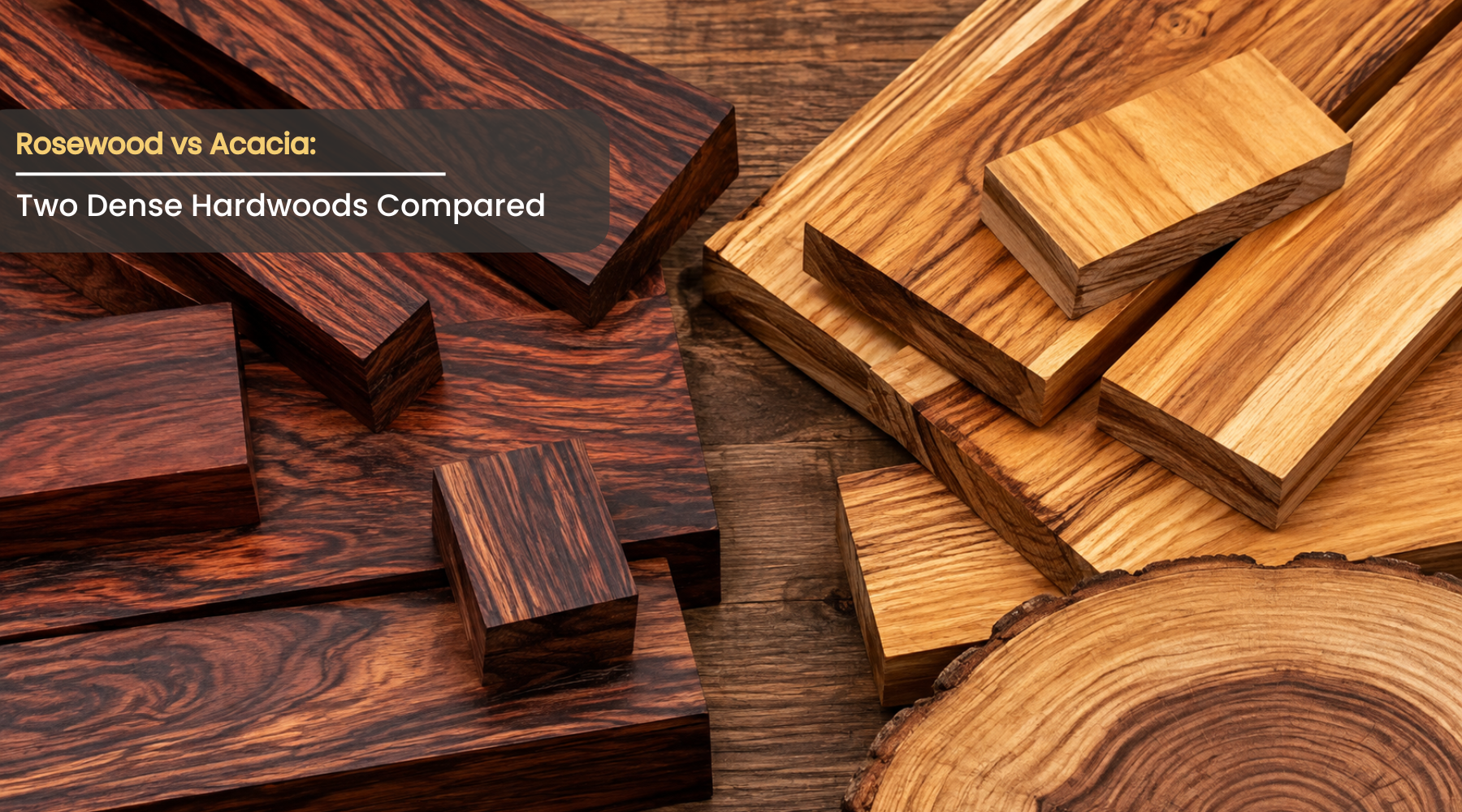
Rosewood is any richly hued hardwood from the Dalbergia genus, prized for dense grain, dark veining, and a faint rose-like scent when freshly cut. That scent gives the wood its name. Only about a dozen Dalbergia species yield true rosewood, and they share a set of traits: hardness, natural oils, and a grain that runs from deep reddish-brown to greenish-black with dramatic streaking.
The scent matters beyond marketing. It comes from essential oils inside the heartwood, and those same oils repel termites and slow decay, which is a structural advantage, not just a sensory one. Genuine rosewood also takes a high polish, so a well-finished piece develops a depth of shine imitations can’t fake. Color shifts across the plank, and no two boards match, which is exactly what makes each piece unique. That variation is a feature of the wood, and it starts with which species the wood came from.
The Main Rosewood Species
Not all rosewood is the same wood. The species changes the color, density, and legal status of the piece, so it’s worth knowing which you’re buying.
- Dalbergia Sissoo (North Indian rosewood, sheesham): Dense and widely used for cabinets, beds, and carving. Boston Mills sources this genus from South Asia, where it isn’t endangered.
- Dalbergia latifolia (Indian rosewood): Warmer reddish-brown tones, a staple of classic carved furniture.
- Dalbergia nigra (Brazilian rosewood): The most coveted historically, deeper and more complex in grain. Now heavily restricted, so most is vintage or antique.
- African rosewood species: Varied in tone, and the subject of the heaviest trafficking concerns, which is why sourcing paperwork matters.
Origin changes performance. South Asian and Brazilian Dalbergia carry a tighter pore structure than some Indian variants, which gives a denser frame and a smoother finish. Whichever species, the genus is what delivers rosewood’s headline benefits.
Why People Choose Rosewood: The Real Advantages
Rosewood earns its price through performance, not just looks. Its advantages hold up under scrutiny in a way marketing adjectives don’t.
Durability leads the list. Rosewood resists dents, scratches, and daily wear far better than softwoods, so it suits high-traffic dining rooms and living rooms. Natural pest and decay resistance comes from the heartwood oils, meaning the frame fends off termites and rot without chemical treatment. Longevity follows from both: a solid rosewood piece can last a lifetime and pass to the next generation, which is why so many heirlooms are carved from it.
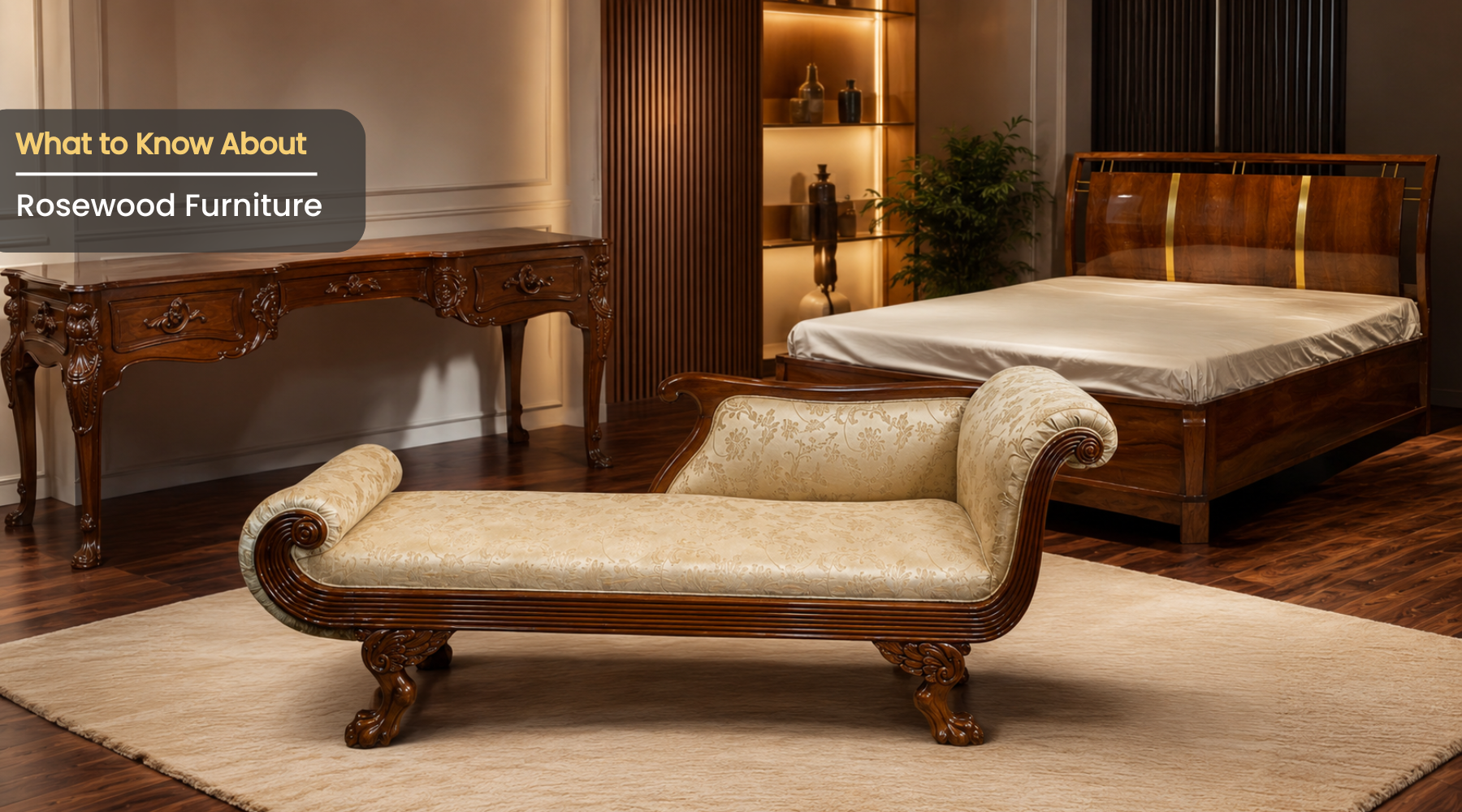
Then there’s aesthetics. The deep tones and bold, unrepeatable grain give rosewood a luxurious presence that anchors a room. It pairs cleanly with neutrals like beige, cream, charcoal, and ivory, and takes carving or brass inlay beautifully. Boston Mills sets thin lines of brass into the wood and finishes with hand-rubbed French polish, a combination that reads as genuinely high-end. You can see the range across the seating collection. These strengths are real, but an honest guide covers the trade-offs too.
The Downsides Worth Knowing Before You Buy
Rosewood has genuine drawbacks, and a buyer should weigh them openly rather than discover them later.
- Cost: Rosewood sits at the premium end. Its scarcity and the skill required to work it push prices well above engineered wood or common hardwoods.
- Weight: The same density that resists dents makes the furniture heavy and harder to move, so plan placement before delivery.
- Legal restrictions: All rosewood species fell under CITES trade protection, so authentic pieces require proper permits and paperwork. This limits availability and rewards buying from makers who can document sourcing.
- Maintenance: Rosewood needs the right care to stay at its best, though as the care section shows, that routine is light and infrequent.
None of these outweigh the benefits for a buyer seeking furniture that lasts, but they explain why real rosewood costs what it does. The cost point also creates an incentive for sellers to fake it, which is the next thing to guard against.
How to Tell Real Rosewood From a Fake
Faking rosewood is common because the price gap is large. “Rosewood-finish” or “rosewood-look” almost always means stained softwood or veneered particleboard wearing the name. A few checks separate the real thing from the costume.
Weight is the fastest tell. Genuine rosewood is dense and feels substantially heavier than an imitation of the same size. Lift a leg or a drawer; real rosewood has heft. Grain is the second check. Real rosewood shows bold, continuous movement with black streaks and swirls, and the pattern runs through the solid wood rather than stopping at a printed veneer edge. Scent confirms it. A light sanding releases the faint rose smell that gives the wood its name; a stained imitation smells of nothing or of chemicals.
Construction seals the judgment. Solid rosewood uses full members throughout the frame, while fakes hide plywood or MDF under a thin skin and expose only the arms or top. Ask for a certificate of origin or CITES documentation; a legitimate maker can produce it, and a cut-corner seller can’t. Boston Mills builds a solid wood sofa with exposed joinery precisely so the real structure is visible, and every batch of rosewood carries its permit. Once you’ve confirmed the wood is real, the fun part is placing it.
Styling Rosewood in Your Home
Rosewood works across eras, which is part of its staying power. It carried ornate Victorian and Regency pieces, then anchored the clean lines of mid-century Danish and Brazilian modernism, and it still suits both traditional and minimalist rooms today.
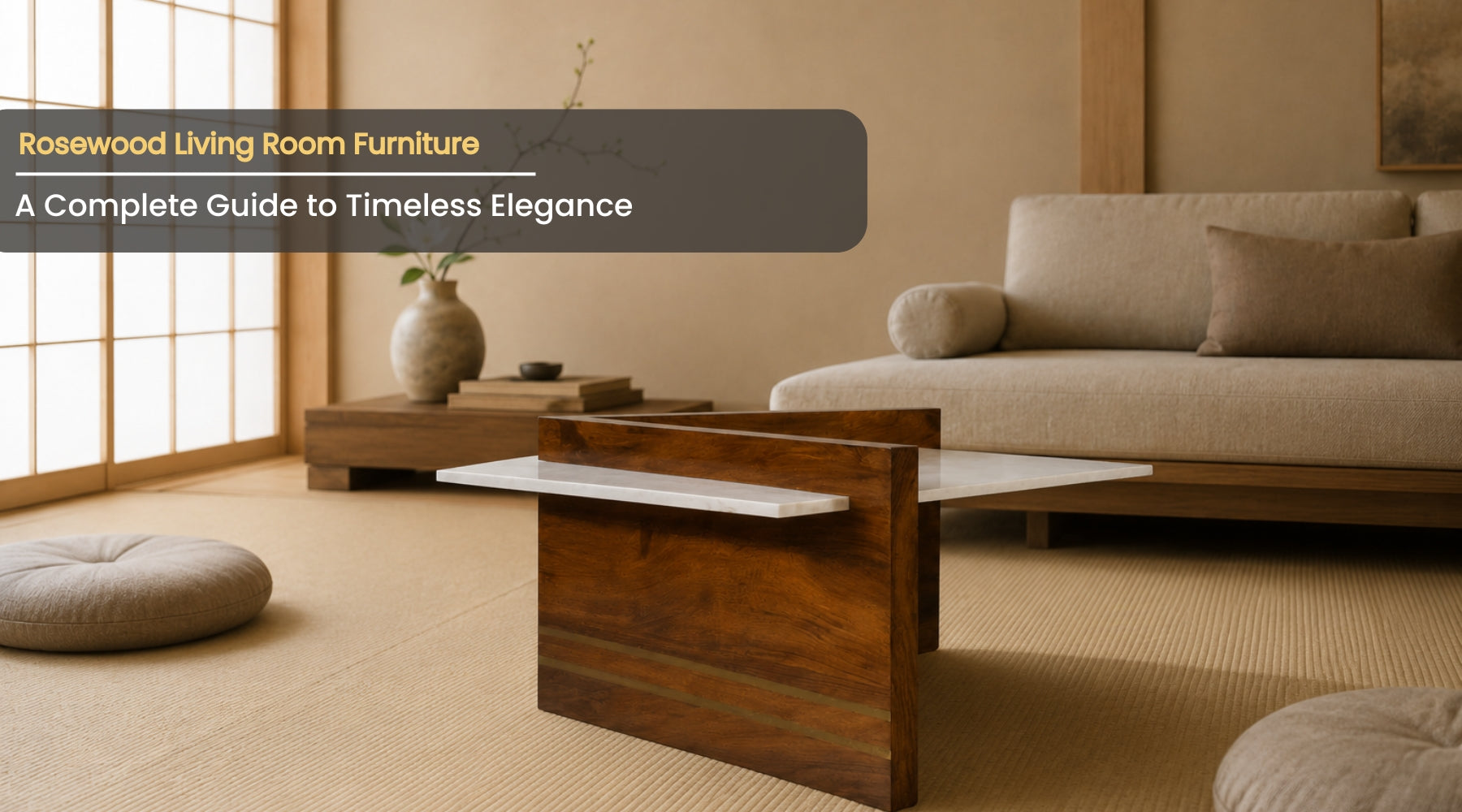
The deep reddish-brown tone reads richest against calm backdrops. Neutral walls in beige, cream, or light grey let the grain do the talking, while earthy greens and deep blues create a bolder, more dramatic contrast. Because the wood already carries visual weight, the room around it should stay relatively restrained so the furniture stays the focal point. Rosewood also mixes well with other materials: glass tops, brass accents, marble slabs, and leather upholstery all complement its warmth rather than compete with it. A rosewood frame paired with tan leather or velvet shifts the piece from formal to inviting without losing its presence. Style it well and the piece looks intentional for decades, provided you also care for it correctly.
Caring for Rosewood Furniture
Rosewood needs less care than its reputation suggests, but the routine has to match the wood. The goal is stability and gentle cleaning, not constant polishing.
Climate matters most. Keep the room near 70 to 72°F with humidity around 50 to 55%, since wood expands and contracts with moisture swings, and repeated movement opens joints. Keep pieces out of direct sunlight, which fades the tone over time, and away from radiators and vents that dry the wood unevenly. Cleaning is simple: dust weekly with a soft microfiber cloth, and wipe spills promptly with a damp cloth before they stain. Polishing is occasional, not weekly. Oil or polish once or twice a year, working with the grain, to feed the wood and keep its luster; over-polishing just builds residue.
Brass inlay wants its own light touch: a soft, slightly damp cloth for routine cleaning, and a mild dish-soap solution for stubborn grime, never household cleaners that strip the finish. Felt pads under legs stop moisture wicking up from mopped floors. The same routine protects every solid rosewood piece, from a sofa to solid wood beds. Done consistently, this light care keeps a rosewood piece looking new for generations, which raises the final question buyers ask: is it worth it?
Is Rosewood Furniture a Good Investment?
Rosewood holds value in a way most furniture doesn’t. Because trade restrictions have tightened supply and genuine pieces last for decades, well-crafted rosewood furniture tends to hold or grow in value rather than depreciate like mass-market pieces. Antique rosewood with provenance can appreciate significantly, and even modern handcrafted pieces retain resale value thanks to their durability and timeless design.
The math favors buying once. A low-cost engineered piece gets replaced every few years when the laminate chips; a solid rosewood piece bought once may never need replacing. Boston Mills hand-builds each frame over 16 to 20 months from CITES-permitted stock, which is why the pieces are made to be restored and handed down rather than discarded. For a buyer weighing upfront cost against lifetime value, that’s the case for rosewood in one line.
What is rosewood furniture made of?
Rosewood furniture is made from hardwood of the Dalbergia genus, known for dense grain, dark veining, and a faint rose-like scent. Only about a dozen Dalbergia species yield true rosewood. Common ones include Dalbergia Sissoo and Dalbergia latifolia, prized for hardness and natural termite resistance.
Is rosewood good for furniture?
Yes. Rosewood is one of the best furniture hardwoods, scoring roughly 2,000 to 3,000 lbf on the Janka scale, harder than oak, walnut, and teak. Its density resists dents, its natural oils repel termites and decay, and a well-made piece lasts for generations with light care.
How can I tell if furniture is real rosewood?
Check weight, grain, and scent. Real rosewood feels distinctly heavy, shows bold continuous grain with black streaking through solid wood, and releases a faint rose smell when lightly sanded. Solid construction and a CITES certificate of origin confirm authenticity; stained softwood and veneered particleboard fail all three checks.
What are the main types of rosewood?
The main true rosewoods are Dalbergia Sissoo (North Indian rosewood or sheesham), Dalbergia latifolia (Indian rosewood), Dalbergia nigra (Brazilian rosewood, now heavily restricted), and various African species. Each differs in color and density, and origin affects the grain and the legal paperwork required.
Why is rosewood furniture so expensive?
Rosewood is expensive because it’s rare, dense, slow-growing, and hard to work, and because CITES trade restrictions limit legal supply. Authentic pieces need permits documenting their source. The high price reflects genuine scarcity and craftsmanship, which is also why real rosewood holds its value over time.
Does rosewood furniture need a lot of maintenance?
No, the maintenance is light. Dust weekly with microfiber, wipe spills promptly, and polish only once or twice a year with the grain. Keep the room stable at 70 to 72°F and 50 to 55% humidity, out of direct sun. Wipe brass inlay with a soft damp cloth only.
Is rosewood furniture legal to buy?
Yes, when properly sourced. All rosewood species are protected under CITES, so legitimate furniture comes with permits confirming legal, unendangered sourcing. Boston Mills imports only CITES-permitted rosewood from South Asian forests where the species isn’t endangered, so the pieces are fully compliant.
Is rosewood furniture worth the money?
Yes, over the lifetime of the piece. Rosewood resists wear for decades, can be refinished repeatedly, and holds or grows in resale value while engineered furniture depreciates. Buying one solid rosewood piece often costs less than replacing cheaper furniture every few years.