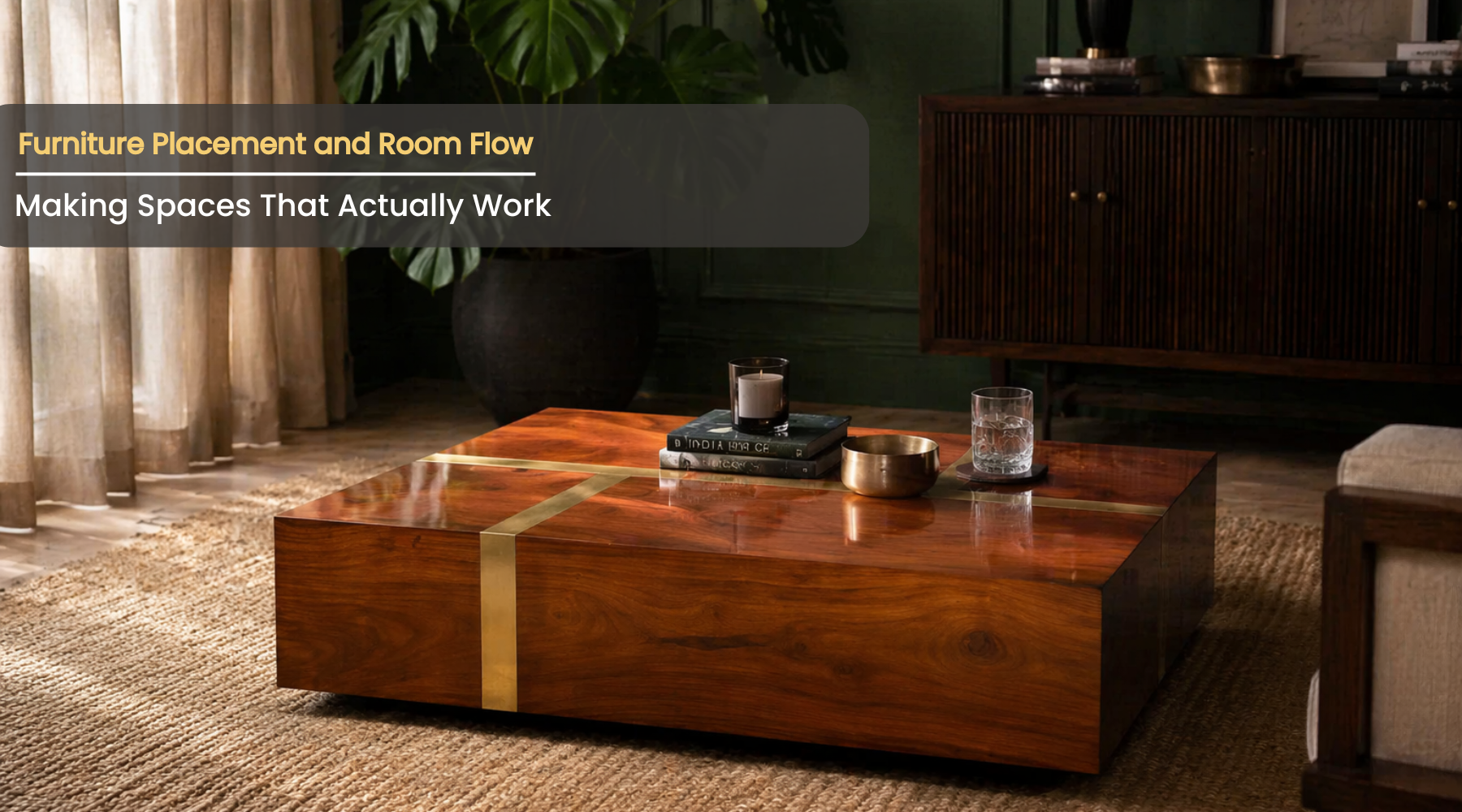
Furniture Placement and Room Flow: Making Spaces That Actually Work
We spent three months saving for the rosewood coffee table and when it finally arrived, I placed it exactly where I had imagined it would go. Right in the center of the living room, between the sofa and the fireplace. It looked beautiful. It also blocked the path from the kitchen to the back door, which meant that every single time anyone walked through the house carrying groceries or taking out the trash, they had to squeeze around this gorgeous table that was absolutely in the wrong place.
It took me two weeks of bumping my shins before I admitted the problem. The table was perfect. The placement was terrible. Moving it eighteen inches to the left transformed the room from obstacle course to comfortable living space. That table has been in its new spot for twelve years now and I still think about those first two weeks whenever I am helping someone plan furniture placement.
Beautiful furniture deserves thoughtful placement. Where you put things matters as much as what you buy. A rosewood dining table in the wrong spot becomes something you work around rather than something you gather around. The same table in the right spot becomes the heart of your home. Let me share what I have learned about making rooms flow because placement mistakes are easy to make and sometimes just as easy to fix.
What Room Flow Actually Means
Flow describes how easily people and activity move through a space. Good flow means you can walk from point A to point B without thinking about it. Bad flow means you are constantly navigating around furniture, squeezing through tight spots or taking roundabout paths. You feel flow problems before you consciously notice them.
Reading Traffic Patterns
Every room has natural paths that people want to travel. From the entry to the kitchen. From the sofa to the bathroom. From the bedroom door to the closet. These paths exist whether furniture acknowledges them or not. Place furniture across a natural path and people will either move the furniture or move around it awkwardly forever.
Before placing furniture, observe how you actually move through your spaces. Walk the routes you travel most often. Notice where you enter and exit rooms. Pay attention to the invisible highways that connect different areas of your home. These patterns should guide placement decisions.
Main traffic paths need at least 36 inches of width for comfortable passage. Secondary paths can narrow to 24 inches but less feels cramped. Measure your planned arrangements against these minimums. A rosewood sideboard that looks perfect against a wall might steal six inches that a walkway desperately needs.
Creating Activity Zones
Rooms serve multiple purposes and furniture placement should acknowledge this. A living room might host conversation, television watching, reading and homework. Each activity works best in a particular arrangement. Thoughtful placement creates zones for different activities without requiring furniture to move.
Conversation zones need seating arranged so people can see each other comfortably. Chairs and sofas should face each other across reasonable distances, typically six to ten feet. A rosewood coffee table in the center provides a natural focal point and a place to set drinks without stretching awkwardly.
Work zones need appropriate surfaces at correct heights with adequate lighting. A desk pushed against a wall faces that wall, which might be fine or might feel isolating depending on the room and the work. Consider what each zone requires and whether placement provides it.
Visual Movement Through Rooms
Eyes flow through rooms just as feet do. Visual flow describes how gaze moves across a space, what it encounters and where it rests. Good visual flow leads the eye naturally from element to element. Poor visual flow creates confusion, clutter or emptiness that feels uncomfortable.
Focal points anchor visual flow. A fireplace, a large window or a striking piece of furniture can serve as the room's visual center. Other elements should relate to this focal point, supporting it rather than competing with it. A rosewood dining table might be the focal point of your dining room, with other furniture arranged to emphasize rather than distract.
Balance affects visual flow significantly. A room with all large furniture on one side feels lopsided. Distributing visual weight throughout the space creates equilibrium that feels right even if you cannot articulate why.
Placement Principles by Room
Different rooms have different requirements. What works in a living room may fail in a dining room. Understanding each room's particular needs helps you place furniture appropriately from the start.
Living Room Placement
Living rooms typically center on conversation or entertainment or both. For conversation, arrange seating in a rough circle or rectangle where everyone can see everyone else. Keep the grouping tight enough for comfortable talking, usually within ten feet across the longest dimension.
If television drives the arrangement, ensure all seating has good viewing angles without neck strain. The optimal viewing distance depends on screen size but generally two to three times the screen's diagonal measurement works well. Position seating accordingly.
Coffee tables should be reachable from surrounding seating without requiring people to stand or stretch uncomfortably. Eighteen inches from sofa to coffee table edge works for most situations. Too close and knees bump the table. Too far and drinks are hard to reach.
Side tables and end tables should sit at or slightly below the arm height of adjacent seating. This makes them functional for lamps, books and beverages. A beautiful rosewood end table at the wrong height becomes frustrating to use despite its beauty.
Dining Room Placement
Dining rooms center on the table, obviously. Position the table to allow comfortable seating all around while maintaining clearance for chairs to pull out and people to pass behind seated diners. Thirty six inches from table edge to wall allows chairs to pull out with minimal clearance. Forty eight inches or more allows comfortable passage behind occupied chairs.
Center the table beneath overhead lighting fixtures. This sounds obvious but gets overlooked when tables are positioned before lighting is considered. If your ceiling box is not centered where you want your table, either move the table or consider having the electrical relocated. Living with a off center light bothers more than you might expect.
Storage pieces like sideboards and buffets work best along walls perpendicular to the table's long axis. This placement creates natural flow for serving while keeping traffic paths clear. A rosewood sideboard facing the table becomes part of the dining experience rather than an obstacle.
Bedroom Placement
Beds typically dominate bedrooms and should be placed first. Position the bed so you can access both sides reasonably, assuming two people share it. Twelve inches between bed and wall allows making the bed without too much difficulty. More clearance is better if space allows.
Consider what you see when lying in bed. Looking directly at a closet full of clothes may not be restful. Looking at a window or a beautiful piece of furniture tends to feel better. This visual consideration should influence bed orientation alongside practical concerns.
Dressers belong where you can open drawers fully without obstruction. Against a wall with clearance for drawer extension seems obvious but often gets compromised when rooms are tight. Nightstands should allow lamps to illuminate without glaring into sleeping eyes.
Common Placement Mistakes to Avoid
Some placement errors appear in home after home. Recognizing these patterns helps you avoid repeating them in your own spaces.
Pushing Everything Against Walls
The instinct to push all furniture against walls leaves room centers empty and creates awkward canyons. Seating arranged around room perimeters forces conversation across uncomfortable distances. Floating furniture away from walls often improves both flow and function.
A sofa pulled forward from the wall by two feet creates space for a console table behind while bringing the conversation area together. A rosewood desk angled into a room rather than facing a wall can feel more commanding and connected. Do not assume walls are the only home for furniture.
Blocking Natural Light
Tall furniture placed in front of windows blocks natural light that makes rooms feel alive. Bookcases, armoires and tall storage pieces should generally avoid window walls. Keep window areas open for light to enter and spread through spaces.
This principle extends to furniture height generally. Lower furniture near windows allows more light to pass over and around. A low rosewood media console under a window works better than a tall entertainment center that would turn the window into a backlight.
Mismatched Scale
Furniture too large for rooms overwhelms them. Furniture too small looks lost. Scale should relate to room dimensions and to other furniture in the space. A massive rosewood dining table in a small room makes the room feel cramped regardless of how beautiful the table is.
Scale relationships matter between pieces too. A tiny coffee table in front of a large sectional sofa looks insufficient. A massive armchair beside a delicate side table creates awkward contrast. Pieces should relate proportionally to each other.
Minimum Clearances for Furniture Placement
|
Situation |
Minimum Clearance |
|
Main traffic paths |
36 inches |
|
Secondary paths |
24 inches |
|
Dining table to wall, chairs pulling out |
36 inches |
|
Dining table to wall, passage behind chairs |
48 inches |
|
Coffee table to sofa |
14-18 inches |
|
Bed to wall, both sides accessible |
12+ inches |
A Process for Getting Placement Right
Good placement rarely happens by accident. A systematic approach helps you think through options before committing to arrangements that might not work.
Plan Before You Move
Create a floor plan with accurate measurements before arranging furniture. Graph paper works for simple rooms. Digital tools let you experiment without physical effort. Either approach lets you test arrangements before muscle strain reveals problems.
Mark fixed elements first. Doors, windows, electrical outlets, heating vents and architectural features that cannot move. These constraints shape what furniture placement is possible. Working around them from the start prevents plans that cannot actually be implemented.
Draw furniture footprints to scale and experiment with arrangements on paper. Move paper rectangles around until you find arrangements that preserve traffic paths, create functional zones and feel balanced. This planning costs nothing and saves significant effort.
Test Before Committing
Before placing heavy furniture permanently, test arrangements with temporary markers. Painter's tape on floors shows furniture footprints without moving anything. Living with tape for a few days reveals how planned arrangements affect actual use patterns.
Walk your normal paths through the taped layout. Sit where seating will go and look around. Imagine daily activities and whether the arrangement supports them. This experiential testing catches problems that floor plans miss.
Only after tape testing confirms an arrangement should you actually place heavy furniture. A rosewood dining table is not something you want to move repeatedly. Get placement right before the table arrives.
Does furniture placement really affect how rooms feel?
Yes, furniture placement profoundly affects room experience. The same furniture in different arrangements creates completely different feelings. Furniture blocking natural traffic paths makes rooms feel frustrating even if nothing else changes. Seating arranged too far apart makes conversation awkward. Furniture scaled wrong for the space makes rooms feel either cramped or sparse. Visual balance affects whether spaces feel settled or uncomfortable. These effects are real and significant even though they often operate below conscious awareness. Most people can sense when a room works without being able to articulate why. Thoughtful placement creates that working feeling. Poor placement prevents it regardless of furniture quality.
What is a focal point and why does it matter?
A focal point is the visual anchor that draws attention when entering a room. It might be architectural like a fireplace, large window or it might be furniture like a striking rosewood dining table or an impressive media wall. Focal points matter because they organize visual experience. Without a clear focal point, eyes wander without finding rest, creating subtle discomfort. With a strong focal point, the room has a center that other elements relate to, creating visual coherence. Furniture placement should acknowledge and support focal points rather than compete with them or ignore them. Seating often faces focal points. Other furniture arranges around them. This organization makes rooms feel intentional and settled rather than random and unsettled.
What factors should guide furniture placement decisions?
Multiple factors should guide furniture placement. First, traffic patterns and clearances that allow comfortable movement through spaces. Second, activity zones that support how you actually use rooms. Third, focal points that organize visual experience. Fourth, natural light access that keeps rooms bright and pleasant. Fifth, scale relationships between furniture pieces and between furniture and room dimensions. Sixth, conversation distances that allow comfortable interaction. Seventh, functional requirements like being able to reach coffee tables or see televisions without strain. Eighth, visual balance distributing weight throughout spaces. Ninth, electrical outlet and heating vent locations that may constrain options. These factors combine differently in every room, requiring case by case evaluation rather than universal formulas.
How does placement differ for small versus large rooms?
Small and large rooms require different placement approaches. In small rooms, every inch matters. Traffic paths may need to shrink toward minimums. Furniture must earn its space through function. Multifunctional arrangements become essential. Visual tricks like floating furniture away from walls can make spaces feel larger. In large rooms, the challenge reverses. Creating intimacy within expansive space requires clustering furniture into conversation areas rather than spreading it throughout. Multiple zones may coexist within single rooms. Furniture can be larger and more numerous without overwhelming space. Large rooms also offer more flexibility, allowing experimentation with arrangements impossible in tight quarters. Both situations reward thoughtful placement but for opposite reasons.
How should homeowners approach rearranging existing furniture?
Approach rearrangement systematically. First, identify what is not working about the current arrangement. Blocked traffic paths, conversation difficulties, visual imbalance or other specific problems. Second, measure the room and create a floor plan showing fixed elements and furniture footprints. Third, experiment with alternative arrangements on paper, specifically addressing identified problems. Fourth, test promising arrangements with painter's tape before moving heavy pieces. Fifth, evaluate test arrangements through actual use, walking paths and simulating activities. Sixth, only after testing confirms improvement, execute the rearrangement. This process prevents the frustration of moving heavy furniture repeatedly and increases likelihood that changes actually improve the room.
Should furniture arrangements change seasonally?
Seasonal rearrangement can improve rooms but is not required. Summer arrangements might orient more toward outdoor connections through windows and doors. Winter arrangements might emphasize fireplaces and cozy conversation groupings. Light changes seasonally, potentially affecting which arrangements work best. However, moving heavy furniture four times yearly is substantial effort. Consider whether potential benefits justify the work. Minor adjustments like adding or removing an accent chair might achieve seasonal responsiveness without major rearrangement. Quality furniture in thoughtful permanent placement serves well year round for most homes.
How can new furniture purchases be evaluated for placement before buying?
Evaluate placement potential before purchasing. First, measure precisely both the furniture and the intended location. Include clearances for door swings, drawer extensions and traffic paths. Second, create floor plan showing how the new piece would fit with existing furniture. Third, test the footprint with painter's tape in the actual room, living with it for several days. Fourth, consider delivery path, since furniture must reach its destination. Fifth, evaluate scale relationships with existing pieces to ensure visual compatibility. Sixth, think through how the new piece affects existing traffic patterns and zones. This evaluation prevents purchasing beautiful furniture that does not work in your actual space. A rosewood table that will not fit through your doorway or overwhelms your dining room is not a good purchase regardless of its beauty.
The Right Place for Beautiful Things
That rosewood coffee table has been in its proper place for twelve years now. Every time I walk through the living room, I pass it comfortably. Guests set their drinks on it without thinking. It looks beautiful and functions beautifully because it is where it belongs.
I sometimes wonder how different my relationship with that table would be if I had never moved it. Would I resent it after twelve years of bumped shins? Would I have grown to dislike something beautiful simply because I put it in the wrong spot? Placement matters that much. It shapes not just how rooms work but how we feel about the furniture in them.
Every Boston Mills rosewood table, walnut sideboard and cherry dressers are designed through our Dallas World Trade Center showroom where the Boston Mills design team shapes each concept before skilled craftsmen bring it to life. Give that piece a setting worthy of it. Trace your traffic paths with painter's tape, study the sight lines and map out where conversations naturally happen. Settle on the spot before delivery day. The planning you do now is what lets furniture, reviewed for finish, proportion and quality by our team before it reaches your home, serve you well for years to come.