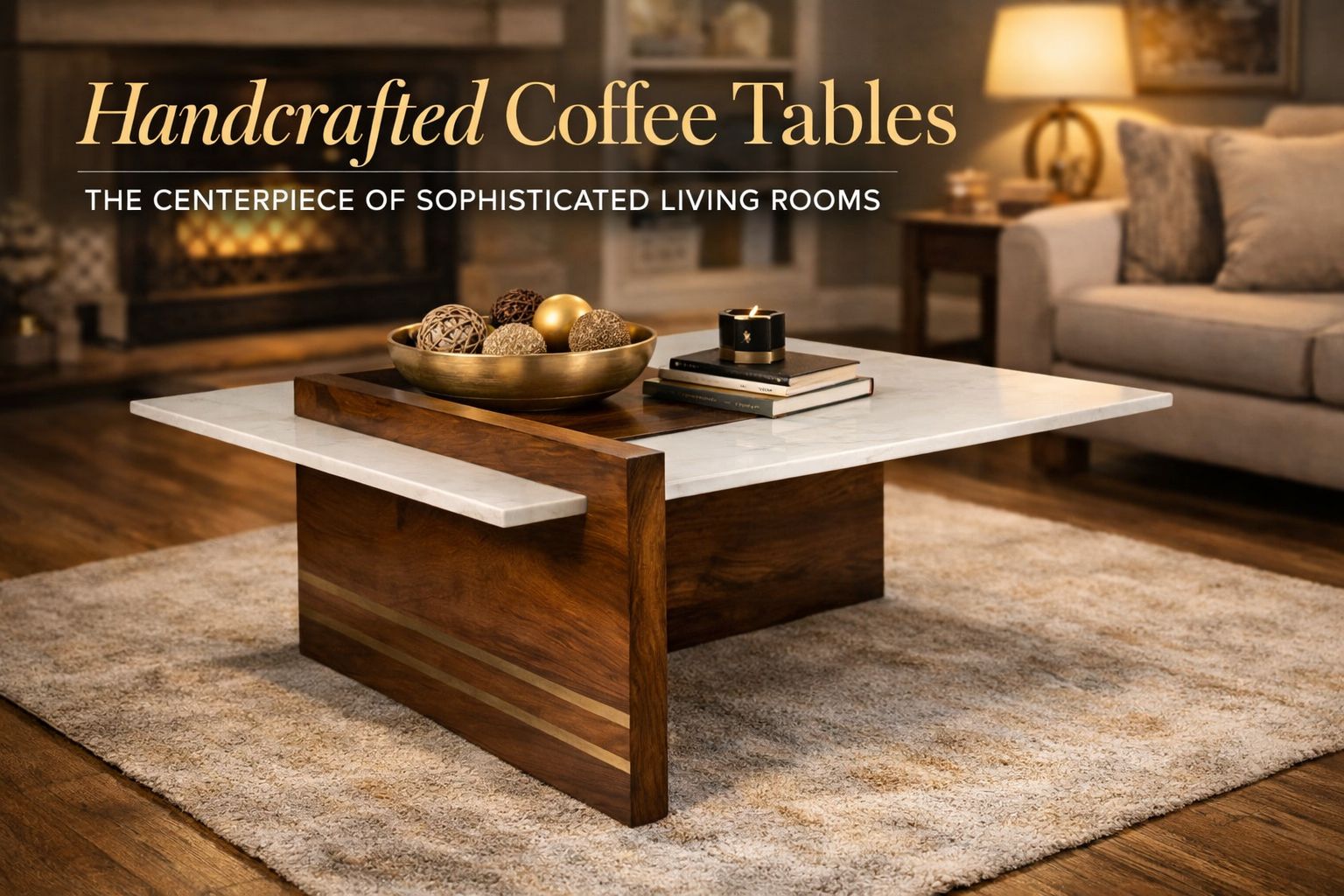
Handcrafted Coffee Tables: The Centerpiece of Sophisticated Living Rooms
Every living room has a center of gravity the place where coffee cups land, books collect, and conversations naturally drift. That's the coffee table. And when it's handcrafted from solid wood, the difference is something you feel every day, not just in how it looks, but in how it quietly holds a room together.
A handcrafted piece sitting at the heart of your home carries a presence that mass-produced furniture cannot match. The grain reveals itself up close. The joinery invites a second look. A Boston Mills coffee table doesn't just fill a space; it earns the attention that comes with being the centerpiece of your living room.
What sets a handcrafted coffee table apart even further is how it ages. Solid wood construction, traditional joinery, and a premium finish that deepens over the years; these aren't just details. They're what transform a piece of furniture into something worth passing down. At Boston Mills, that's the standard we build to not disposable, not trend-driven, just honest craftsmanship made to last for generations.
What Defines a Handcrafted Coffee Table
Handcrafted coffee tables are distinguished by construction methods, material quality, and finishing techniques that mass production cannot replicate. Skilled artisans select individual wood boards for grain character and structural integrity. They shape components using traditional techniques refined over centuries. They assemble pieces with joinery designed to strengthen over time rather than loosen.
The difference becomes apparent immediately upon examination. Run your hand across a handcrafted tabletop and feel the subtle undulations that indicate hand-planing. Inspect the corners and observe how wood meets wood with precision measured in fractions of millimeters. Examine the underside and discover the same attention to detail applied where most eyes never look.
Boston Mills craftsmen spend between 40 and 80 hours producing a single coffee table. This investment of skilled labor enables attention to detail that is impossible in factory settings, where minutes, not hours, determine production timelines. Each table receives individual assessment at every stage, with adjustments made to optimize the specific characteristics of the wood being worked.
The Role of Coffee Tables as Living Room Centerpieces
Visual Anchor for Room Design
Coffee tables establish the visual center point around which other furniture arranges itself. Sofas and chairs orient toward this central element, creating conversational groupings that feel natural and inviting. The table height, typically between 16 and 18 inches, positions it within the sightlines of seated guests, making its design constantly visible.
The materials and finish of your coffee table influence the perceived warmth of the entire room. Rich rosewood tones introduce warmth and sophistication. The depth of a French polish finish catches and reflects light, adding movement and life to the space. These qualities radiate outward, affecting how visitors perceive the entire living area.
Interior designers consistently identify the coffee table as the single most impactful furniture selection in living room design. A well-chosen piece elevates modest surroundings, while a poorly chosen piece undermines even luxurious settings. This influence makes the coffee table an ideal investment point for those seeking maximum design impact.
Functional Hub of Daily Living
Beyond aesthetics, coffee tables serve as the functional hub of living room activities. Families gather around them for board games and puzzles. Hosts arrange appetizers and drinks for entertaining. Individuals use them as workstations for laptops and correspondence. This versatility demands surfaces that withstand varied use while maintaining their beauty.
Solid wood construction handles these demands admirably. Unlike glass or composite materials, hardwood surfaces resist impact damage, support substantial weight, and survive the occasional spill with minimal concern. The natural resilience of rosewood and similar premium hardwoods means daily use improves rather than degrades their appearance, as the wood develops richer patina over time.
Material Excellence in Handcrafted Coffee Tables
Premium Hardwoods and Their Characteristics
Boston Mills sources premium hardwoods from sustainable forests worldwide, selecting species prized for beauty, durability, and workability. Indian rosewood remains the signature material, valued for its deep color, dramatic grain patterns, and exceptional density. Each board displays unique figuring, ensuring no two tables appear identical.
Rosewood density measures between 750 and 850 kilograms per cubic meter, making it significantly harder than oak or walnut. This density translates to superior dent and scratch resistance, critical qualities for furniture subjected to daily contact. The weight of rosewood also contributes stability, preventing lighter tables from shifting during use.
Alternative hardwoods like teak and mahogany offer different aesthetic qualities while maintaining construction integrity. Teak provides golden-brown tones with excellent moisture resistance. Mahogany delivers reddish-brown warmth with exceptional dimensional stability. Boston Mills craftsmen work with each species according to its specific characteristics, optimizing results for the chosen material.
Solid Wood Versus Veneer and Engineered Alternatives
Understanding the difference between solid wood and alternatives protects buyers from disappointing purchases. Veneer consists of thin wood slices glued over composite substrates like particleboard or MDF. While attractive initially, veneer chips and peels over time, especially on edges and corners that receive frequent contact. Repairs prove difficult or impossible once damage occurs.
Solid wood construction uses the same material throughout the entire piece. Scratches and dents can be sanded and refinished indefinitely. Edges remain intact through decades of use. The table actually increases in value as it develops the patina and character associated with antique furniture. This renewable quality makes solid wood the superior long-term investment.
Weight provides a reliable indicator of construction quality. Lift a corner of any coffee table and note the heft. Solid hardwood tables feel substantial, often weighing 50 to 100 pounds depending on design. Veneered pieces over composite cores feel noticeably lighter, sometimes dramatically so. This weight difference reflects material density and construction integrity.
Craftsmanship Techniques That Define Quality
Traditional Joinery Methods
Joinery determines furniture longevity more than any other construction factor. Handcrafted coffee tables employ traditional joinery techniques developed and refined over centuries. Mortise and tenon joints connect legs to aprons, creating mechanical locks that strengthen under stress. Dovetail joints secure drawer components with interlocking geometry that prevents separation.
Boston Mills craftsmen cut these joints by hand, fitting each connection individually. This approach allows micro-adjustments that ensure perfect alignment and optimal glue surfaces. Machine-cut joints, while faster to produce, cannot achieve the same precision because they follow programmed dimensions rather than responding to the specific characteristics of each piece of wood.
The superiority of traditional joinery becomes apparent over time. Factory furniture with dowel or screw joints begins loosening within years, developing wobbles and creaks that worsen progressively. Handcrafted furniture with proper joinery actually tightens as wood seasons and settles, explaining why antique furniture often proves sturdier than modern pieces.
French Polish Finishing Excellence
French polish represents the pinnacle of wood finishing techniques, producing depth and clarity unmatched by modern alternatives. The process involves applying dozens of thin shellac layers using a specialized pad called a rubber. Each layer partially dissolves into the previous one, building a finish that appears to glow from within the wood rather than sitting atop it.
Completing a French polish finish requires between 20 and 40 hours of skilled labor. The craftsman must maintain consistent pressure, speed, and material application throughout sessions that span multiple days. Environmental conditions affect results, requiring temperature and humidity control during application. This labor intensity explains both the rarity and value of properly French polished furniture.
The resulting finish provides excellent protection while remaining repairable. Minor scratches buff out easily. More significant damage responds to spot refinishing without requiring complete stripping. This repairability contrasts sharply with polyurethane and lacquer finishes that demand complete removal when damaged, often irreparably altering the wood beneath.
Decorative Elements and Brass Inlay
Many Boston Mills coffee tables feature brass inlay work that adds visual interest without overwhelming the wood itself. Craftsmen cut precise channels into tabletop surfaces, then set brass strips or shapes flush with the surrounding wood. The contrast between warm brass and rich rosewood creates elegant geometric patterns or flowing organic designs.
Brass inlay requires exceptional precision since any gap between metal and wood becomes immediately visible. The inlay must sit perfectly flush, neither proud nor recessed, to maintain smooth surfaces suitable for daily use. Achieving this precision demands hand fitting of each brass element, adjusting both the channel and the metal until perfect alignment results.
Beyond aesthetics, brass inlay reinforces structural integrity at vulnerable points. Many designs incorporate brass at corners and edges where wear concentrates. The metal protects these areas from impact while adding decorative value. This dual function exemplifies the thoughtful design philosophy distinguishing handcrafted furniture from purely decorative pieces.
Selecting the Perfect Handcrafted Coffee Table
Size and Proportion Guidelines
Proper coffee table sizing creates visual harmony and functional utility. Length should measure approximately two-thirds the length of your sofa, establishing proportional relationship between the pieces. A 90-inch sofa pairs well with a 60-inch coffee table, while a 72-inch sofa suits a 48-inch table. These proportions create balanced compositions that satisfy the eye instinctively.
Height requires careful consideration relative to seating. Standard coffee table height ranges from 16 to 18 inches, aligning with or slightly below typical sofa seat cushion height. Tables too tall create awkward reaching angles. Tables too low appear sunken and disconnected from surrounding furniture. Test proportions by placing objects at various heights before committing to a specific table.
Width determines accessibility and functionality. Tables narrower than 20 inches provide limited surface area for practical use. Tables wider than 28 inches may impede traffic flow in smaller rooms. Most living rooms accommodate widths between 22 and 26 inches comfortably, providing adequate surface while maintaining clear pathways around the perimeter.
Shape Selection for Different Room Configurations
Rectangular coffee tables suit most living room configurations, particularly those with linear sofa arrangements. Their elongated form echoes sofa proportions while providing ample surface area distributed evenly across seating positions. Rectangular tables work especially well in narrower rooms where circular shapes would reduce walkway clearance.
Round and oval coffee tables soften angular room arrangements and improve traffic flow. Without corners to navigate around, guests move more freely. Curved shapes also suit sectional sofas that create irregular seating configurations. The organic forms complement contemporary design schemes while providing functional advantages in high-traffic households.
Square coffee tables anchor smaller seating arrangements effectively. Their balanced proportions suit compact living rooms and reading nooks where elongated shapes would overpower the space. Square tables also function well as secondary pieces in larger rooms, providing additional surface area without competing with the primary coffee table.
Style Coordination with Existing Furniture
Coffee table style should complement rather than match existing furniture exactly. Perfect matching creates monotonous environments lacking visual interest. Instead, select tables that share design elements such as wood tone, leg style, or decorative motifs without replicating other pieces precisely. This approach maintains cohesion while allowing each piece to contribute individual character.
Contemporary interiors favor clean-lined coffee tables with minimal ornamentation. Straight legs, simple aprons, and unadorned surfaces emphasize material quality over decorative complexity. The Boston Mills Contempo collection exemplifies this aesthetic, showcasing rosewood grain without competing embellishment.
Traditional spaces accommodate more elaborate designs including turned legs, carved aprons, and decorative inlay. These elements reference historical furniture traditions while remaining appropriate for modern living. The Heritage collection from Boston Mills offers traditionally inspired designs executed with contemporary craftsmanship standards.
The Investment Value of Handcrafted Coffee Tables
Calculating furniture value requires looking beyond initial purchase price to consider total cost of ownership. A handcrafted coffee table costing $2,000 that lasts 50 years costs $40 per year. A mass-produced alternative costing $500 that requires replacement every 10 years costs $50 per year while delivering inferior quality throughout its shorter lifespan.
Handcrafted furniture also retains and often increases in monetary value. Quality pieces from recognized makers appreciate over decades, sometimes dramatically. Boston Mills tables sold ten years ago now command prices exceeding their original cost, rewarding owners who recognized lasting value over temporary savings.
Beyond financial calculations, handcrafted coffee tables deliver intangible value through daily enjoyment. The pleasure of owning beautiful furniture that performs flawlessly enriches everyday life. Hosting guests around a table you feel proud to display creates satisfaction no discount purchase provides. These experiential benefits compound over years of ownership.
Caring for Your Handcrafted Coffee Table
Proper care preserves handcrafted coffee table beauty across generations. Dust regularly with soft, lint-free cloths to prevent particle accumulation that can scratch surfaces. Avoid furniture polishes containing silicone, which builds up residue that clouds finishes over time. Instead, use quality paste wax applied sparingly twice annually.
Protect surfaces from heat and moisture damage. Use coasters under all beverages regardless of material. Place trivets beneath hot dishes and avoid setting potted plants directly on wood surfaces. These simple precautions prevent the most common damage affecting coffee tables in active households.
Address spills immediately by blotting rather than wiping. Wiping spreads moisture across larger areas and can push liquids into finish pores. Blotting absorbs moisture vertically without spreading. After blotting, allow the area to dry completely before applying any treatments. Most spills cleaned quickly cause no lasting damage to properly finished surfaces.
Frequently Asked Questions About Handcrafted Coffee Tables
How can I identify genuine handcrafted furniture?
Genuine handcrafted furniture reveals its origins through construction details. Look for traditional joinery like dovetails and mortise and tenon connections. Examine finish depth and clarity, particularly with French polish. Check underside construction for the same attention visible on display surfaces. Handcrafted pieces also show subtle variations between similar models, while mass-produced items appear identical. Quality makers provide documentation of materials and construction methods upon request.
What makes rosewood ideal for coffee tables?
Rosewood offers exceptional hardness, dramatic grain patterns, and natural oils that enhance durability. Its density provides dent and scratch resistance superior to softer hardwoods. The deep color and varied figuring create visual interest that rewards close examination. Rosewood also machines beautifully, accepting fine detail work and achieving high polish that showcases wood character. These combined qualities make rosewood the preferred material for heirloom-quality coffee tables.
How long do handcrafted coffee tables last?
Properly constructed handcrafted coffee tables last indefinitely with appropriate care. Many antique pieces remain in active use after 200 or more years. Modern handcrafted tables built with traditional techniques should serve multiple generations without requiring more than periodic refinishing. The combination of solid wood construction, proper joinery, and quality finishes creates furniture designed to outlast its original owners.
Can scratches and damage be repaired?
Solid wood coffee tables accept repair more readily than any other construction type. Minor scratches often buff out with appropriate polishes. Deeper damage responds to sanding and refinishing of affected areas. French polish finishes repair particularly well since new applications blend seamlessly with existing finish. Even significant damage like chips or dents can be addressed through professional restoration, returning tables to original condition.
How do handcrafted tables compare in price to mass-produced alternatives?
Handcrafted coffee tables typically cost three to ten times more than mass-produced alternatives with similar dimensions. This premium reflects material quality, construction time, and skilled labor. However, cost-per-year calculations often favor handcrafted pieces due to dramatically longer useful lifespans. The superior daily experience and potential appreciation further enhance value proposition for quality-conscious buyers.
What coffee table size works best for most living rooms?
Most living rooms accommodate coffee tables measuring 48 to 54 inches in length, 24 to 30 inches in width, and 16 to 18 inches in height. These dimensions suit standard three-seat sofas and typical room proportions. Measure your specific space and existing furniture before selecting, ensuring two-thirds length proportion to your sofa and clearance of at least 18 inches between table and seating.
Creating Your Living Room Centerpiece
Handcrafted coffee tables transform living rooms from functional spaces into sophisticated environments that reflect owner taste and values. Boston Mills artisans combine traditional techniques with premium materials to create furniture worthy of centerpiece status. Each table represents both artistic achievement and practical investment designed to serve generations of family life.
The decision to invest in handcrafted furniture reflects priorities beyond mere decoration. It acknowledges the value of craftsmanship, the importance of sustainability through durability, and the daily pleasure derived from living with beautiful objects. A handcrafted coffee table embodies these values while serving the practical needs of modern living.
Explore Boston Mills handcrafted coffee table collection to discover pieces that will anchor your living room for generations. Each table tells the story of skilled hands, premium materials, and time-honored techniques united in furniture built to become family heirlooms.