Nesting Tables: The Smart Solution for Flexible Living Spaces
Some furniture just sits there. Nesting tables show up when you need them and disappear when you don't. That's what makes them one of the smartest designs in modern living. Three tables, one footprint. Slide them apart for a dinner party, tuck them back together for movie night. They work the way real life works, always shifting, never standing still.
We build every Boston Mills nesting set by hand from solid wood, with joinery designed for use, not just admiration. They're made for city apartments where square footage is precious, for family rooms that wear a dozen hats, and for anyone who believes their home should keep up with them, not the other way around. Thoughtful design and honest craftsmanship are built into every inch.
What Are Nesting Tables and How Do They Work
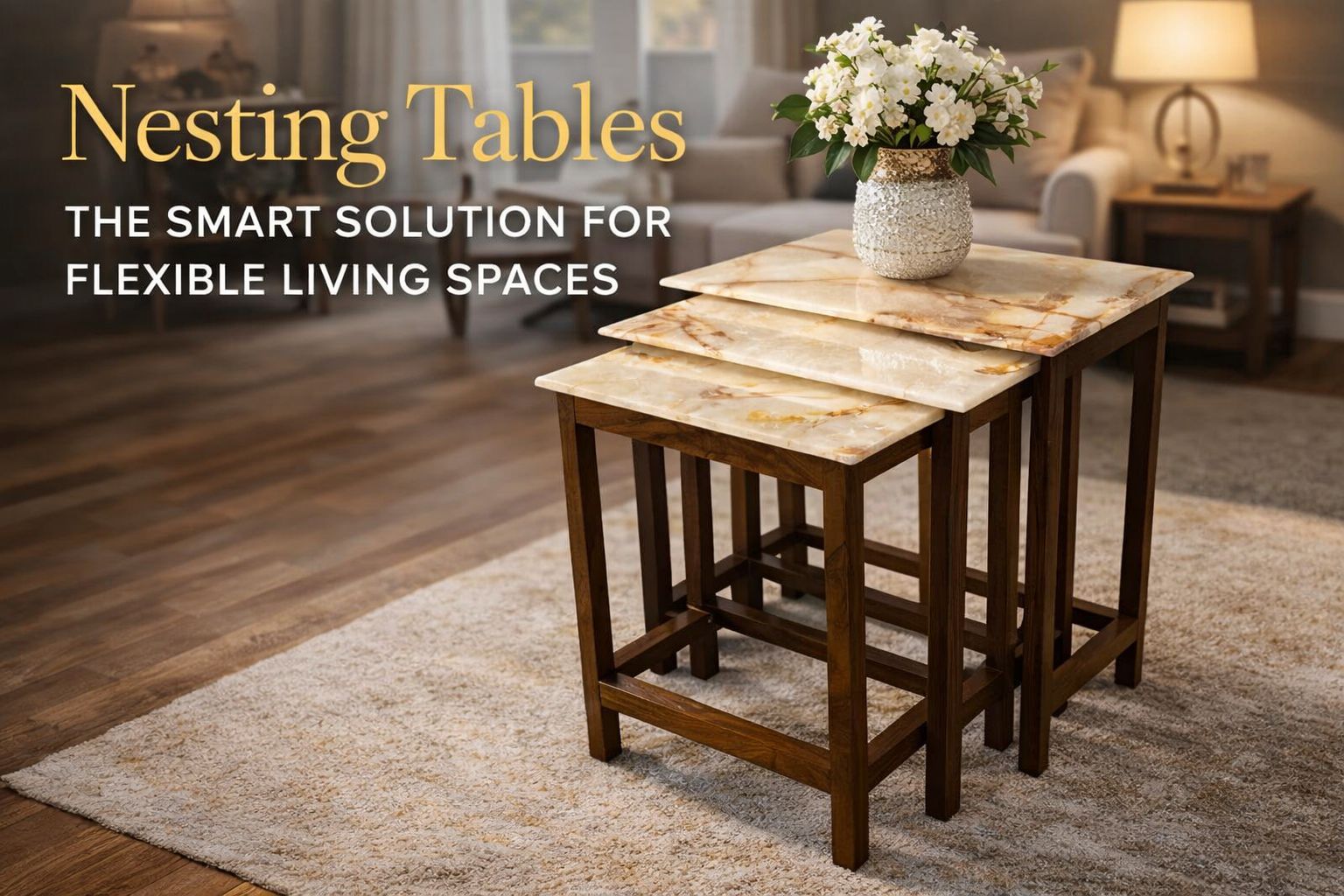
Nesting tables consist of two or three tables that fit together when stacked. The largest table serves as the primary surface, while smaller tables slide beneath it in a graduated arrangement. Each table maintains identical styling but varies in height and surface area, creating a cohesive aesthetic when displayed together or separately.
The design principle behind nesting tables originated in 18th-century England. Craftsmen developed these space-saving sets for aristocratic homes where entertaining required additional surfaces that could disappear when not needed. Today, this same functional elegance serves modern homes facing similar space constraints.
Solid wood nesting tables from Boston Mills feature precision joinery that allows smooth sliding and stacking. The graduated heights ensure each table clears the one above it without friction or damage. Quality construction prevents wobbling and maintains stability regardless of how the tables are arranged.
Benefits of Nesting Tables for Modern Living
Space Efficiency Without Compromise
Nesting tables occupy the footprint of a single table while providing the functionality of three. A typical set measuring 24 inches by 16 inches, when nested, expands to cover nearly 60 inches of surface area when fully deployed. This represents a 250% increase in usable space from the same storage footprint.
Small living rooms benefit tremendously from this efficiency. Rather than committing floor space to multiple side tables or occasional tables that rarely move, nesting tables provide surface area on demand. The flexibility allows homeowners to maintain open floor plans while still having adequate surfaces for entertaining.
Versatility in Function and Placement
Nesting tables serve multiple purposes throughout your home. The largest table functions as a permanent end table beside your sofa. The medium table becomes a drink station during parties. The smallest table transforms into a laptop stand or reading surface wherever needed.
This multi-purpose nature significantly extends the value proposition. Instead of purchasing separate furniture pieces for each function, a single nesting table set handles numerous tasks. Boston Mills customers frequently report using their nesting tables in ways they never anticipated, from plant stands to bedside tables to remote workstations.
Design Cohesion and Visual Appeal
Matching furniture sets create visual harmony in living spaces. Nesting tables automatically provide this cohesion since all pieces share identical materials, finishes, and design elements. When separated around a room, they establish a subtle visual rhythm that connects different areas.
Solid rosewood nesting tables from Boston Mills showcase consistent grain patterns across all three surfaces. The French polish finish applied to each piece ensures uniform sheen and protection. This attention to detail across the entire set demonstrates the craftsmanship that distinguishes handcrafted furniture from mass-produced alternatives.
Choosing the Right Nesting Tables for Your Space
Size Considerations and Proportions
Selecting appropriately sized nesting tables requires measuring your available space and existing furniture. The largest table should relate proportionally to your sofa or primary seating. A general guideline suggests the table height should match the arm height of adjacent seating, typically between 22 and 26 inches.
Consider the fully nested dimensions when planning placement. The stacked set needs clearance on at least one side for extracting the smaller tables. Account for traffic patterns and ensure that, when deployed, the tables do not obstruct movement through the room.
Material Selection and Quality Indicators
Solid wood construction provides superior durability compared to veneer or engineered wood alternatives. Hardwoods like rosewood, teak, and walnut withstand decades of daily use without showing significant wear. The density of these premium woods also adds stability, preventing lighter tables from tipping when used independently.
Examine the joinery connecting legs to tabletops. Mortise-and-tenon joints or dovetail construction indicate quality craftsmanship. Avoid tables connected solely with screws or dowels, as these joints loosen over time, especially in pieces that move frequently, like nesting tables.
Style Matching with Existing Decor
Nesting tables should complement your existing furniture without demanding attention. For contemporary interiors, clean-lined designs with minimal ornamentation work best. Traditional spaces accommodate more decorative elements, such as turned legs or carved aprons.
Wood tone coordination matters significantly. Warm-toned rosewood pairs naturally with earthy color palettes and warm lighting. Cooler woods like walnut pair well with modern interiors featuring gray, blue, or green accents. Boston Mills offers a variety of wood options to ensure compatibility with diverse design schemes.
Styling and Arranging Nesting Tables
The beauty of nesting tables lies in their flexibility of arrangement. When not entertaining, keep them nested beside your sofa as a single sculptural unit. The graduated heights create visual interest even when the tables serve no immediate function.
During gatherings, position tables strategically near seating clusters. Place one beside a reading chair for guests who want a surface for their drink. Position another near the entryway as a temporary landing spot. The third remains available whenever needed during the event.
Some homeowners permanently separate their nesting tables across different rooms. One serves the living room, another the bedroom, and the third a home office. This approach maximizes utility while maintaining the option to reunite the set when desired.
Care and Maintenance for Longevity
Solid-wood nesting tables require simple maintenance to preserve their beauty. Dust regularly with a soft, lint-free cloth to prevent particle buildup that can scratch surfaces during stacking and unstacking. Avoid silicone-based polishes, as they leave surfaces slippery and attract dust.
Apply quality furniture wax twice annually to maintain the protective finish. Work the wax into the wood along the grain, then buff to a soft sheen. This treatment nourishes the wood while providing a barrier against moisture and minor scratches.
When stacking the tables, lift rather than slide them to prevent finish damage. Felt pads on the bottom of each table protect both the tables and your flooring. Replace worn pads immediately to prevent scratching.
Frequently Asked Questions About Nesting Tables
Do nesting tables work in small apartments?
Yes, nesting tables work exceptionally well in small apartments. Their space-saving design provides multiple surfaces when needed while occupying minimal floor space when stored. A quality set gives you three tables in the footprint of one, making them ideal for compact living situations where every square foot matters.
What materials are best for nesting tables?
Solid hardwoods like rosewood, teak, walnut, and oak provide the best combination of durability, beauty, and stability for nesting tables. These dense woods withstand frequent handling without damage and develop attractive patina over time. Avoid particleboard or MDF options that cannot handle the repeated stacking and unstacking that nesting tables experience.
How do I prevent scratches when stacking nesting tables?
Prevent scratches by lifting tables rather than sliding them during stacking. Apply felt pads to the bottom of each table leg. Keep surfaces clean and free of debris that could scratch during contact. Regular waxing creates a protective barrier that minimizes surface damage from normal use.
Can nesting tables support heavy items?
Quality, solid-wood nesting tables can support substantial weight when properly constructed. Handcrafted tables with mortise-and-tenon joinery hold table lamps, stacks of books, and decorative objects without concern. The smallest table in a set typically supports 15 to 20 pounds safely, while larger tables handle proportionally more weight.
How do nesting tables compare to traditional end tables?
Nesting tables offer greater flexibility than traditional end tables. While a standard end table provides one fixed surface, nesting tables provide two or three surfaces that deploy as needed. Traditional end tables suit spaces with consistent furniture arrangements, while nesting tables excel in dynamic environments where surface needs change frequently.
Are nesting tables suitable for formal living rooms?
Nesting tables suit formal living rooms when selected in appropriate materials and styles. Handcrafted solid-wood sets with refined finishes, such as French polish, present elegantly in formal settings. The key lies in choosing designs with proportions and details that complement your existing formal furniture.
Investing in Flexible Living
Nesting tables represent thoughtful furniture design that respects modern living constraints. Boston Mills handcrafted nesting tables combine this practical functionality with the enduring beauty of solid wood construction. The result serves your daily needs while adapting effortlessly to changing circumstances.
Consider how your living space functions throughout different occasions. If you frequently transition between quiet evenings and social gatherings, nesting tables provide the flexibility to accommodate both. The investment in quality craftsmanship ensures these versatile pieces serve your home for generations.