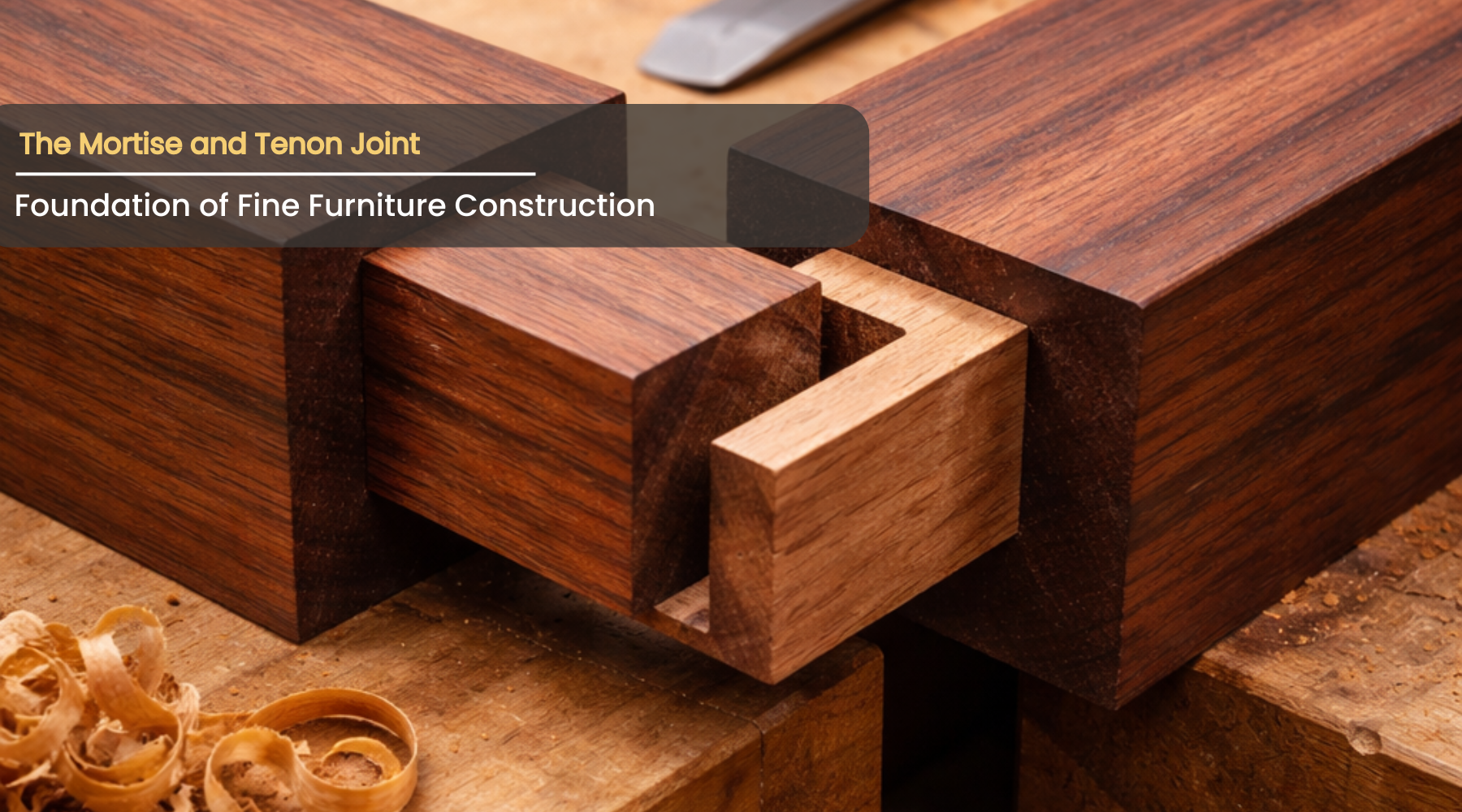
The Mortise and Tenon Joint: Foundation of Fine Furniture Construction
The mortise and tenon joint represents furniture making's most fundamental and enduring joinery method, connecting wood components with strength that has proven itself across millennia. From ancient Egyptian furniture through contemporary fine woodworking, this joint provides reliable structural connections resisting the forces furniture experiences during use. Understanding mortise and tenon construction reveals the craftsmanship distinguishing quality furniture.
The joint's basic concept is elegantly simple: a projecting tenon fits precisely into a corresponding mortise cavity, creating mechanical connection supplemented by adhesive. This simplicity belies the precision required for successful execution and the engineering sophistication enabling the joint to handle complex stress patterns. The mortise and tenon's success across cultures and centuries testifies to its fundamental effectiveness.
This guide examines mortise and tenon joinery comprehensively, from basic mechanics through variations, applications, and quality indicators. Whether evaluating furniture construction or appreciating traditional craftsmanship, understanding this essential joint enables informed appreciation of furniture engineering excellence.
Understanding the Basic Joint
The mortise and tenon joint consists of two complementary components precisely fitted together. Understanding how these parts work mechanically reveals why this joint provides such reliable furniture connections.
The Mortise
A mortise is a cavity, typically rectangular, cut into one wooden component to receive the tenon. Mortise depth usually ranges from two-thirds to completely through the stock thickness. The cavity walls must be precisely flat and perpendicular to ensure proper tenon seating and maximum glue surface contact.
Mortise dimensions relate proportionally to stock size. Width typically measures approximately one-third of stock thickness, providing adequate strength without weakening surrounding material excessively. Length accommodates the corresponding tenon with allowance for glue and potential movement.
Mortise cutting requires removing material from within bounded space—fundamentally different from surface cutting operations. Traditional hand methods use mortise chisels and mallets. Contemporary methods employ mortising machines or routers. Regardless of method, accuracy determines joint quality.
The Tenon
A tenon is a projection extending from a component end, sized to fit precisely into the corresponding mortise. Tenon thickness matches mortise width while tenon width and length conform to mortise dimensions. The tenon typically measures slightly less than stock width, creating shoulders on one or more sides.
Tenon shoulders bear against the mortised piece, preventing the joint from being pulled through and providing lateral strength. Four-shoulder tenons with shoulders on all sides provide maximum strength and precision. Two-shoulder tenons with shoulders only on broad faces suit some applications requiring simpler construction.
Tenon length depends on mortise depth and desired strength. Longer tenons increase glue surface area and mechanical strength but require correspondingly deep mortises. Typical tenons extend two-thirds through mortised components for blind joints or completely through for through tenons.
How the Joint Works
Mortise and tenon joints resist forces through multiple mechanisms. The mechanical fit resists withdrawal and rotation. Tenon shoulders bear against mortised components preventing racking. Glue adhesion across the substantial surface area provides additional strength and rigidity.
The joint excels at resisting tension pulling components apart and lateral forces attempting to rotate them. This resistance suits furniture stress patterns from sitting, leaning, and moving furniture. The massive glue surface area of properly fitted joints exceeds wood strength when executed correctly.
Proper proportions enable mortise and tenon joints to develop full wood strength. Undersized tenons fail before wood fails. Oversized tenons weaken mortised components through excessive material removal. Traditional proportional rules developed over centuries create reliably strong joints.
Joint Variations
The basic mortise and tenon concept adapts to diverse furniture construction needs through numerous variations. Understanding these variations reveals the joint's versatility and enables recognition of appropriate applications.
Through vs Blind Mortise and Tenon
Through mortise and tenon joints feature mortises extending completely through mortised components with tenons visible on opposite sides. This approach provides maximum strength through full-depth tenons and enables wedging for mechanical locking. The visible tenon ends can create attractive design elements or remain hidden depending on furniture design.
Blind mortise and tenon joints feature mortises stopping within mortised components, concealing tenons completely. This approach suits furniture designs where visible joinery would detract aesthetically. Blind joints require precise depth control for proper tenon seating without breakthrough.
Through joints generally provide slightly greater strength due to full tenon engagement and wedging potential. Blind joints offer cleaner appearance when joinery visibility is undesirable. Selection depends on design requirements and construction preferences.
Wedged Tenons
Wedged tenons incorporate hardwood wedges driven into saw kerfs cut in tenon ends. The wedges spread tenon material, creating mechanical locks preventing joint withdrawal. This ancient technique provides remarkable strength without adhesives, enabling furniture assembly and disassembly when needed.
Through wedged tenons position wedges visible on opposite sides from shoulders. Blind wedged tenons, also called foxed wedges, drive wedges into blind mortises where mortise ends force wedge expansion. The technique requires precise execution as wedge placement cannot be verified visually.
Wedged construction appears prominently in Arts and Crafts and Japanese furniture traditions where mechanical joinery gains aesthetic and philosophical value. Contemporary furniture makers continue using wedged tenons both for strength and visual interest.
Haunched Tenons
Haunched tenons feature reduced-width sections at tenon tops, creating L-shaped profiles. The haunch fills mortise extension preventing twisting while maintaining stock width at joint tops. This variation suits frame construction where full-width tenons would remove excessive material from mortise tops.
Frame and panel construction commonly employs haunched tenons in rail-to-stile connections. The haunch maintains frame corner strength while accommodating panel grooves running through stiles. This specialized application demonstrates how tenon variations solve specific construction challenges.
Angled and Compound Joints
Angled mortise and tenon joints connect components at angles rather than perpendicular intersections. Chair leg splays and table leg angles commonly employ this variation. The angled geometry complicates layout and cutting but provides the strong joinery angled connections require.
Compound angle joints address connections where components meet at angles in multiple planes. These complex joints require sophisticated geometry understanding and careful execution. Chair arm connections to legs sometimes employ compound angles creating ergonomic positions.
Mortise and Tenon Variations Comparison
|
Variation |
Visibility |
Strength |
Common Applications |
|
Through Mortise |
Visible tenon ends |
Excellent |
Table legs, benches |
|
Blind Mortise |
Completely concealed |
Very good |
Rails, aprons, case goods |
|
Wedged Through |
Visible wedges |
Excellent+ |
Traditional, Arts & Crafts |
|
Haunched |
Concealed |
Very good |
Frame & panel, doors |
|
Angled |
Variable |
Very good |
Chair legs, splayed components |
Applications in Furniture
Mortise and tenon joints appear throughout quality furniture, connecting components that must resist substantial forces. Understanding common applications helps recognize where this joinery should appear in well-constructed pieces.
Table Construction
Table leg-to-apron connections rely heavily on mortise and tenon joinery. The joint resists the racking forces tables experience when moved or leaned upon. Mortises in legs receive tenons from aprons, creating rigid frame structures supporting table tops.
Stretchers connecting table legs employ mortise and tenon joints providing both structural function and design elements. Through mortises with visible tenons create visual interest in some traditional designs. Blind joints suit cleaner contemporary aesthetics.
Table construction demonstrates why mortise and tenon remains essential despite modern alternatives. The joint handles complex stress patterns while maintaining aesthetics and enabling repair when needed. Quality dining tables invariably feature this proven joinery.
Chair Construction
Chair frames depend on mortise and tenon more than any furniture type. Chairs experience extraordinary stress from weight, movement, and tilting. Leg-to-seat rail connections must resist these forces reliably, making mortise and tenon essential.
Back post connections to seat frames and upper rails employ mortise and tenon withstanding pulling and twisting. The joint's resistance to these stresses explains centuries of chair-making reliance on this method. Modern adhesives enhance traditional mechanical strength.
Stretchers in chair construction typically join through mortise and tenon preventing leg spreading under load. The precision fit required for chair joinery exceeds other furniture given the critical strength requirements. Quality chair construction showcases mortise and tenon excellence.
Bed Frame Construction
Bed rails connect to posts through mortise and tenon joints resisting the significant forces beds experience. The joint must handle not only static weight but dynamic forces from movement during sleep. Properly executed joints maintain tight fits through decades of nightly use.
Headboard and footboard assemblies often employ mortise and tenon connecting vertical and horizontal components. The joint creates rigid panels resisting the forces from mattress pressure and user contact. Traditional bed construction relies almost exclusively on this proven method.
Case Furniture
Case furniture including dressers, cabinets, and bookcases uses mortise and tenon in frame construction. Face frames joining case fronts employ this joinery for strength and precision. The joints maintain tight fits preventing gaps that would compromise appearance.
Door frames for case goods typically feature haunched mortise and tenon at corners. The joinery resists door stresses while accommodating panel grooves. This specialized application demonstrates how traditional joints solve contemporary construction needs.
Execution Methods
Mortise and tenon joints can be created through hand methods, machine methods, or combinations of both. Understanding execution approaches reveals the skill and precision quality joinery requires.
Hand-Cut Joinery
Hand-cut mortise and tenon demonstrates traditional woodworking at its finest. Mortise chisels remove cavity material through patient work requiring sharp tools and practiced technique. Tenons emerge from careful sawing and paring to precise dimensions.
Hand-cut joints enable customization impossible with machine methods. Angled, compound, and irregular joints accommodate design requirements without specialized machinery. The process demands significant skill and time but produces joints precisely suited to specific applications.
Quality hand-cut joinery shows crisp edges, flat surfaces, and precise fits. Gaps indicate imprecise work while tight, even contact across entire surfaces demonstrates skill. Hand work remains viable for custom furniture and repairs where machine setup proves impractical.
Machine Methods
Dedicated mortising machines create accurate mortises efficiently through hollow chisel or slot mortisers. These specialized tools remove cavity material quickly while maintaining precision. Production furniture relies heavily on machine mortising for consistency and economy.
Tenons emerge from table saws, router tables, or specialized tenoning machines. Multiple setups enable shoulder cuts and cheek cuts creating precise tenon dimensions. Machine methods produce consistent results essential for production while enabling one-person operations.
The choice between hand and machine methods depends on production scale, available equipment, and desired aesthetic. Both approaches produce excellent joints when executed properly. Modern furniture makers often combine methods using machine efficiency where appropriate while hand-fitting for precision.
Fit and Finish
Proper fit defines mortise and tenon quality regardless of execution method. Joints should require firm hand pressure or light mallet tapping for assembly. Too-tight joints may split mortises during assembly while loose joints compromise strength and create visible gaps.
Glue application techniques affect joint strength significantly. Proper glue quantity fills gaps without excessive squeeze-out while ensuring complete surface coverage. Insufficient glue starves joints while excess creates messy cleanup and potentially weakens joints.
Final shoulder-to-face contact completes successful joints. Gaps between shoulders and mortised components indicate dimensional errors or assembly problems. Quality joints show full shoulder contact around entire perimeters.
Identifying Quality Mortise and Tenon Work
Recognizing quality mortise and tenon joinery helps evaluate furniture construction. While much joinery remains hidden, observable indicators reveal construction commitment and skill level.
Visual Indicators
Through tenons visible on furniture exteriors should show tight fits without gaps around perimeters. Consistent reveals around visible tenons indicate precision while variations suggest careless work. End grain should appear clean without tearout or splintering.
Shoulder lines at joint intersections should appear crisp and continuous without gaps. Visible gaps indicate poor fit or assembly problems. Quality work maintains tight shoulder contact even under finish layers.
Examine joints at stress points including chair leg-to-rail connections and table leg-to-apron intersections. These critical areas reveal construction quality most clearly. Look for tight fits, absence of mechanical fasteners, and proper proportions.
Structural Testing
Gently attempt to rack furniture frames testing joint integrity. Quality mortise and tenon joints resist movement firmly without creaking or looseness. Any play indicates joint failure or inadequate initial construction.
Check chair rigidity by applying gentle diagonal pressure across seat frames. Solid joints maintain frame geometry without deflection. Flexibility or clicking sounds indicate failing joints requiring repair.
Examine furniture during use rather than static display. Joints reveal their quality through functional stress. Pieces maintaining tight joints through years of regular use demonstrate excellent initial construction and appropriate wood selection.
Asking Informed Questions
When purchasing furniture, inquire specifically about joinery methods at critical connections. Quality makers proudly explain their construction while vague responses may indicate inferior methods. Ask about mortise and tenon dimensions, whether joints are blind or through, and execution methods.
Request to see joint examples if possible. Some makers maintain cutaway samples demonstrating internal construction. These samples reveal commitment to quality and provide concrete evidence of construction claims.
Are mortise and tenon joints stronger than other joinery methods?
Yes, properly executed mortise and tenon joints rank among the strongest woodworking joints for furniture construction. The joint develops full wood strength when proportioned correctly, with failure occurring in surrounding wood rather than the joint itself. The substantial glue surface area and mechanical fit create connections exceeding most alternatives. Dovetail joints provide comparable or superior strength in specific applications like drawer construction. Dowel joints, pocket screws, and other modern alternatives typically provide less strength than mortise and tenon. The joint's strength explains its continued dominance in quality furniture despite simpler modern alternatives. However, poorly executed mortise and tenon joints can fail, so proper proportions and precision matter critically.
What makes mortise and tenon joints so durable?
Mortise and tenon joint durability results from multiple complementary strengths. The mechanical fit resists withdrawal through the tenon's seated position within the mortise. Shoulders bearing against mortised components prevent racking and rotation. The substantial glue surface area—often exceeding wood strength itself—creates adhesive bonds that last decades. Long grain-to-long grain gluing provides maximum adhesive strength as wood fibers bond directly. The joint geometry distributes stress across large areas rather than concentrating it at points. Proper wood selection using stable, strong species enhances durability further. These factors combine creating joints that commonly outlast furniture service lives, remaining tight through generations of daily use when properly executed.
Where should buyers expect mortise and tenon joints in quality furniture?
Quality furniture employs mortise and tenon joints at nearly all critical structural connections. Expect this joinery in dining table leg-to-apron connections and any stretchers. Chair construction should feature mortise and tenon at all leg-to-rail connections, back posts to seat frames, and stretcher connections. Bed frames require mortise and tenon joining rails to posts. Case furniture uses this joinery in face frame construction and door assemblies. Desk and office furniture employ mortise and tenon in leg assemblies and structural frames. Any furniture experiencing significant stress should demonstrate this proven joinery. Absence of mortise and tenon at these critical points may indicate cost-focused construction substituting inferior methods.
How do mortise and tenon joints compare to dowel joints?
Mortise and tenon joints significantly exceed dowel joints in strength, longevity, and precision. Mortise and tenon provides much larger glue surface area distributed across broad tenon faces rather than dowel circumferences. Tenon shoulders prevent racking while dowels offer no comparable feature. The mechanical fit of properly sized tenons creates stronger connections than round dowels. Mortise and tenon joints maintain tightness through decades while dowel joints may loosen over time. However, dowel joints require simpler tooling and less skilled execution, explaining their popularity in production furniture. Quality custom and handcrafted furniture uses mortise and tenon at stress points, reserving dowels for secondary connections if used at all. The strength difference justifies mortise and tenon's traditional dominance.
How can furniture owners identify mortise and tenon construction?
Identify mortise and tenon construction through systematic examination. First, look for visible through tenons appearing as rectangular projections on opposite sides from shoulders. Second, examine joint corners for shoulder lines indicating blind tenons. Third, check underneath tables and chairs where joint evidence may be visible despite exterior concealment. Fourth, look for wedges indicating wedged through tenons. Fifth, examine any exposed joinery on furniture backs or undersides. Sixth, inquire directly with sellers about specific joinery methods. Seventh, request documentation or cutaway samples demonstrating construction. Quality furniture makers willingly explain their joinery while sellers of inferior furniture may provide vague responses. These examination methods reveal construction quality before purchase.
Can mortise and tenon joints be repaired if they fail?
Yes, mortise and tenon joints can often be repaired successfully, though the process requires skill and appropriate execution. Failed joints typically result from glue failure rather than mechanical damage, enabling repair through disassembly, cleaning, and re-gluing. The process involves carefully separating components without damaging mortise or tenon surfaces, removing old adhesive completely, and re-gluing with proper clamping. Damaged tenons may require rebuilding through splicing new material. Enlarged mortises may need shimming to restore proper fit. Professional furniture restorers regularly repair failed mortise and tenon joints in antique and valuable furniture. The joint's mechanical integrity enables repair that mechanical fasteners often preclude. However, prevention through proper initial construction and appropriate use proves far easier than repair.
How can buyers evaluate mortise and tenon joint quality?
Evaluate mortise and tenon quality through observation and physical testing. First, examine visible through tenons for tight fits without gaps around perimeters. Second, check shoulder lines for continuous contact without visible gaps. Third, look for appropriate proportions with tenon thickness approximately one-third of stock thickness. Fourth, test structural rigidity by gently attempting to rack frames—quality joints resist movement firmly. Fifth, examine end grain quality on visible tenons looking for clean surfaces without tearout. Sixth, ask makers about specific dimensions and execution methods. Seventh, compare weight and feel to similar pieces, as quality joinery requires substantial material. These evaluation methods reveal construction quality enabling informed purchasing decisions about furniture investments.
The Timeless Standard
The mortise and tenon joint remains furniture construction's gold standard after thousands of years of continuous use. This endurance testifies to the joint's fundamental excellence in addressing furniture engineering challenges. Understanding this essential joinery reveals the craftsmanship and engineering sophistication quality furniture requires.
Modern alternatives exist, but none match mortise and tenon's combination of strength, repairability, and longevity at critical furniture connections. Quality furniture continues relying on this proven method because it works, consistently, reliably, and beautifully. The joint connects past craftsmanship traditions to contemporary fine furniture.
Boston Mills employs traditional mortise and tenon joinery throughout our furniture, particularly at critical stress points requiring maximum strength. Our craftspeople execute these joints with the precision and attention centuries of woodworking tradition demand. The strength and permanence of proper joinery ensures our furniture serving your family for generations.