
Rosewood vs Mango Wood Furniture: Which Hardwood Fits Your Home and Budget?
Rosewood (genus Dalbergia) is a dense, oil-rich hardwood with deep reddish-brown to purple-brown color, dramatic grain, and a Janka hardness near 2,440 lbf, which ranks it among the hardest furniture timbers made. Mango wood (Mangifera indica) is a lighter, sustainable hardwood with pale golden-brown to greenish-brown color, a Janka rating around 1,070 lbf, and a reputation as an affordable, eco-friendly choice harvested from mango trees after their fruiting years. Both are genuine hardwoods. Both make handsome furniture. But they sit at opposite ends of the price, density, and prestige scale, and choosing between them comes down to budget, durability needs, and how long you want the piece to last.
Buyers weigh these two woods when deciding between heirloom investment and practical value. Rosewood is the luxury timber: harder, heavier, more dramatic, and built to last generations. Mango wood is the accessible one: softer, lighter, greener, and priced for buyers who want real solid wood without the premium-hardwood cost. The differences that matter are physical and practical, including hardness, weight, grain, water and insect resistance, finishing behavior, sustainability, and price.
Named authorities shape the rosewood side of this comparison. Most Dalbergia rosewood species sit under CITES Appendix II, so legitimate rosewood furniture moves with permits and documented sourcing, and the trees can take a century to mature. Mango wood carries no such restriction; it is a by-product of mango cultivation, cut when the tree stops fruiting, which makes it one of the more sustainable furniture woods available. At Boston Mills, a Dallas workshop handcrafting solid rosewood furniture since 2014, rosewood's density and finishing demands are daily bench realities, so this guide draws on hands-on experience rather than catalog copy.
This article covers the botanical origins of each wood, the hardness and weight numbers, grain and color differences, water and insect resistance, finishing behavior, sustainability, and price, then maps which pieces suit each wood. The FAQ section answers the practical questions buyers ask when choosing between a luxury hardwood and a budget-friendly one, so you finish knowing which fits your home and your wallet.
What Is Rosewood?
Rosewood names a group of tropical hardwoods in the Dalbergia genus, part of the Fabaceae family. The species that matter for furniture include East Indian rosewood (Dalbergia latifolia), Brazilian rosewood (Dalbergia nigra), and Honduran rosewood (Dalbergia stevensonii). The name comes from the rose-like scent the freshly cut wood releases.
Color runs from warm reddish-brown through chocolate to deep purple-brown, almost always crossed by dark, dramatic streaks that swirl and interlock. That high-contrast figure is rosewood's signature, and no two boards match. Density sits very high: East Indian rosewood measures roughly 2,440 lbf on the Janka scale and Brazilian rosewood around 2,550 lbf, so the wood resists dents, scratches, and daily wear better than almost any alternative, and it feels heavy in the hand and planted in a room.
Rosewood carries natural oils that give it a smooth, waxy surface and superb polishing behavior. It takes French polish to a mirror depth no other furniture timber reaches. Makers use it for statement dining tables, carved cabinets, fine seating, and musical instruments, where density doubles as tonal quality. Most species are CITES-listed, so legal supply is limited and documented.
What Is Mango Wood?
Mango wood comes from the Mangifera indica tree, the same tree that produces mangoes, native to South Asia and now grown across tropical regions. Its sustainability story is central to its appeal: mango trees are harvested for timber only after they stop bearing fruit, usually after several productive decades, so the wood is a by-product of fruit farming rather than a reason to clear forest. That makes mango one of the more eco-friendly furniture woods on the market.
Color ranges from pale golden-brown to light brown, sometimes with greenish or darker streaks, and the grain is usually straight with an occasional wave and a slightly coarse texture. Mango trees grow tall and wide, up to around 30 meters, so makers can cut sizable boards. Janka hardness lands around 1,070 lbf, softer than rosewood, which makes mango easy to cut, shape, and carve into decorative designs.
Mango wood is strong and reasonably durable, and it has a useful trait: good natural resistance to water. Its main vulnerability is insects. Freshly cut mango lumber can harbor eggs that hatch and damage the wood later, so it must be treated with appropriate insecticides before it is worked, and it is more prone to insect attack and rot than rosewood if left untreated. Properly treated and finished, mango wood serves well for affordable, characterful furniture, and its lighter weight makes pieces easy to move.
Hardness and Weight: The Janka Numbers
Density is the sharpest difference between these woods. Rosewood rates roughly 2,440 lbf (East Indian) to 2,550 lbf (Brazilian) on the Janka scale, while mango wood measures around 1,070 lbf, well under half of rosewood's hardness.
That gap shows up in daily use. Rosewood resists dents from dropped objects, scratches from pet claws, and the surface wear of ordinary life far better than mango. A rosewood dining table takes decades of contact and keeps its surface intact. Mango wood, being softer, is more prone to scratches and dents, so it suits areas with lighter use or buyers who accept some patina as character.
Weight follows density. Rosewood is heavy to the point of feeling planted, part of its substantial, heirloom presence. Mango wood is noticeably lighter, which is a genuine practical benefit for anyone who rearranges furniture or moves often. If maximum hardness and a lifetime of dent resistance matter most, rosewood leads decisively. If a lighter, workable, budget-friendly wood suits the room, mango wood earns its place.
Color and Grain: Bold Luxury Versus Light Warmth
The visual gap is easy to see and often guides the choice.
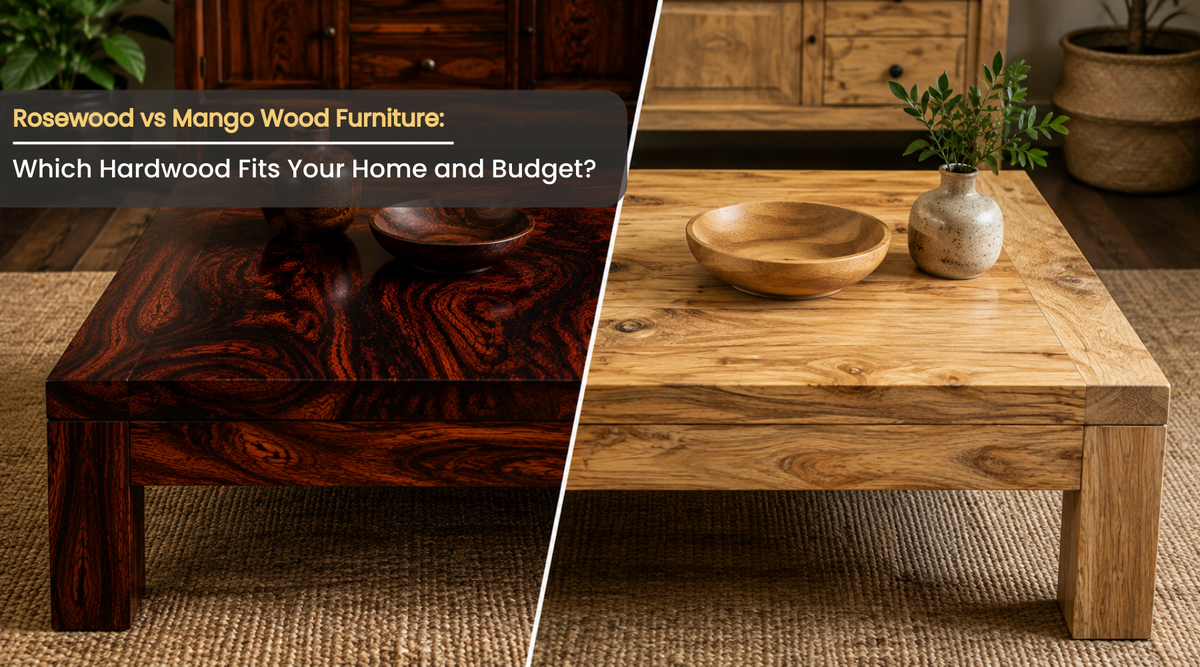
Rosewood reads bold and luxurious. Deep reddish-brown to purple-brown fields, dark ribbon streaks, and interlocked figure that shifts under light. It looks painted rather than grown. Rosewood suits rooms where the furniture is meant to be the focal point: a statement table, a carved cabinet, a headboard that anchors the bedroom.
Mango wood reads light and casual. Pale golden-brown to light brown, straight grain with occasional darker or greenish streaks, and a coarser texture that gives it a relaxed, natural character. Because mango cuts and shapes easily, makers often carve decorative detail into it, so mango furniture frequently shows attractive patterning at an accessible price. It suits casual, contemporary, and boho interiors.
Grain sums the divide. Rosewood is dark, complex, and dramatic. Mango is lighter, straighter, and warmer, with a handcrafted feel. One wood signals luxury. The other brings friendly, everyday warmth.
Water and Insect Resistance
The two woods swap advantages here, and it matters for placement.
Mango wood has good natural water resistance, better than many affordable hardwoods, which lets it tolerate everyday humidity reasonably well. Its weakness is insects. Untreated mango is more prone to insect attack and rot than rosewood, and fresh lumber can carry eggs that hatch later, so it must be treated with insecticide before working and kept properly finished afterward. With treatment and a good finish, mango holds up well indoors.
Rosewood carries high natural oil content that gives it strong resistance to decay and insects, and its density makes it exceptionally durable against physical wear. It prefers stable indoor humidity and can develop fine surface checks if it swings between very dry and very damp conditions, so like most fine hardwoods it should avoid direct radiator heat and harsh sun. Rosewood also tends to deteriorate under prolonged direct sunlight, so it belongs away from unshaded windows.
The verdict: mango resists water well but needs insect treatment, while rosewood resists insects and decay naturally through its oils but prefers stable humidity and shade. Both perform well indoors when placed thoughtfully.
Finishing: How Each Wood Takes a Polish
Finish behavior tracks oil content and density, and the woods differ sharply.
Rosewood is oily and dense, so it resists oil finishes, because the wood is already saturated with its own oils. Applied oil dries unevenly. The right treatment is lacquer or, for the deepest result, French polish built up in many thin hand-rubbed shellac layers. Boston Mills applies hand-rubbed French polish to rosewood to expose the grain depth, producing a mirror finish that cannot be sprayed. Rosewood benefits from periodic care: dust it regularly, keep it out of direct sun, and refresh the finish over the years.
Mango wood is easy to finish. It looks good straight off the first cut, and standard practice is sanding and applying a finish, stain, or paint, all of which mango accepts readily. Its lighter, more open grain takes color well, so mango can be stained darker to mimic pricier woods or finished natural to show its warm tone. Unfinished mango benefits from occasional oiling or waxing to protect the surface.
In short: rosewood demands a finish that respects its oils and rewards the effort with unmatched depth, while mango accepts stain, paint, and finish easily, which is part of why it is such a versatile, affordable furniture wood.
Sustainability and Price
This is where the woods separate most, and it drives many decisions.
Mango wood is highly sustainable and affordable. Because it is harvested only after mango trees finish their fruiting years, it is a renewable by-product of fruit farming rather than a driver of deforestation, and the trees grow fast. That abundance keeps mango furniture among the more budget-friendly solid wood options, and its green credentials appeal to eco-conscious buyers who want real wood without a heavy environmental cost.
Rosewood is the opposite: scarce, restricted, and premium. Most Dalbergia species used for furniture sit under CITES Appendix II, so legal furniture requires permits and documented sourcing, and slow growth over decades or longer keeps legal supply limited. Prices sit at the top of the hardwood range. Boston Mills imports rosewood under permit and publishes a Rosewood Compliance note so buyers can verify the chain of custody.
For the budget-minded or sustainability-focused buyer, mango wood is the clear practical choice, offering solid wood character at an accessible price with strong green credentials. For the buyer seeking maximum density, dramatic figure, and heirloom investment, rosewood justifies its higher cost, provided the sourcing is documented and transparent.
Which Furniture Pieces Suit Each Wood
The woods' properties point to different uses and budgets.
Choose mango wood for: casual dining tables, sideboards, TV units, shelving, accent pieces, and contemporary or boho furniture where affordability, sustainability, light weight, and warm character matter most. Mango is the practical pick for furnishing a home on a sensible budget without dropping to particleboard or veneer.
Choose rosewood for: statement dining tables, carved cabinets and credenzas, headboards, accent seating, and desks meant to be the visual anchor of a formal room and to hold heirloom value across generations. In a climate-controlled interior, rosewood's density, dramatic figure, and French-polished depth make it the investment choice.
Many homes use both across different rooms, letting rosewood anchor the formal spaces while mango furnishes casual and secondary rooms affordably. The two woods cover different budgets and roles rather than competing head to head.
How to Buy With Confidence
Buying either wood well comes down to construction, treatment, and sourcing. For mango, confirm the lumber was properly treated against insects and that the piece is solid wood with a protective finish. For rosewood, ask which Dalbergia species and request CITES documentation and a compliance statement. Solid wood construction, cut from continuous timber rather than veneer over particleboard, is what lets a piece be sanded and refinished for decades, so ask how it is built.
At Boston Mills, every rosewood piece is handcrafted in Dallas, cut from documented solid timber, finished with hand-rubbed French polish, and accented with custom brass hardware. White-glove delivery and assembly are free on orders over $3,500. To ask about a specific piece, a custom order, or sourcing documentation, call (214) 666-6647 or email info@bostonmills.net.
Is rosewood harder than mango wood?
Yes, by a wide margin. Rosewood rates roughly 2,440 lbf (East Indian) to 2,550 lbf (Brazilian) on the Janka scale, while mango wood measures around 1,070 lbf. Rosewood resists dents and scratches far better and feels much heavier, while mango is softer, lighter, and more prone to surface marks under heavy use.
Which is better, rosewood or mango wood furniture?
It depends on budget and purpose. Rosewood is better for maximum hardness, dramatic figure, and heirloom investment in formal rooms, but it costs far more. Mango wood is better for affordable, sustainable, lightweight furniture with warm character. Choose rosewood for a lasting centerpiece and mango for practical, budget-friendly pieces.
Why is mango wood so much cheaper than rosewood?
Mango wood is cheaper because it is abundant and fast growing, harvested as a by-product of mango fruit farming after trees stop bearing fruit. Rosewood is scarce, slow growing over decades or longer, and mostly CITES-restricted, so legal supply is limited and requires documented sourcing, which pushes rosewood to the top of the hardwood price range.
Is mango wood sustainable?
Yes, mango wood is one of the more sustainable furniture woods. It is harvested only after mango trees finish their productive fruiting years, so it is a renewable by-product of fruit cultivation rather than a cause of deforestation, and the trees grow quickly. That makes it an appealing eco-friendly choice for buyers who want genuine solid wood.
Does mango wood need special treatment?
Yes. Freshly cut mango lumber can carry insect eggs that hatch and damage the wood later, so it must be treated with appropriate insecticide before it is worked. Mango is more prone to insect attack and rot than rosewood if left untreated, so a proper protective finish and occasional maintenance keep mango furniture sound.
Which woods count as rosewood?
Rosewood covers several Dalbergia species, chiefly East Indian rosewood (Dalbergia latifolia), Brazilian rosewood (Dalbergia nigra), and Honduran rosewood (Dalbergia stevensonii). All share high density, natural oils, and dramatic interlocked grain, though color ranges from reddish-brown to deep purple-brown across the species, and most are protected under CITES.
How can I tell rosewood from mango wood?
Compare color, weight, and grain. Rosewood shows deep reddish-brown to purple-brown color with dark, high-contrast interlocked streaks and feels heavy and dense. Mango wood shows pale golden-brown to light brown with straighter grain, occasional greenish streaks, a coarser texture, and a noticeably lighter weight. Rosewood also polishes to a far deeper lustre.
Is mango wood durable enough for a dining table?
Yes, with realistic expectations. Mango wood is strong and reasonably durable, and properly treated and finished it serves well as a dining table, especially in casual settings. Being softer than rosewood, it will show scratches and dents sooner under heavy use, so it suits buyers who value affordability and accept some patina over time.
Does rosewood or mango wood resist water better?
Mango wood has better natural water resistance and tolerates everyday humidity well. Rosewood resists insects and decay through its natural oils but prefers stable indoor humidity and can check if conditions swing sharply. Neither is an outdoor wood, but for damp-prone indoor spots mango handles moisture slightly better, while rosewood better resists wear.
Can I mix rosewood and mango wood furniture in one home?
Yes. Their contrast can work well when styling is deliberate. Use rosewood as the dramatic focal point in formal rooms and mango for casual, warm pieces in secondary spaces, keeping finishes and design language coherent. The tonal difference reads as an intentional layering of luxury and relaxed character rather than a clash.
Does mango wood take stain well?
Yes. Mango wood accepts stain, paint, and finishes readily thanks to its lighter, more open grain, so it can be finished dark to resemble pricier woods or left natural to show its warm tone. This versatility, plus its low cost and easy workability, is a major reason mango is popular for affordable modern furniture.
Do I need documentation to buy rosewood furniture?
Yes, you should expect it. Because most rosewood is CITES-protected, legitimate furniture moves with permits and a documented chain of custody. Ask any seller which Dalbergia species the piece uses and request sourcing paperwork. A maker who imports under permit, as Boston Mills does, can show you exactly where the timber came from.
The Bottom Line
Rosewood and mango wood sit at opposite ends of the furniture spectrum, and that is exactly what makes the choice straightforward. Rosewood (Dalbergia) brings a Janka hardness near 2,440 lbf, deep reddish-brown to purple-brown color, dramatic interlocked grain, natural insect resistance, and a density that rewards hand-rubbed French polish, which makes it the heirloom investment for formal, climate-controlled interiors and statement pieces. Mango wood (Mangifera indica) brings a softer 1,070 lbf hardness, light golden-brown color, straight warm grain, good water resistance, standout sustainability, and an accessible price, which makes it the practical choice for affordable, eco-friendly furniture.
Match the wood to your budget and intent. Choose mango wood for warm, sustainable, well-priced pieces in casual and secondary rooms, accepting that a softer wood shows some patina over time. Choose rosewood where the piece lives indoors, takes daily contact, and is meant to anchor a formal room and hold value across generations. Confirm mango is properly treated, verify rosewood sourcing, insist on solid wood construction either way, and both woods will serve your home well.
To see handcrafted solid rosewood pieces, ask about a custom project, or verify sourcing documentation, call Boston Mills at (214) 666-6647 or email info@bostonmills.net.
%20is%20a%20dense,%20oil-rich%20hardwood%20with%20deep%20reddish-brown%20to%20purple-brown%20color,%20dramatic%20grain,%20and%20a%20Janka%20hardness%20near%202,440%20lbf,%20which%20ranks%20it%20among%20the%20hardest%20furnitu...)