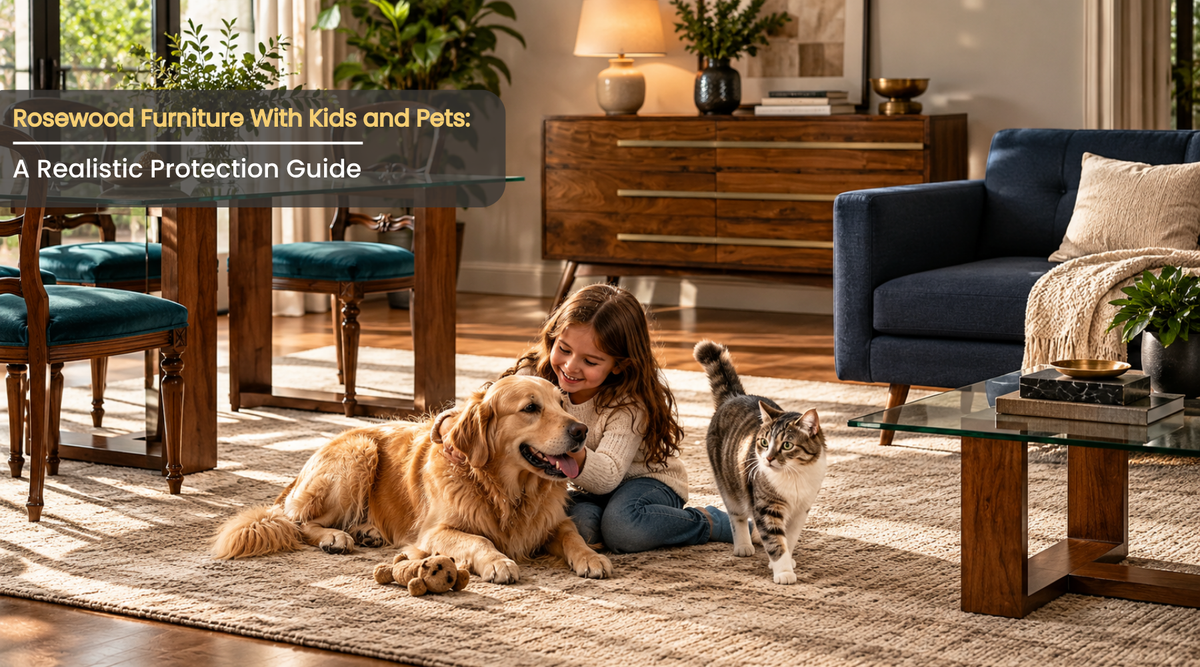
Rosewood Furniture With Kids and Pets: A Realistic Protection Guide
Rosewood measures roughly 2,000 to 3,000 lbf on the Janka scale depending on species, against 1,290 for red oak and 1,010 for black walnut. That density means a toy car dropped on a rosewood table top is very unlikely to dent the wood. It can still leave a mark, because the impact lands on the finish, not the timber. The wood is not the vulnerable part of the piece. The finish is, and understanding that difference changes how you protect furniture in a house with children and animals.
Traditional French polish is a thin shellac film built up in dozens of hand-rubbed passes. It gives rosewood its depth, and it can be repaired in a single spot rather than stripped back entirely, which is a real advantage in a family home. But shellac dissolves in alcohol. Hand sanitizer, spilled wine, perfume and nail polish remover all attack it. Water left standing turns it white. A cat's claw scores it long before it reaches the timber underneath.
So a realistic protection plan for a family home does three things: it keeps liquids off the surface, keeps claws and hard toys off the surface, and keeps the piece stable when a five-year-old decides to climb it. None of that requires wrapping furniture in plastic. It takes a small number of habits and a handful of physical barriers.
This guide covers what actually gets damaged and what does not, the three real risks in a family room, and how to protect a dining table in daily use. It then looks at how dogs and cats interact with solid hardwood, what to do in the first sixty seconds after a spill, and which cleaning products destroy shellac on contact. Finally, it covers edge and tip-over safety for toddlers, which repairs are safe to attempt at home, and how to choose pieces that survive family life from the day they arrive.
What actually gets damaged: wood or finish
Damage separates into three categories with very different consequences. Surface damage sits in the finish and stops there. Structural damage reaches the timber. Chemical damage attacks the finish everywhere at once.
Surface damage covers white water rings, alcohol blush, heat marks, fine scratches and dulled patches. All of it lives in a shellac layer measured in thousandths of an inch. A restorer can rub it back, rebuild it and blend the repair into the surrounding polish without touching the rest of the piece. Owners routinely mistake this for ruin. It rarely is.
Structural damage means a gouge through the finish into the wood, a cracked panel, a broken joint, or a delaminated veneer edge. Rosewood's density makes a gouge far harder to achieve than on oak or pine. A dropped ceramic bowl usually chips itself instead.
The third category is the one people forget: chemical damage from cleaning. Ammonia and bleach break the finish down directly, and unlike a scratch, the damage spreads across the entire surface at once. Silicone-based furniture sprays work differently but cause a worse long-term problem. They do not dissolve shellac; they sink into it and contaminate it, so when the piece eventually needs a repair, the new polish will not bond. A single scratch is fixable. A silicone-soaked tabletop often is not.
Knowing which category you are dealing with decides whether you reach for a cloth, a professional, or nothing at all. In practice, three specific risks account for most family-home damage.
The three risks that account for most damage
Liquid comes first. Alcohol dissolves shellac on contact and marks it within seconds. Water works more slowly but just as certainly: trapped under a glass or a plant pot, it pushes moisture into the film until the surface goes white. A sweating tumbler can leave a ring before the drink is finished.
Claws and hard points come second. A cat sharpening on a chair leg scores parallel lines through the finish. A toy fire engine dragged across a tabletop does the same in a straight line. Neither dents the timber; both cut the polish.
Tipping comes third, and it is the only one that endangers a person rather than a piece of furniture. Tall case goods loaded unevenly can tip when a child pulls on an open drawer or climbs a shelf. Federal stability rules in the US now cover dressers and chests of drawers, but they do not extend to every tall piece in the house. Our own recommendation is simple: any bookcase or cabinet taller than it is wide should be anchored to a stud and the heaviest items should live in the lowest drawers.
Everything else is background noise. Normal handling does nothing. Dust sitting on a surface does nothing either, though wiping it away with a dry cloth is one of the few ways a careful owner puts fine scratches into their own finish. Sunlight changes color slowly, which is a separate topic covered in the Boston Mills notes on seasonal care. The dining table sees the highest concentration of all three risks at once.
Protecting a dining table in daily family use
Dining surfaces take spills, heat and dragged objects at every meal. Four habits handle almost all of it.
- Use coasters under every glass, including water, since condensation rings mark shellac as readily as wine does.
- Place trivets under anything above 150°F, because hot dishes drive moisture into the finish and leave a white cloud.
- Choose runners over plastic-backed cloths, which trap humidity against the wood and can bloom the polish across a whole panel.
- Lift rather than drag placemats, laptops and serving boards, since grit caught underneath acts like fine sandpaper.
- Placemats deserve one caution. Rubber-backed and vinyl mats left in place for weeks can react with shellac and leave a permanent outline. Felt-backed, cork or woven mats that come off after each meal avoid the problem entirely.
Children old enough to help clear the table are old enough to learn the coaster rule, and it works better than any protective covering. Families who want an extra layer during the toddler years often use a fitted felt table pad under a cloth for daily meals and remove both for guests. That keeps the dining table fully protected without hiding it permanently.
Animals bring a different set of behaviors to the same room.
Dogs, cats and solid rosewood
Cats scratch vertical surfaces to condition their claws and mark territory. Chair legs, cabinet sides and the exposed corners of case goods are the usual targets, and the damage runs in parallel lines through the finish.
The fix is redirection rather than deterrence. A sisal post placed within three feet of the favored piece intercepts most of the behavior and soft claw caps blunt the point entirely. Caps shed as the claw grows, so expect to replace them a few at a time over a four to six week cycle. Be careful with deterrent sprays: most commercial citrus and bitter formulas are alcohol-based and alcohol is the one thing shellac cannot survive. If you use one, spray it onto a cloth draped over the piece so the deterrent never touches the polish.
Dogs cause different damage. Nails scratch horizontal surfaces when a dog jumps onto a bench or leans against a low cabinet and puppies chew table legs during teething. Trimmed nails, a rug at the base of frequently approached pieces, and a designated chew object handle most cases. Bitter deterrent sprays follow the same rule as with cats: onto a cloth wrap, never directly onto the polish.
Both species come with one more consideration. Rosewood is stable only between roughly 40 and 55 percent relative humidity, and a house that runs dry in winter will move the timber whether or not there are animals in it. A hygrometer costs very little and prevents the joint gaps and panel cracks discussed in the guide to protecting rosewood in dry and humid homes.
When something does spill, the response window is short.
The first sixty seconds after a spill
Speed decides the outcome. Most liquids sitting on shellac for a minute leave nothing behind; the same liquid at ten minutes often leaves a mark that needs professional attention. Alcohol is the exception and gets no grace period at all — spirits, wine and hand sanitizer start dissolving the film on contact.
Blot, do not wipe. Wiping spreads the liquid across a wider area and grinds any grit into the finish. Press a dry absorbent cloth straight down, lift, refold to a clean face and repeat until the surface reads dry to the touch.
Treat the categories differently once the bulk is up:
- Water and juice: dry blot, then a barely damp cloth along the grain, then dry immediately.
- Wine and spirits: dry blot first and fast, since ethanol is the most aggressive common household liquid for shellac. Once the surface is dry, leave it alone. Do not follow with water and do not rub the area to even it out.
- Milk and food: dry blot, then a cloth wrung out in plain warm water, then dry.
- Ink and marker: blot only and stop, because the solvents that lift ink also lift the finish.
- Pet accidents: blot, clean with plain water and dry thoroughly. Skip the enzyme cleaner on the wood itself — those products work by soaking the area for ten minutes or more, and prolonged wetness is exactly what marks a shellac surface.
If a white cloud appears after drying, resist the urge to attack it. Moisture trapped in the film often clears on its own over several days as it evaporates. A soft dry cloth and patience resolve more of these than any product on a supermarket shelf.
What you clean with day to day matters more than any single spill.
Cleaning products that damage rosewood
Silicone polishes cause the most long-term damage, for the reason set out earlier: they sink into the finish, cannot be removed and stop any future repair from bonding. Most supermarket furniture sprays contain them, which makes the aerosol can under the sink a bigger threat to the piece than the children in the room.
Ammonia and bleach strip shellac outright. So do all-purpose kitchen sprays, glass cleaners, and disinfecting wipes, which is a genuine hazard now that wipes live in most family kitchens. A wipe run across a rosewood sideboard removes gloss in a single pass.
Oils are the third mistake. On a French polished piece the shellac seals the timber completely, so furniture oil has nowhere to go: it sits on the surface, dries unevenly, goes blotchy and collects dust. Many products sold as lemon or teak oil also carry petroleum distillates that soften shellac on the way through. Rosewood's own high natural oil content means the wood never needed feeding in the first place. The Boston Mills care and maintenance guidance rules oils out for that reason.
The safe routine is short. Dust every week or two with a clean, soft microfiber cloth, moving along the grain, and retire the cloth once it has picked up grit rather than dragging that grit back across the polish. Clean marks with a cloth wrung out in plain warm water and dry immediately. Apply a silicone-free hard paste wax sparingly to high-traffic horizontal surfaces once or twice a year, buffed to a shine. Nothing else is needed on a French polished surface.
Cleaning handles the surface. Physical safety around small children needs separate thought.
Edges, corners and tip-over safety
Anchoring comes before anything else. Any case piece taller than it is wide should be secured to a wall stud, using the manufacturer's bracket kit where one is supplied or an equivalent anti-tip strap. Fix into the stud itself, not into plasterboard with a plug — a strap anchored in plasterboard gives way under exactly the load it was fitted to resist. Load heavy items in the lowest drawers, keep the top surface clear of anything a child would want to reach for and never let drawers be used as steps.
Corner protection is a live question through the crawling and toddling stages. Adhesive foam guards work, but the adhesive is the problem: it can lift shellac when the guard comes off and you will not discover that until removal day, so testing an offcut area first tells you very little. Clear silicone guards that grip by friction are the safer choice on a polished piece. If you use an adhesive type, accept that the corner may need a restorer's attention afterwards, and treat that as the price of the toddler years rather than a surprise.
Furniture geometry helps more than accessories. Pieces with softened edge radii, no sharp hardware at child height and a low center of gravity are simply safer in a family room. Boston Mills builds edge profiles by hand and can adjust them through the custom orders process, which is worth raising at the point of order rather than after delivery.
Glass elements deserve one line of their own. Tempered glass is safe when intact and breaks into blunt fragments rather than shards, so the concern is not injury from breakage so much as the cost and disruption of replacing a top a child has cracked with a toy. A household with active children may simply prefer a solid top piece such as the BLOC coffee table over a table with a glass component.
Even with all of this, marks accumulate over a decade. Some you can address yourself.
Repairs you can do and repairs to leave alone
Attempt these at home:
- Remove surface dust and film with a dry cloth or a barely damp one, followed by immediate drying.
- Wax a dulled area with a small quantity of hard paste wax, buffed until no residue remains.
- Wait out a white water bloom for several days before doing anything further.
- Tighten loose hardware with a correctly sized screwdriver, never a power driver.
Leave these to a restorer:
- Alcohol damage that has softened or lifted the shellac film.
- Deep scratches that show pale wood through the finish.
- Heat marks that have gone opaque white across a wide area.
- Joint separation, cracked panels, or lifted brass inlay.
The reason for the split is simple. French polish is repairable in place, but the technique involves reactivating and rebuilding shellac with a rubber and a solvent, and an untrained attempt usually enlarges the damaged zone. Boston Mills covers workmanship issues through its warranty policy and can advise on restoration for wear that falls outside it.
Choosing well at the start reduces how often any of this comes up.
Choosing family-friendly pieces from the start
Solid construction beats veneer in a house with children. A solid rosewood top can be sanded and repolished repeatedly across a lifetime; a veneered top has a face layer measured in fractions of a millimeter and cannot survive the same treatment.
Favor pieces with closed storage at child height, which keeps contents out of reach and reduces the pull-out climbing risk. Favor leather over fabric on seating, since leather wipes clean and ages rather than stains. Boston Mills offers more than 50 leather options across its seating range.
Favor matte or satin polish over high gloss during the young-children years. Both are equally durable but gloss shows every fingerprint and fine scratch while satin diffuses them.
And buy pieces you will keep. The economics of hardwood only work over decades, which is the argument the Boston Mills piece on rosewood dining table cost sets out in detail. A table bought when a child is two should still be in the family when that child furnishes a first apartment.
Is rosewood furniture practical with young children?
Yes. Rosewood is one of the hardest commercial furniture woods at roughly 2,000 to 3,000 lbf on the Janka scale, so it resists the dents and impacts that mark softer species. The finish needs protection from alcohol, standing water and heat, which coasters and trivets handle.
Will a cat ruin rosewood chair legs?
Cats damage the finish rather than the timber, and the damage is repairable. Claw marks score the shellac in parallel lines. A scratching post placed within three feet of the favored piece plus soft claw caps applied every four to six weeks stops most of the behavior.
What removes a white ring from a rosewood table?
Time removes most of them. A white bloom is moisture trapped in the shellac film, and it often clears within several days as the moisture evaporates. If it persists, a restorer can reamalgamate the finish in that spot. Household remedies involving heat or abrasives usually make it worse.
Can I use disinfecting wipes on rosewood?
No. Disinfecting wipes contain alcohol and quaternary compounds that dissolve shellac and strip gloss in a single pass. Clean rosewood with a cloth wrung out in plain warm water and dry it immediately.
Which cleaning products should never touch rosewood?
Avoid silicone polishes, ammonia, bleach, glass cleaner, all-purpose kitchen spray, disinfecting wipes, and furniture oils. Silicone builds a cloudy film that resists removal, the solvents strip shellac, and oil goes blotchy on a species that is already oily.
Do I need to anchor rosewood cabinets to the wall?
Yes for anything taller than 30 inches. Solid hardwood case goods are heavy, which makes a tip-over more dangerous rather than less. Anchor to a stud, load the heaviest items in the bottom drawers, and keep attractive objects off the top surface.
Are dog nails a problem for solid hardwood furniture?
Trimmed nails cause almost no damage. Untrimmed nails scratch the finish when a dog jumps onto a bench or leans against a low cabinet. Keep nails short, place a rug at the base of pieces the dog approaches, and give the animal an alternative surface to rest on.
Should I put a tablecloth on a rosewood dining table full time?
No. Plastic-backed and vinyl cloths trap humidity against the wood and can bloom the polish across the whole top. Use washable runners and felt-backed placemats that come off after each meal, or a fitted felt pad under a cloth during the toddler years only.
How fast do I need to clean up a spill?
Within about a minute for alcohol and roughly five for water. Ethanol dissolves shellac on contact, so wine and spirits need immediate dry blotting. Blot straight down rather than wiping, refold the cloth to a clean face, and dry the area fully.
Is a scratched rosewood piece worth repairing?
Yes, in almost every case. French polish can be rubbed back and rebuilt in the damaged area alone rather than requiring a full strip, which keeps the original surface and the value of the piece intact. Solid construction also allows sanding and refinishing that veneer cannot survive.
Living with it, not around it
Rosewood’s density puts the timber beyond most household impact, so protection in a family home is really about the shellac film on top of it. Liquids, claws and hard dragged objects mark that film. Anchoring and edge geometry protect the people rather than the piece.
Coasters, trivets, felt-backed mats and prompt dry blotting cover the dining table. Redirection, trimmed nails and stable humidity between 40 and 55 percent cover the animals. Plain water, occasional hard wax and nothing else cover routine cleaning, while alcohol damage, deep scratches and joint problems go to a restorer who can rebuild polish in place.
Choose solid over veneer, satin over gloss, leather over fabric, and closed storage at child height, and the furniture outlasts the childhood. To discuss edge profiles, finish sheen or leather options for a household with kids and pets, call (214) 666-6647 or use the Boston Mills contact page.