How Much Does a High-Quality Rosewood Dining Table Cost?
A high-quality solid rosewood dining table costs between $4,000 and $9,000 for the table alone, with most handcrafted pieces landing in the $4,500 to $7,000 range. Add a set of matching rosewood chairs and a complete dining set climbs to $10,000 to $18,000 or more. Those numbers sit well above oak, walnut, or maple, and there are concrete reasons for the gap: rosewood is the rarest furniture hardwood in commercial use, its trade is regulated under international law, and the joinery that solid construction demands takes a skilled maker days to complete by hand. This guide breaks down what drives the price, what you actually get at each tier, how rosewood compares to other woods, and how to tell whether a table is worth its tag.
What you pay for a solid rosewood dining table
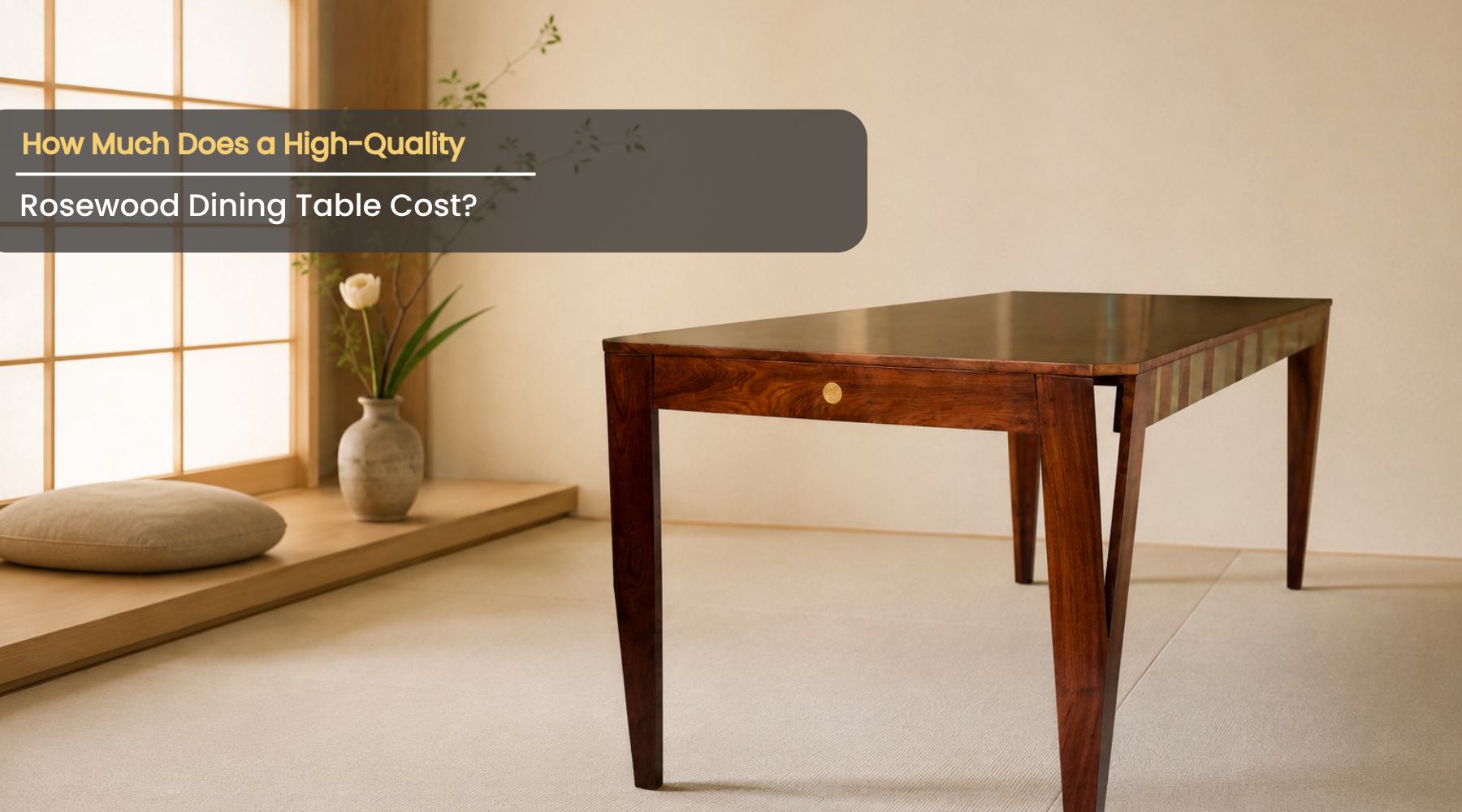
Solid rosewood dining tables start around $4,000 and run past $9,000 depending on size, base design, and detailing. A compact four-seater with a simple frame sits at the lower end. A large extendable table or a single-slab top with brass inlay reaches the top. For reference, Boston Mills sets free white glove delivery at orders over $3,500 and offers 15% off purchases above that threshold, which tells you their dining tables comfortably clear that mark on their own. Their solid rosewood coffee tables already run from $2,795 for the MIRA to $3,795 for the BLOC, and a dining table uses far more timber than a coffee table.
The general US market frames the rosewood premium clearly. A typical quality solid wood dining table runs $1,200 to $10,000, with most priced between $2,000 and $6,000. But that range covers oak, maple, and acacia. Rosewood sits at the very top of it. Where solid oak tables start around $1,500 and walnut tables start above $2,500, rosewood begins where walnut ends and climbs from there, because the raw material costs several times more per board foot.
Size moves the number as much as species does. One maker prices solid wood dining tables at roughly $850 per foot of length for a 38-inch-wide top, so each extra foot adds meaningful cost. Scale that model up to rosewood's material premium and a six-foot rosewood table easily reaches the $5,000 to $7,000 band before any inlay or custom work.
Why rosewood costs more than oak or walnut
Rosewood carries a premium that has nothing to do with marketing and everything to do with supply. Three forces stack on top of each other.
First, scarcity. Rosewood is among the rarest and most prized furniture timbers worldwide, valued for centuries in fine furniture and even in instruments. There is no fast-growing plantation substitute that matches its density and figure, so supply stays tight and prices stay high.
Second, regulation. True rosewoods in the Dalbergia genus are listed under CITES, the international convention governing trade in threatened species. Legitimate rosewood furniture moves with documentation and compliance overhead that oak and pine never face. That paperwork, sourcing diligence, and restricted supply all feed into the final price. Boston Mills publishes its rosewood compliance and sources what it calls true black rosewood specifically because the species designation is where buyers get misled.
Third, density and workability. Rosewood is dense, oily, and hard. It dulls tools faster, demands slower machining, and rewards hand-finishing. The same properties that make it resist decay and insects also make it harder and slower to build with, and that labor lands in the price.
Put those together and a rosewood table is not an oak table with a fancier name. It is a different material class with a different cost floor.
What drives the price within rosewood
Within rosewood itself, four factors decide where a table falls in the $4,000 to $9,000 range.
- Top construction. A single-slab top cut from one piece of rosewood costs more than a top built from joined boards, because it requires a larger, flawless section of rare timber. Boston Mills cuts some tops, like the ALIVE table, by hand from a single rosewood slab with a live edge.
- Size and extension. Length drives material cost directly, and any extension mechanism or added leaf raises both the timber and the engineering required.
- Base complexity. A plain four-leg frame is cheaper to build than a sculptural base. The AVA table's inverted V-leg base, inspired by cathedral arches, is more labor-intensive than a straight leg and priced accordingly.
- Detailing and mixed materials. Brass inlay, marble insets, hand-rubbed French polish, and hand-lacquered finishes each add hours. Boston Mills accents many pieces with brass inlay and white marble, both of which lift the price above a plain oiled top.
The finish matters more than buyers expect. A hand-sanded, multi-coat hand-rubbed finish that lets rosewood's golden-orange to greenish-black heartwood show through is slow work, and it is part of why a handmade rosewood table costs what it does.
The full dining set, not just the table
Set pricing surprises most first-time buyers, because chairs add up fast. Solid rosewood dining chairs are not cheap accessories. Boston Mills sells the WINTRI dining chair set of four starting around $6,560, which works out to roughly $1,600 per chair, and its chairs generally run $1,600 to $1,800 each when bought in sets.
Run the math on a complete set. A $5,500 rosewood table plus six chairs at $1,700 each adds about $10,200 in seating, bringing the set to roughly $15,000. Even a modest pairing of a $4,500 table with four chairs lands near $11,000. This is why a solid rosewood dining set is priced as a long-term investment rather than a quick refresh.
Resale data backs up these numbers. On the secondhand platform AptDeco, a Boston Mills extendable dining table with six chairs carried an estimated retail of $3,900 as a heavily discounted resale listing, and the brand-new WINTRI eight-chair set alone retails at $6,560. The new-build set price is firmly in five figures once chairs are included.
How rosewood compares to other dining table woods
Comparison with other hardwoods puts the rosewood number in context. Using a consistent five-foot table as the yardstick, the market shows a clear ladder.
- Acacia: genuine solid acacia starts around $800 to $1,000 for smaller bistro sizes, the entry point for real solid wood.
- Oak: solid oak typically starts around $1,500, with a five-foot table near $4,250 at quality makers.
- Cherry: slightly premium, with a five-foot table around $4,500.
- Walnut: higher-end, starting above $2,500, with a five-foot table near $4,800.
- Rosewood: above all of them, with a comparable five-foot table commonly $5,000 to $7,000 and rising with detailing.
So rosewood typically costs 30% to 60% more than a like-for-like walnut table, and several times the price of mass-market acacia or oak. The premium buys a denser, more decay-resistant, more visually distinctive wood that also happens to be regulated and scarce.
For comparison at the bottom of the market, flat-pack and veneer-look tables tell a different story entirely. IKEA solid and veneered dining tables run $300 to $600, and budget marketplace listings drop below $100. Those are not rosewood, and in most cases not solid hardwood either. Knowing the species and construction is what separates a $400 table from a $7,000 one.
Is a rosewood dining table worth the cost?
Worth depends on how you measure it, and the honest answer favors annual cost over sticker price. A 2025 Consumer Reports analysis found solid wood custom tables last 50 or more years, putting the annual cost of a $3,000 table at just $15 to $25 a year. Apply that logic to rosewood. A $6,000 rosewood table kept for 50 years costs around $120 a year, and rosewood's density and natural oils make that lifespan realistic rather than optimistic.
Three points support the value case. Solid rosewood is repairable, so scratches and rings sand out and refinish to match, because the wood is identical all the way through. It is durable, naturally resistant to decay and insects, which is why rosewood pieces survive as heirlooms. And it holds character, since no two rosewood tops share the same grain, giving each table a one-of-a-kind figure that veneer and laminate cannot replicate.
The case against is straightforward: the upfront cost is high, rosewood is sensitive to humidity swings like all solid timber, and a cheaper hardwood will seat your family just as well. If a table is a five-year purchase for you, oak or walnut makes more sense. If it is a generational one, rosewood's cost per year of use is modest.
What to check before you buy
Before paying rosewood prices, confirm you are buying rosewood. The species gets misapplied to look-alike woods and to veneers and laminates that contain no Dalbergia at all.
- Ask for the species and compliance. A legitimate seller names the rosewood species and can speak to CITES documentation. Vagueness here is a red flag at this price.
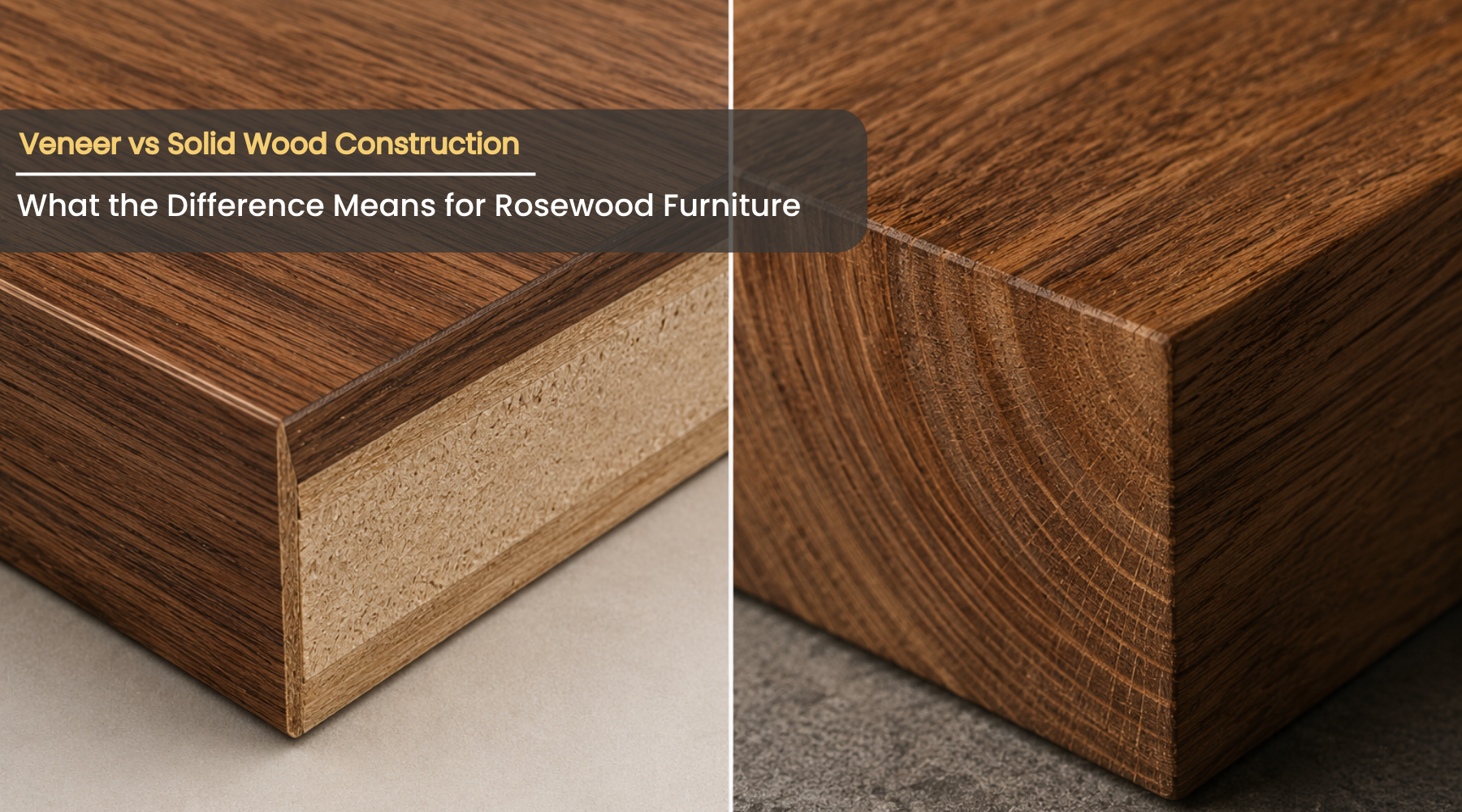
- Confirm solid versus veneer. Solid rosewood shows continuous grain over the table edge and related grain underneath. A thin surface layer over a different core is veneer, which should cost far less.
- Check the joinery. Dovetailed or dowelled construction signals a maker building for longevity. Staples and butt joints do not belong on a multi-thousand-dollar table.
- Watch the price floor. If a table is sold as solid rosewood but priced like oak, the description is likely misleading. Real rosewood cannot be built and sold cheaply.
- Factor delivery. Solid rosewood is heavy, so white glove delivery and assembly matter. Boston Mills charges a flat $199 or includes it free over $3,500.
A reputable maker will answer every one of these without hesitation, because the answers are what justify the price.
How much does a solid rosewood dining table cost?
A solid rosewood dining table costs roughly $4,000 to $9,000 for the table alone, with most handcrafted pieces between $4,500 and $7,000. Size, base design, and detailing like brass inlay move the price within that band. A complete set with rosewood chairs reaches $10,000 to $18,000.
Why is rosewood more expensive than oak or walnut?
Rosewood costs more because it is rarer, regulated under CITES as a protected species, and harder to work than oak or walnut. A five-foot rosewood table commonly runs $5,000 to $7,000, against roughly $4,250 for oak and $4,800 for walnut at quality makers. The premium reflects scarce supply and slower, hand-intensive construction.
How much do rosewood dining chairs cost?
Solid rosewood dining chairs typically run $1,600 to $1,800 each when bought in sets. A Boston Mills set of four starts around $6,560. Chairs are why a full rosewood dining set costs far more than the table by itself.
Is a rosewood dining table worth the price?
A rosewood table is worth it for buyers keeping it for decades. Solid wood custom tables last 50 or more years, putting the annual cost of a $6,000 table near $120 a year. Rosewood is repairable, decay-resistant, and unique in grain, which supports the long-term value. For a short-term purchase, oak or walnut costs less.
How can I tell if a dining table is real solid rosewood?
Check that the grain wraps continuously over the table edge and matches underneath, which indicates solid construction rather than veneer. Confirm the seller can name the rosewood species and its CITES compliance. Inspect the joinery for dovetails or dowels. A solid rosewood table priced like oak is almost certainly not what it claims.
What is the cheapest real rosewood dining table?
The entry point for a genuine solid rosewood dining table is around $4,000 for a small, simple model. Anything marketed as rosewood well below that is likely veneer over an engineered core, a look-alike species, or laminate, none of which carry the durability or value of solid rosewood.