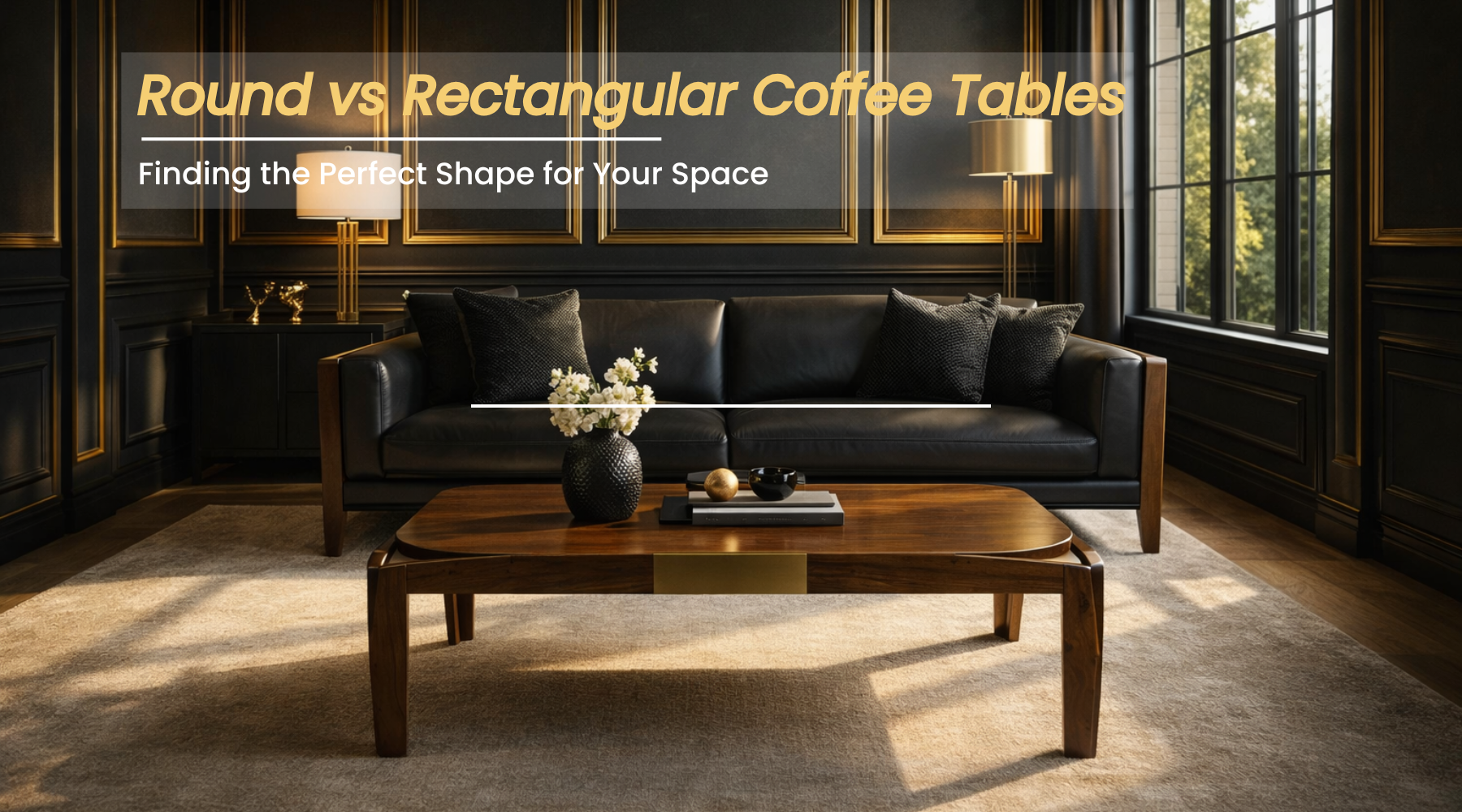
Round vs Rectangular Coffee Tables: Finding the Perfect Shape for Your Space
There's a moment maybe it's a Sunday morning, coffee in hand, bare feet on the rug - when you really notice your coffee table. How it holds your favorite mug, gathers your people close, anchors the room in a way nothing else quite does. It's one of those pieces you live around every single day, which is exactly why its shape matters more than you'd think.
Round or rectangular? It sounds like a simple question, but the answer quietly shapes how your living room feels, how you move through it, and how it works when life shows up whether that's a Tuesday movie night with the kids or a Saturday evening with friends and a good bottle of wine. A round table softens a space and keeps little ones safer around the edges. A rectangular one stretches out to meet a bigger sofa, gives you room to spread out, and holds its own in a larger room.
At Boston Mills, we handcraft both because we believe the right coffee table isn't just furniture. It's the quiet center of your home. And choosing well starts with understanding how your space actually lives, not just how it looks. So let's walk through what each shape brings to the room, so you can pick the one that fits your life.
Understanding How Shape Affects Room Dynamics
Coffee table geometry creates invisible boundaries that direct movement through living spaces. Rectangular tables establish linear pathways along their longer sides while blocking direct routes across their width. Round tables permit fluid movement in all directions, creating circular traffic patterns that feel more organic and less constrained.
These traffic patterns become especially relevant during social gatherings. Guests naturally circulate around round tables, facilitating mingling and conversation. Rectangular tables tend to create two-sided arrangements where guests cluster on opposite sides with the table functioning as a barrier between groups. Neither pattern proves universally superior, but understanding these dynamics helps match table shape to intended use.
Visual weight distribution also differs between shapes. Rectangular tables anchor rooms along specific axes, creating directional emphasis that draws eyes toward longer walls. Round tables distribute visual weight evenly, creating centered focal points that stabilize rooms without directional bias. This distinction matters particularly in asymmetrical rooms where balanced visual weight prevents spaces from feeling lopsided.
The Case for Rectangular Coffee Tables
Proportional Harmony with Linear Seating
Rectangular coffee tables align naturally with standard sofa configurations. The elongated form echoes sofa proportions, creating visual continuity that satisfies instinctively. A 54-inch rectangular table positioned before a 90-inch sofa establishes the two-thirds proportion that interior designers consistently recommend for harmonious arrangements.
This proportional relationship extends beyond aesthetics into functionality. Every seat position along a sofa gains equal access to rectangular table surfaces. Guests at either end reach the table as easily as those in the center. This democratic access proves valuable during entertaining when multiple guests require surface space simultaneously.
Boston Mills rectangular coffee tables range from 42 to 60 inches in length, accommodating sofas from compact apartment models to generous sectionals. The consistent width of 22 to 26 inches ensures adequate surface area without impeding traffic flow regardless of length selection.
Maximized Surface Area
Rectangular shapes maximize usable surface area within given footprints. A 48-inch by 24-inch rectangular table provides 1,152 square inches of surface. A round table with equivalent footprint diameter yields only 905 square inches, representing a 21 percent reduction in usable space.
This efficiency matters for households that actively use coffee table surfaces. Displaying art books, arranging decorative objects, and setting out refreshments all benefit from maximum available space. The straight edges of rectangular tables also simplify object arrangement, providing natural alignment guides that curved edges lack.
Storage options expand with rectangular designs as well. Many Boston Mills rectangular tables incorporate shelf tiers or drawer compartments that utilize the full rectangular footprint efficiently. Round tables sacrifice potential storage space to their curved geometries, limiting organizational options.
Optimal for Narrow Rooms
Rectangular coffee tables suit narrow living rooms where width constraints limit furniture options. Orienting the table parallel to the longer walls maintains adequate walkway clearance while providing substantial surface area. Round tables with equivalent surface area would extend further into limited width, potentially blocking movement.
Urban apartments frequently present these narrow room challenges. Boston Mills customers in metropolitan areas consistently favor rectangular tables for their spatial efficiency. The shape maximizes functionality within constrained dimensions without requiring compromise on quality or design sophistication.
The Case for Round Coffee Tables
Superior Traffic Flow
Round coffee tables eliminate corner obstacles that disrupt natural movement patterns. Guests navigate around curved edges fluidly without the angular redirections rectangular corners demand. This smooth circulation proves especially valuable in high-traffic households where family members constantly move through living areas.
Safety considerations favor round designs in homes with young children. Toddlers learning to walk inevitably contact furniture edges during their explorations. Curved edges present glancing surfaces that redirect rather than impact, significantly reducing injury risk compared to squared corners. Many parents select round tables specifically for this protective advantage.
Accessibility benefits extend to elderly residents and those with mobility challenges. Navigating around curved obstacles requires less precise movement than clearing angular corners. The forgiveness of round edges reduces collision incidents while facilitating more natural gait patterns through living spaces.
Ideal for Sectional and Curved Seating
Round coffee tables complement sectional sofas and curved seating arrangements that rectangular tables cannot serve effectively. The continuous curve of a round table maintains consistent distance from every seat position regardless of seating configuration angle. This geometric compatibility creates cohesive groupings impossible to achieve with linear table forms.
L-shaped sectionals particularly benefit from round table pairings. Rectangular tables positioned before L-sectionals inevitably favor one section over another, with distant seats losing convenient table access. Round tables centered within the L provide equal access to all positions, democratizing surface availability across the entire seating arrangement.
Boston Mills round coffee tables range from 36 to 48 inches in diameter, sized to complement sectionals from modest apartment configurations to generous family room installations. The solid wood construction ensures stability despite the absence of corner leg placements that rectangular designs utilize.
Visual Softening Effect
Round shapes soften rooms dominated by angular architecture and linear furniture. Modern construction emphasizes straight lines and right angles, creating environments that can feel harsh without organic counterpoints. A round coffee table introduces curves that relieve visual tension, making spaces feel more welcoming and relaxed.
This softening effect proves particularly valuable in contemporary interiors. Clean-lined sofas, rectangular area rugs, and geometric art create cohesive modern aesthetics that benefit from curved accent pieces. The round coffee table provides visual relief without disrupting the overall design direction.
Feng shui practitioners specifically recommend round tables for their association with unity and completeness. Whether or not one subscribes to feng shui principles, the psychological comfort many people experience around curved forms has documented basis in environmental psychology research.
Oval and Square Alternatives
Oval coffee tables combine advantages of both primary shapes. The elongated form provides proportional harmony with sofas while curved edges maintain traffic flow benefits. Ovals suit rooms where neither purely round nor purely rectangular designs feel optimal, offering compromise without significant sacrifice.
Square coffee tables anchor smaller seating arrangements effectively. Their balanced proportions suit compact living rooms, reading nooks, and secondary conversation areas. Squares also pair well with individual chairs arranged in intimate groupings rather than sofa-centered configurations.
Boston Mills craftsmen produce all four shapes in matching wood species and finish options. This consistency enables customers to select shapes based purely on functional requirements while maintaining design cohesion across furniture collections.
Matching Shape to Room Configuration
Assessing Your Traffic Patterns
Observe how family members move through your living room during typical daily activities. Note where paths intersect and where furniture currently impedes natural movement. This observation reveals traffic patterns that should inform table shape selection.
Rooms with multiple entry points benefit from round tables that permit multidirectional flow. Rooms with single entry points creating linear traffic corridors accommodate rectangular tables without flow disruption. Matching table geometry to existing patterns prevents the frustration of constantly navigating around obstacles.
Considering Your Seating Arrangement
Diagram your current seating arrangement, noting distances from potential table positions to each seat. Rectangular tables require all seats to align along table sides for optimal access. Round tables permit varied angles while maintaining reasonable access distances.
If your seating already arranges linearly facing a focal point like a fireplace or entertainment center, rectangular tables reinforce this orientation. If seating arranges in clusters or curves promoting conversation, round tables complement these social configurations more naturally.
Measuring Available Space
Calculate available floor space between seating and desired table position. Maintain minimum clearance of 14 to 18 inches between table edge and seat front to permit comfortable leg positioning and standing access. Reduce this clearance and seated guests feel cramped; increase it excessively and the table becomes inconveniently distant.
Walkway clearance around the table perimeter should measure at least 30 inches for comfortable passage, increasing to 36 inches in high-traffic areas. Map these clearances before selecting table dimensions to ensure the chosen piece fits without compromising movement.
Frequently Asked Questions
Which coffee table shape works best for small living rooms?
Round coffee tables generally work better in small living rooms because their curved edges facilitate movement through tight spaces. The absence of corners eliminates obstacles that would otherwise narrow pathways. However, narrow rectangular rooms may benefit from slender rectangular tables that maximize surface area within limited width dimensions.
Are round coffee tables safer for homes with children?
Yes, round coffee tables present fewer injury risks for young children. The curved edges eliminate sharp corners that cause painful impacts when toddlers fall or run into furniture. Many pediatric safety guidelines specifically recommend round or oval tables for households with children under age five.
How do I choose between oval and round coffee tables?
Choose oval tables when you want traffic flow benefits but need elongated proportions to complement linear sofas. Choose round tables when you want a centered focal point and have sectional or curved seating arrangements. Oval shapes bridge the gap between round and rectangular advantages.
Can rectangular coffee tables work with sectional sofas?
Rectangular coffee tables can work with sectional sofas but typically favor one section over another. Position the table parallel to the longest section for best results. Alternatively, consider two smaller rectangular tables positioned to serve different sectional sections independently.
What proportions should I maintain between sofa and coffee table?
Coffee table length should measure approximately two-thirds of sofa length for rectangular tables. For round tables, diameter should not exceed two-thirds of the shorter seating dimension. Height should align with or sit slightly below sofa seat cushion height, typically 16 to 18 inches.
Do round coffee tables provide less surface area?
Round coffee tables provide approximately 21 percent less surface area than rectangular tables with equivalent maximum dimensions. A 48-inch diameter round table offers 1,810 square inches compared to 2,304 square inches for a 48-inch by 48-inch square. This difference matters for households needing maximum surface utility.
Making Your Selection
Coffee table shape selection balances aesthetic preferences with practical requirements unique to each household. Rectangular tables serve traditional sofa arrangements with maximum surface efficiency. Round tables enhance traffic flow and complement curved seating configurations. Neither choice proves universally superior.
Boston Mills handcrafted coffee tables deliver exceptional quality regardless of shape selection. The solid wood construction, traditional joinery, and premium finishes remain consistent across all geometric options. Your choice determines spatial dynamics; our craftsmanship ensures lasting beauty and performance.
Consider how your living room functions today and anticipate how needs may evolve. The right coffee table shape supports these activities seamlessly, becoming an unobtrusive foundation for daily living rather than an obstacle requiring constant navigation.