Furniture Joinery Explained: Why Construction Methods Define Longevity
Furniture joinery determines whether pieces survive decades of daily use or fail within years of purchase. The methods connecting wood components create structural integrity that no amount of surface beauty can replace. Understanding joinery techniques enables buyers to evaluate furniture quality beyond superficial appearance, identifying construction worthy of investment.
Traditional joinery techniques developed over centuries of woodworking practice represent accumulated wisdom about wood behavior and structural requirements. These methods exploit wood's natural properties to create connections stronger than the surrounding material. Modern furniture often substitutes mechanical fasteners for traditional joinery, sacrificing longevity for production efficiency.
This guide examines major joinery types, their applications, strength characteristics, and identification methods. Armed with this knowledge, buyers can distinguish furniture built for generations from pieces designed for limited service. Joinery quality correlates directly with furniture investment value and expected lifespan.
Why Joinery Matters More Than Surface Appearance
Furniture fails at joints, not in solid wood sections. Stress concentrates where components meet, making connection quality the primary determinant of structural lifespan. Beautiful surfaces over weak joints create furniture that looks impressive initially but loosens, squeaks, and eventually collapses under normal use.
Stress Distribution in Furniture
Furniture experiences multiple stress types during use. Chairs endure racking forces as sitters lean and shift weight. Tables resist downward loads and lateral movement. Case pieces withstand drawer cycling and door operation thousands of times annually. Each stress type challenges joints differently.
Quality joinery distributes stress across maximum wood surface area, reducing pressure at any single point. Large glue surfaces created by interlocking joints resist separation far better than small contact areas of butt joints. This distribution principle underlies all traditional joinery design.
Mechanical interlocking in quality joints provides strength independent of adhesive alone. Dovetails, mortise and tenon, and similar joints physically prevent separation in specific directions. This mechanical advantage means joints retain significant strength even if glue fails partially over time.
Wood Movement Accommodation
Solid wood expands and contracts seasonally with humidity changes. This movement creates stress that poorly designed joints cannot accommodate. Traditional joinery accounts for wood movement through specific techniques allowing controlled expansion without joint failure.
Cross-grain construction, where wood grain directions meet at angles, creates particular challenges. Table tops attached rigidly to aprons crack as top and apron move differently. Quality construction uses buttons, elongated screw holes, or floating attachments allowing independent movement.
Traditional Joinery Types
Traditional joinery encompasses numerous techniques suited to specific applications and stress requirements. Understanding major joint types helps identify quality construction and appropriate applications. Each technique offers distinct advantages in particular furniture contexts.
Mortise and Tenon Joints
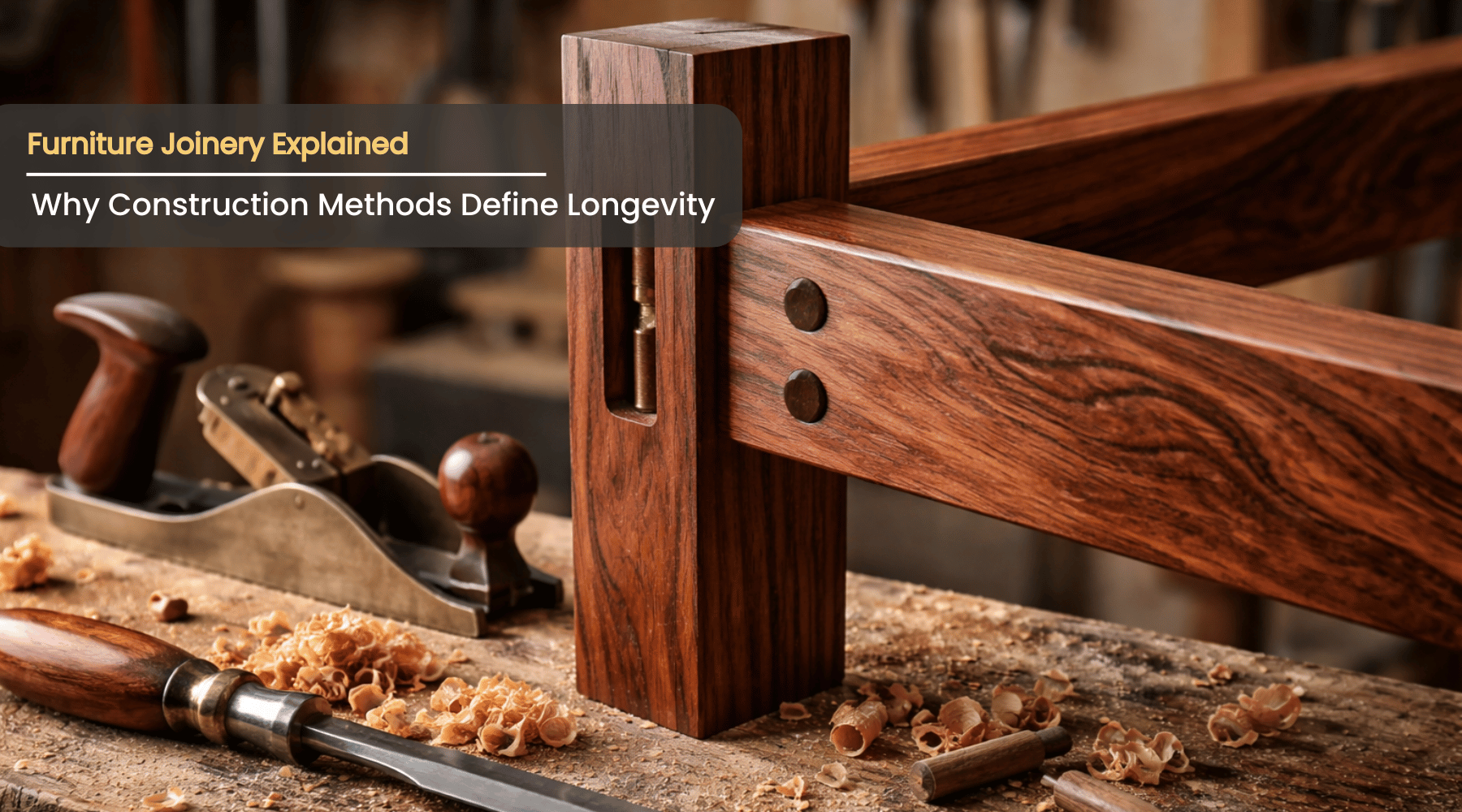
Mortise and tenon joinery represents the foundational technique for frame construction in quality furniture. A projecting tenon on one component fits precisely into a rectangular mortise cavity in the mating piece. This interlocking creates substantial glue surface area and mechanical resistance to separation.
Applications include table leg-to-apron connections, chair construction, door frames, and bed rail attachments. The joint excels at resisting racking forces that would separate simpler connections. Properly executed mortise and tenon joints often outlast surrounding wood.
Variations include through tenons visible on exterior surfaces, wedged tenons with mechanical locking, and haunched tenons providing additional support. Each variation addresses specific structural or aesthetic requirements. Visible through tenons demonstrate craftsmanship confidence while wedged versions add mechanical security.
Identifying mortise and tenon construction requires examining joint areas for evidence of interlocking components. Quality furniture often exposes these joints intentionally as craftsmanship indicators. Hidden joints may reveal themselves through furniture weight and rigidity exceeding fastener-dependent alternatives.
Dovetail Joints
Dovetail joints feature interlocking wedge-shaped projections creating mechanical bonds resisting pull-apart forces. The angled pins and tails physically prevent separation in one direction while providing substantial glue surface. This technique represents the premier method for drawer box construction.
Hand-cut dovetails display slight irregularities proving handwork execution. Pin and tail spacing varies subtly, and scribe lines may remain visible. These characteristics indicate traditional craftsmanship investment. Machine-cut dovetails show perfect uniformity but still provide excellent structural performance.
Through dovetails expose joint patterns on both faces, commonly seen on drawer fronts in traditional furniture. Half-blind dovetails hide the joint from one face, typical where drawer fronts conceal construction. Secret mitered dovetails hide joints completely for refined appearance.
Drawer quality assessment should always include dovetail examination. Pull drawers completely and inspect corner construction. Dovetailed drawers indicate quality commitment extending throughout the piece. Stapled or nailed drawer corners suggest cost-cutting affecting overall construction.
Tongue and Groove Joints
Tongue and groove joinery connects boards edge-to-edge through projecting tongues fitting into corresponding grooves. This technique creates panels from narrower boards while maintaining flat surfaces and preventing separation. Table tops, cabinet backs, and panel construction commonly use tongue and groove.
The joint allows wood movement along its length while preventing boards from cupping or separating at edges. Glue application varies with intended movement accommodation. Fully glued joints create rigid panels while selective gluing permits seasonal expansion.
Dowel Joints
Dowel joints use cylindrical wooden pins connecting components through aligned holes. Multiple dowels provide mechanical alignment and increased glue surface compared to simple butt joints. Quality furniture uses dowels in combination with other techniques or where traditional joinery proves impractical.
Properly executed dowel joints require precise hole alignment and appropriate dowel sizing. Spiral-grooved dowels allow glue distribution and air escape during assembly. Dowel joints approach mortise and tenon strength when correctly implemented but require less skill for consistent results.
Dowel construction often appears in mid-range furniture offering improved quality over fastener-dependent assembly. While not matching traditional joinery strength, quality dowel work significantly outperforms screws or brackets. Examine joint areas for dowel evidence when evaluating furniture.
Joinery Type Comparison
|
Joint Type |
Strength |
Skill Required |
Common Uses |
Identification |
|
Mortise & Tenon |
Excellent |
High |
Frames, legs, rails |
Joint rigidity, weight |
|
Dovetail |
Excellent |
High |
Drawers, boxes |
Visible interlocking pattern |
|
Tongue & Groove |
Good |
Moderate |
Panels, tops |
Board edge alignment |
|
Dowel |
Good |
Moderate |
Frames, panels |
Plugged holes, joint strength |
|
Biscuit |
Moderate |
Low |
Panel alignment |
Hidden, edge joints |
|
Pocket Screw |
Low-Moderate |
Low |
Quick assembly |
Angled holes, visible plugs |
Modern Joinery Methods
Modern production introduces joinery methods prioritizing manufacturing efficiency over maximum strength. These techniques serve legitimate purposes in appropriate applications but should not substitute for traditional joinery in quality furniture. Understanding modern methods helps identify construction compromises.
Biscuit Joinery
Biscuit joinery uses compressed wood wafers inserted into matching slots cut in mating components. The biscuits swell with glue moisture, creating tight joints with reasonable strength for panel alignment and edge joining. This technique speeds production significantly compared to traditional methods.
Appropriate biscuit applications include edge-joining boards for panels and aligning components during assembly. The technique provides adequate strength for these secondary purposes. Biscuits should not replace mortise and tenon in structural frame joints where maximum strength matters.
Pocket Screw Joinery
Pocket screw joinery drives screws at angles through one component into another, creating quick mechanical connections. This technique allows rapid assembly without clamps or extended glue curing. Production furniture frequently uses pocket screws to minimize labor costs.
Pocket screws provide adequate initial strength but may loosen over time as wood compresses around screw threads. The technique works acceptably for light-duty applications but cannot match traditional joinery longevity in heavily stressed furniture. Visible plugged holes often indicate pocket screw construction.
Identifying pocket screw construction requires examining hidden areas including furniture undersides, inside corners, and back panels. Angled plugged holes or visible screw heads indicate this construction method. Quality furniture avoids pocket screws in primary structural connections.
Cam Lock and Knock-Down Hardware
Cam lock fittings enable flat-pack furniture assembly through mechanical fasteners requiring no tools beyond simple wrenches. This hardware facilitates shipping efficiency and consumer assembly but creates inherently weaker connections than permanent joinery. Ready-to-assemble furniture depends entirely on these fittings.
Knock-down hardware serves legitimate purposes in furniture requiring disassembly for moving or reconfiguration. Quality bed frames often use knock-down bolts connecting rails to headboards. The key distinction involves whether hardware supplements quality joinery or substitutes for it entirely.
Joinery in Different Furniture Types
Different furniture categories demand specific joinery approaches based on stress patterns and construction requirements. Understanding appropriate joinery for each furniture type helps evaluate whether specific pieces meet quality standards for their intended use.
Chair Joinery Requirements
Chairs experience the most demanding stress patterns in residential furniture. Racking forces from leaning, impact from sitting, and constant movement create extreme joint demands. Chair joinery failure represents the most common furniture structural problem.
Quality chair construction requires mortise and tenon joinery at all leg-to-seat and leg-to-stretcher connections. These joints must resist forces in multiple directions simultaneously. Doweled or screwed chair joints loosen within years of normal use, requiring repair or replacement.
Examine chair joints by grasping seat and attempting to rack the frame. Quality construction shows no perceptible movement. Any looseness indicates inadequate joinery that will worsen progressively. Test multiple chairs in sets, as manufacturing variation may reveal inconsistent quality.
Table Joinery Requirements
Table construction centers on leg-to-apron connections resisting downward loads and lateral racking. Mortise and tenon joints provide optimal strength for these connections. Table tops require attachment methods accommodating seasonal wood movement without cracking.
Trestle and pedestal bases present different joinery challenges than four-leg designs. Central supports must resist concentrated loads while connections to top surfaces accommodate movement. Quality trestle tables use wedged through-tenons creating both strength and visual interest.
Case Furniture Joinery
Case pieces including dressers, bookcases, and cabinets require joinery addressing both structural frame and component construction. Carcase joints connect sides to tops and bottoms. Internal components including shelves, dividers, and drawer supports need appropriate attachment.
Drawer construction provides concentrated joinery evidence in case furniture. Dovetailed drawers indicate quality commitment throughout the piece. Examine multiple drawers as manufacturers sometimes dovetail visible front drawers while using inferior construction for less-visible components.
Back panel attachment affects case furniture rigidity significantly. Quality construction uses panels captured in grooves or screwed into rabbets. Stapled cardboard or hardboard backs indicate cost-cutting that likely extends to other construction aspects.
Identifying Quality Joinery
Evaluating joinery requires systematic examination of visible and hidden construction details. Showroom assessment and online specification review both contribute to informed purchasing decisions. Developing joinery recognition skills protects furniture investments.
Visual Inspection Points
Examine drawer corners for dovetail patterns indicating quality construction. Check table undersides for leg attachment methods. Inspect chair joints for evidence of mortise and tenon construction. Look for quality indicators in hidden areas where manufacturers reveal true priorities.
Visible joinery elements including through tenons, exposed dovetails, and wooden pegs indicate craftsmanship confidence. Manufacturers hiding all joinery may do so for aesthetic reasons or to conceal inferior construction. Context and other quality indicators help distinguish these motivations.
Physical Testing Methods
Apply moderate pressure to furniture joints, feeling for movement indicating loose connections. Rack chairs and tables by pushing and pulling on different sections. Quality joinery shows no perceptible play. Any movement indicates inadequate construction that worsens over time.
Compare weights between similar pieces from different manufacturers. Heavier furniture generally indicates denser wood and more substantial joinery. Lightweight pieces may use thinner components and less robust connections to reduce material costs.
Documentation Review
Request detailed construction specifications from retailers and manufacturers. Quality producers willingly document joinery methods, wood species, and construction techniques. Reluctance to provide specifications suggests potential quality concerns worth investigating further.
Warranty terms often reflect manufacturer confidence in construction quality. Extended warranties of 10 to 25 years indicate joinery designed for long service. Short warranties of 1 to 2 years suggest anticipated structural failures within those timeframes.
Joinery and Furniture Value
Joinery quality correlates directly with furniture longevity and investment value. Premium prices for traditionally joined furniture reflect construction costs and expected service life. Understanding this relationship justifies quality investment while identifying overpriced inferior products.
Cost-Per-Year Analysis
Traditional joinery enables furniture service spanning 50 to 100 years or more. Fastener-dependent construction typically lasts 5 to 15 years before structural failure. This lifespan difference dramatically affects true ownership costs despite initial price disparities.
A traditionally joined dining chair costing 800 dollars and lasting 60 years costs 13 dollars annually. A pocket-screwed chair costing 200 dollars and lasting 8 years costs 25 dollars annually while providing inferior daily experience. Quality joinery proves economical long-term.
Repair and Restoration Potential
Traditional joinery allows disassembly for repair and re-gluing when joints eventually loosen. Skilled furniture restorers routinely repair antique pieces using original joinery methods. This repairability extends furniture service indefinitely through periodic maintenance.
Fastener-dependent construction often proves unrepairable. Stripped screw holes, broken cam locks, and failed brackets cannot be restored to original strength. Repair attempts may temporarily address symptoms but cannot restore structural integrity.
Do all furniture joints require glue to function properly?
No, certain traditional joints function through mechanical interlocking without requiring adhesive. Wedged through-tenons physically cannot separate once assembled. Some dovetail applications rely primarily on mechanical fit rather than glue strength. However, most furniture joinery combines mechanical interlocking with adhesive bonding for maximum strength. Modern wood glues create bonds stronger than surrounding wood fibers, making adhesive contribution significant in most joints. The combination of mechanical and adhesive strength explains why traditional joinery outperforms either approach alone.
What is a mortise and tenon joint?
A mortise and tenon joint connects two wood components through a projecting tongue (tenon) fitting precisely into a rectangular cavity (mortise). The tenon typically measures one-third to one-half the thickness of its parent board, creating substantial shoulders supporting loads. The mortise receives the tenon with close tolerance allowing glue bonding across maximum surface area. This fundamental joinery technique dates back thousands of years and remains the standard for quality frame construction in furniture. Variations include through tenons extending completely through the mortised piece and wedged tenons with mechanical locking.
What are the strongest joinery methods for different furniture types?
Optimal joinery varies by furniture type and stress requirements. Chairs demand mortise and tenon throughout due to extreme racking stress. Tables require mortise and tenon for leg connections with movement-accommodating top attachment. Drawers perform best with dovetail corner construction. Case furniture benefits from dado and rabbet joinery for shelf and panel installation combined with dovetailed drawers. Bed frames use mortise and tenon or quality knock-down hardware for rail connections. Each application presents specific stress patterns that traditional techniques address through centuries of developed practice.
How do machine-cut dovetails compare to hand-cut versions?
Machine-cut and hand-cut dovetails provide similar structural performance when properly executed. The primary differences involve aesthetics and craftsmanship indicators rather than functional strength. Hand-cut dovetails display subtle irregularities including varied pin spacing and visible scribe lines proving individual attention. Machine-cut versions show perfect uniformity and consistent angles. Some furniture enthusiasts prefer hand-cut character while others appreciate machine precision. Both indicate quality commitment compared to stapled or nailed alternatives. Structural performance depends more on wood quality, glue application, and fit tolerance than cutting method.
How can buyers identify joinery quality without disassembling furniture?
Identify joinery quality through systematic external examination. First, inspect drawer corners for dovetail patterns visible without removal. Second, examine table and chair joints for evidence of mortise and tenon construction through joint size and appearance. Third, check furniture undersides and backs where construction details remain visible. Fourth, test structural rigidity by applying moderate pressure to joints, feeling for movement indicating weakness. Fifth, compare furniture weight as indicator of material and joinery substance. Sixth, request manufacturer specifications documenting construction methods. Quality producers willingly provide detailed information while inferior manufacturers avoid specifics.
Can pocket screw joinery be acceptable in quality furniture?
No, pocket screw joinery should not appear in primary structural connections of quality furniture. This technique provides adequate strength for secondary applications including attaching cleats, installing backs, and temporary assembly during manufacturing. However, pocket screws in leg joints, rail connections, or other structural areas indicate cost-cutting that compromises longevity. The mechanical nature of screw connections allows loosening over time as wood compresses around threads. Quality furniture reserves pocket screws for non-structural applications where their convenience benefits production without affecting service life.
What distinguishes quality dowel joints from inferior versions?
Quality dowel joints require precise hole alignment, appropriate dowel sizing, and proper glue application. Holes must align perfectly between mating components to prevent joint stress during assembly. Spiral-grooved dowels allow glue distribution and air escape preventing hydraulic pressure that weakens bonds. Multiple dowels per joint provide redundancy and increased surface area. Dowel diameter should match joint size with sufficient length for deep insertion. Quality execution approaches mortise and tenon strength while inferior versions using single smooth dowels in misaligned holes fail rapidly. Examine joint rigidity and construction documentation when evaluating doweled furniture.
Building Understanding of Furniture Construction
Joinery knowledge transforms furniture evaluation from superficial appearance assessment to informed quality recognition. The construction methods connecting wood components determine service life more than any other factor. Understanding joinery enables confident purchasing decisions identifying furniture worthy of investment.
Traditional techniques developed through centuries of practice continue providing optimal furniture construction. Modern alternatives may suit specific applications but cannot match traditional joinery for demanding furniture requirements. Recognizing appropriate joinery for different furniture types protects against costly purchasing mistakes.
Boston Mills employs traditional joinery throughout furniture construction, using mortise and tenon, dovetail, and other time-tested techniques. Each joint receives individual attention ensuring structural integrity matching materials and design quality. The construction invites examination because quality joinery speaks for itself under scrutiny.