How to Identify Solid Wood Construction: A Visual and Tactile Guide
Solid wood construction distinguishes heirloom-quality furniture from mass-produced alternatives designed for limited lifespans. Identifying genuine solid wood requires understanding visual patterns, tactile characteristics, and construction methods that manufacturers cannot fake. This guide provides systematic approaches for evaluating furniture quality before purchase.
The furniture market contains significant misrepresentation regarding material composition. Terms like "wood furniture," "hardwood construction," and "real wood" often describe veneered particleboard or medium-density fiberboard rather than solid lumber. Learning to identify solid wood construction protects buyers from expensive mistakes while ensuring furniture investments deliver expected longevity.
Evaluating furniture construction requires examining multiple characteristics together. No single test definitively confirms solid wood, but combining visual inspection, weight assessment, sound testing, and construction analysis provides reliable identification. These methods work in showrooms, online purchases, and estate sales where documentation may be incomplete or misleading.
Understanding Wood Types and Their Characteristics
Solid wood furniture uses lumber cut directly from tree trunks, retaining the natural grain structure that provides strength and beauty. Different wood species offer varying characteristics in hardness, grain pattern, color, and workability. Understanding these properties helps identify both wood authenticity and species accuracy.
Hardwoods vs Softwoods
Hardwoods derive from deciduous trees that lose leaves seasonally, including oak, walnut, maple, cherry, and rosewood. These species develop dense cellular structures that resist wear and accept fine finishes. Quality furniture predominantly uses hardwoods for structural components and visible surfaces.
Softwoods come from coniferous evergreen trees such as pine, cedar, and fir. Lower density makes softwoods easier to work but less durable for furniture applications. Softwood furniture suits casual settings and pieces where rustic character matters more than longevity. Identifying softwood versus hardwood helps assess appropriate pricing and expected lifespan.
Grain Patterns as Identification Tools
Wood grain provides the most reliable visual indicator of solid construction. Genuine solid wood displays continuous grain patterns that flow naturally across surfaces and wrap around edges. These patterns result from the tree's growth rings and cannot be perfectly replicated in manufactured materials.
Cathedral grain appears in flat-sawn lumber, creating arched patterns resembling gothic church windows. Straight grain results from quarter-sawing that cuts perpendicular to growth rings. Both patterns indicate solid wood when they continue consistently across the piece and show natural variation rather than repetitive printing.
Examine grain at edges and corners where solid wood reveals end grain or continuous wrap-around patterns. Veneer terminates at edges, showing thin layers applied over substrate materials. Laminate displays printed patterns that repeat exactly and end abruptly at corners without natural continuation.
Visual Inspection Methods
Visual inspection provides the first and most accessible evaluation method. Trained observers identify solid wood quickly through pattern recognition, while beginners can apply systematic checks that reveal construction quality. These visual tests work without touching the furniture, enabling evaluation in showroom settings.
The Edge Test
Examining furniture edges reveals construction immediately. Solid wood shows end grain at cut edges, displaying the circular or semi-circular patterns of growth rings viewed from the side. This end grain appears on table edges, drawer fronts, and door panels where cuts expose the wood's internal structure.
Veneer construction shows thin layers at edges, typically 0.5 to 3 millimeters thick, applied over particleboard or plywood substrate. Edge banding may conceal this layered construction, but close inspection reveals the junction between veneer and banding material. High-quality veneer furniture uses matching edge banding, while lower quality shows mismatched patterns or plastic trim.
Laminate furniture displays printed surfaces that end sharply at edges without grain continuation. The edge itself may show the brown compressed material of particleboard or the layered structure of medium-density fiberboard. These edges often receive plastic or vinyl covering that differs obviously from the surface pattern.
The Pattern Matching Test
Genuine solid wood contains natural variation that prevents any two surfaces from appearing identical. Examine multiple pieces in a furniture set, comparing grain patterns on drawer fronts, door panels, and tabletops. Solid wood shows unique patterns on each component, while manufactured materials often repeat identical patterns.
Laminate particularly fails this test, as printed patterns repeat exactly across large production runs. Two adjacent drawer fronts on laminate furniture may display mirror-image patterns or obvious repetition. Veneer performs better, as natural wood veneer carries individual variation, but book-matched veneers create symmetrical patterns that solid wood rarely exhibits naturally.
Examining Underside and Hidden Areas
Manufacturers invest finishing effort proportional to visibility. Examining undersides, back panels, and interior surfaces reveals construction shortcuts invisible from normal viewing angles. Solid wood furniture typically shows consistent material throughout, while composite construction hides inferior materials in unseen areas.
Table undersides in solid wood construction display the same species and grain character as the top surface, though perhaps with less refined finishing. Particleboard or MDF substrates beneath veneer tops create obviously different appearances underneath. Drawer bottoms, cabinet backs, and furniture interiors similarly reveal true construction.
Tactile Assessment Techniques
Physical contact with furniture surfaces provides information unavailable through visual inspection alone. Weight, texture, temperature, and sound characteristics differ measurably between solid wood and composite alternatives. These tactile tests confirm or contradict visual assessments.
The Weight Test
Solid hardwood furniture weighs significantly more than composite alternatives of similar size. The dense cellular structure of genuine wood creates substantial mass that manufacturers cannot replicate cost-effectively in particleboard or MDF construction. Lifting furniture edges or attempting to move pieces reveals weight differences immediately.
A solid oak dining chair weighs approximately 15 to 25 pounds depending on design. Equivalent particleboard chairs with veneer surfaces weigh 8 to 12 pounds. This 50 to 100 percent weight difference becomes obvious when handling furniture directly. Heavier pieces within a category generally indicate higher solid wood content.
Typical Weight Comparison: Solid Wood vs Composite Construction
|
Furniture Type |
Solid Hardwood |
Veneer/Composite |
|
Dining Chair |
15-25 lbs |
8-12 lbs |
|
Nightstand |
35-55 lbs |
18-28 lbs |
|
Dresser (6-drawer) |
150-220 lbs |
70-110 lbs |
|
Dining Table (6-seat) |
120-180 lbs |
50-80 lbs |
|
Bookcase (5-shelf) |
100-160 lbs |
45-75 lbs |
The Sound Test
Knocking on furniture surfaces produces distinctive sounds that indicate material density and construction. Solid wood creates a warm, resonant tone with noticeable sustain. Particleboard and MDF produce flat, dull thuds without resonance. Hollow-core construction creates obviously empty sounds.
Perform sound tests on flat surfaces away from joints and hardware. Table tops, drawer fronts, and side panels provide reliable test locations. Compare sounds across different furniture pieces to develop recognition for solid wood resonance versus composite dullness.
The Temperature Test
Wood conducts heat differently than synthetic materials, creating temperature differences detectable by touch. Solid wood feels warmer than laminate or metal-based surfaces at room temperature. This warmth results from wood's cellular structure trapping air, providing natural insulation.
Place your palm flat against furniture surfaces for 5 to 10 seconds. Solid wood warms quickly to body temperature and maintains pleasant contact. Laminate and composite materials feel cooler initially and may become clammy under prolonged contact. This simple test distinguishes natural wood from synthetic surfaces effectively.
Construction Analysis
Beyond material identification, construction methods determine furniture quality and longevity. Solid wood enables joinery techniques impossible with composite materials. Examining how pieces connect reveals both material authenticity and craftsmanship investment.
Joinery Examination
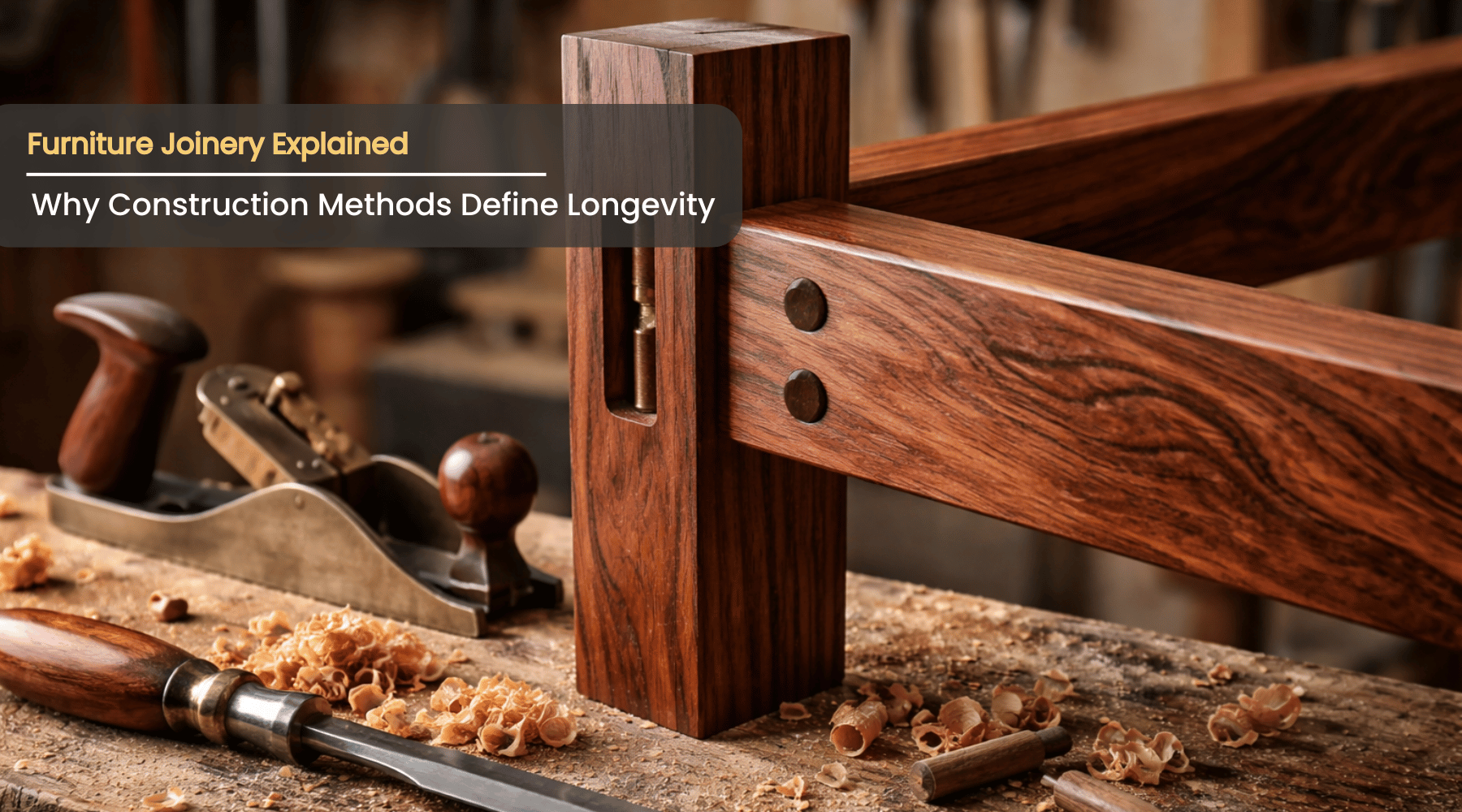
Traditional wood joinery provides the strongest and most durable furniture connections. Dovetail joints in drawers, mortise and tenon joints in frames, and tongue and groove joints in panels all require solid wood to function properly. These joints cannot be executed in particleboard or MDF without immediate failure.
Examine drawer corners for dovetail patterns, the interlocking fingers that indicate quality construction. Hand-cut dovetails show slight irregularities proving handwork, while machine-cut dovetails display perfect uniformity. Both indicate solid wood and quality manufacturing. Stapled, nailed, or glued butt joints suggest composite construction regardless of surface appearance.
Frame joints at leg-to-rail connections reveal construction investment. Quality furniture uses mortise and tenon or doweled joints that require precise machining and substantial wood thickness. Metal brackets, corner blocks, or visible screws indicate either composite materials or cost-cutting in solid wood pieces.
Drawer Construction Details
Drawer construction provides concentrated evidence of overall furniture quality. Well-made drawers use solid wood for all components including sides, backs, and bottoms. Dovetailed corners, captured bottoms floating in grooves, and smooth-operating wood guides indicate investment in quality materials and craftsmanship.
Remove drawers completely and examine all surfaces. Solid wood drawer sides display grain running the length of the piece with end grain visible at front and back joints. Plywood drawer bottoms, common even in quality furniture, should float in grooves rather than being stapled or glued in place. Metal drawer slides, while convenient, may indicate corner-cutting elsewhere in construction.
Back Panel and Structural Components
Furniture back panels reveal manufacturer priorities clearly. Solid wood or thick plywood backs indicate commitment to durability. Thin hardboard, cardboard, or missing backs suggest disposable construction philosophy regardless of front-facing appearance. Quality furniture maintains consistent standards throughout.
Examine structural components including corner blocks, support rails, and stretchers. Solid wood construction extends to these hidden elements in quality furniture. Particleboard or MDF structural components indicate cost-driven manufacturing that compromises long-term durability. These hidden materials often fail first, causing furniture collapse despite acceptable surface appearance.
Common Deceptions and How to Spot Them
Furniture marketing employs terminology that misleads uninformed buyers. Understanding common deceptions prevents expensive mistakes and ensures purchases match expectations. Certain phrases signal composite construction despite implications of solid wood.
Misleading Terminology
"Wood furniture" and "made with wood" describe any product containing wood-derived materials including particleboard and MDF. These terms provide no assurance of solid construction. Similarly, "hardwood solids" may refer only to small frame components while major surfaces use veneer over composite substrates.
"Wood veneer" honestly describes thin wood layers over other materials but may be presented to suggest solid construction. Veneer furniture offers certain advantages including stability and efficient use of rare species, but costs and longevity expectations should match actual construction rather than solid wood equivalents.
"Engineered wood" describes manufactured products including plywood, particleboard, MDF, and oriented strand board. This term obscures material composition while sounding technical and modern. Quality plywood serves legitimate purposes, but the term often disguises particleboard in marketing materials.
Photo Enhancement and Staging
Online furniture photography frequently enhances wood grain appearance beyond reality. Lighting, color correction, and digital enhancement create impressions that physical products cannot match. Request multiple photos from different angles and lighting conditions before purchasing sight-unseen.
Showroom lighting similarly flatters furniture beyond home conditions. Assess pieces under multiple lighting types when possible, and request to see furniture in natural daylight. Grain depth, color accuracy, and surface quality may differ substantially from showroom presentation.
Verification Questions for Retailers
Direct questions to sales staff can confirm or reveal construction details unavailable through inspection. Knowledgeable retailers welcome questions about materials and construction, while evasive answers suggest potential misrepresentation.
Specific Questions to Ask
Ask whether tops, sides, and structural components use solid lumber or veneer over substrate. Request specification of substrate material if veneer construction applies. Inquire about drawer construction including box material, joinery method, and guide system. Question back panel material and attachment method.
Request documentation of wood species, origin, and any certifications regarding sustainable sourcing. Quality manufacturers provide detailed specifications willingly. Reluctance to answer material questions suggests either ignorance or intentional misrepresentation.
Warranty and Return Considerations
Warranty terms often reveal manufacturer confidence in construction quality. Solid wood furniture typically carries warranties of 5 to 25 years or lifetime coverage. Short warranties of 90 days to 1 year suggest expected failure within those timeframes, regardless of marketing claims.
Return policies matter particularly for online purchases where inspection before delivery is impossible. Ensure return options allow reasonable evaluation time and cover shipping costs for defective or misrepresented products. Quality retailers stand behind their products with customer-friendly policies.
Making Informed Purchasing Decisions
Combining identification techniques with realistic expectations enables sound furniture investments. Solid wood commands premium prices reflecting material costs and craftsmanship requirements. Understanding value propositions helps allocate furniture budgets effectively.
Value Considerations
Solid wood furniture costs 3 to 10 times more than comparable composite alternatives. This premium reflects material expenses, skilled labor requirements, and longer production times. However, solid wood longevity of 50 to 100+ years versus 5 to 15 years for composites often creates lower cost-per-year despite higher purchase prices.
Repairability adds value that upfront pricing cannot capture. Solid wood accepts refinishing, structural repair, and modification impossible with composite materials. This repairability extends useful life indefinitely while allowing adaptation to changing needs and aesthetics.
Where to Invest in Solid Wood
Prioritize solid wood construction for furniture receiving heavy daily use. Dining tables, bed frames, dressers, and seating experience wear that shortens composite furniture lifespan dramatically. These categories deliver maximum return on solid wood investment through extended service life.
Secondary furniture and accent pieces may acceptably use quality veneer construction. Well-executed veneer over quality plywood substrate provides stability advantages and efficient use of rare wood species. Reserve solid wood investment for pieces where longevity and repairability matter most.
Can solid wood furniture be identified without touching it?
Yes, visual inspection identifies solid wood furniture in most cases without physical contact. Examine grain patterns at edges where solid wood shows end grain or continuous wrap-around patterns. Check for natural variation in grain across multiple surfaces rather than repeated identical patterns. Look at undersides and hidden areas where manufacturers often reveal true construction. These visual tests provide reliable identification in showroom settings where handling may be restricted.
What does solid wood construction actually mean?
Solid wood construction refers to furniture made from lumber cut directly from tree trunks rather than manufactured wood products. Components retain the natural grain structure that provides strength, beauty, and repairability. Solid wood furniture may use single boards or edge-glued panels of narrower pieces, both qualifying as solid construction. The defining characteristic excludes veneer over particleboard, MDF, or plywood substrates commonly used in mass-produced furniture.
What are the most reliable tests for identifying solid wood?
The most reliable identification combines multiple tests. Edge examination reveals end grain in solid wood versus thin layers in veneer construction. Weight testing finds solid hardwood substantially heavier than composite alternatives. Sound testing produces resonant tones from solid wood versus dull thuds from particleboard. Joinery examination shows dovetails and mortise-tenon joints impossible in composite materials. Pattern analysis finds natural variation in solid wood versus repetition in laminates. Using all five tests together provides confident identification.
How does veneer furniture compare to solid wood in quality?
Veneer furniture varies widely in quality depending on substrate material and construction methods. High-quality veneer over Baltic birch plywood provides stability advantages and efficient use of rare wood species. This construction suits certain applications appropriately. Low-quality veneer over particleboard or MDF creates disposable furniture regardless of surface appearance. Solid wood generally offers superior longevity, repairability, and value retention. However, well-constructed veneer furniture serves legitimate purposes when expectations and pricing match actual construction.
How should buyers evaluate furniture when shopping online?
Online furniture evaluation requires systematic information gathering. Request detailed specifications listing materials for all components including tops, sides, structural elements, drawer construction, and back panels. Ask for multiple photos showing edges, undersides, and interior surfaces where construction becomes visible. Verify weight specifications that indicate material density. Review warranty terms reflecting manufacturer confidence. Check return policies allowing post-delivery inspection. Read customer reviews mentioning quality surprises positive or negative. Contact customer service with specific construction questions, judging responses for knowledge and transparency.
Does furniture labeled hardwood always indicate solid wood construction?
No, hardwood labeling does not guarantee solid wood construction. Marketing terminology uses "hardwood" to describe veneer surfaces, hardwood-derived particleboard, and small solid components within otherwise composite furniture. The phrase "hardwood solids and veneers" explicitly indicates mixed construction. Only unambiguous terms like "solid oak" or "constructed entirely from solid walnut" confirm complete solid wood construction. Request specific clarification when marketing language remains vague about material composition.
What is end grain and why does it matter for identification?
End grain refers to wood surface exposed when cutting across the tree trunk perpendicular to growth rings. This surface displays the circular or semi-circular ring patterns that indicate genuine solid wood. End grain appears on the edges of solid wood panels, the ends of boards, and at joinery intersections. Veneer and laminate cannot display end grain because these materials run parallel to surfaces rather than through them. Identifying end grain at furniture edges provides definitive confirmation of solid wood construction at that location.
Building Confidence in Furniture Quality Assessment
Identifying solid wood construction protects furniture investments while ensuring purchases match expectations and needs. The visual, tactile, and analytical techniques described enable confident evaluation regardless of marketing claims or sales presentations. These skills serve buyers throughout lifetimes of furniture acquisition.
Quality furniture represents significant household investments deserving careful evaluation. Understanding construction differences between solid wood, veneer, and composite materials enables informed decisions matching furniture choices to budgets, needs, and longevity expectations. This knowledge transforms furniture shopping from uncertain purchasing to confident investment.
Boston Mills constructs furniture using solid hardwoods throughout, employing traditional joinery techniques that have proven their durability over centuries. Each piece demonstrates authentic craftsmanship visible through the identification methods described in this guide. The construction quality speaks for itself under any inspection scrutiny, inviting buyers to verify claims through direct examination.