Dining Room Buffets and Sideboards: First Impressions and Functional Style
There's a moment during every great dinner party when the candles are lit, the table's set and behind you, a beautifully crafted sideboard holds everything you need to keep the evening flowing. Buffets and sideboards have played this quiet essential role in dining rooms for centuries, serving as part storage, part stage and part steady backbone of how we gather and entertain at home.
Whether you call it a buffet or a sideboard (and honestly most people use the terms interchangeably) the purpose stays the same: a place to tuck away your linens, serving ware and everyday dining essentials while offering a generous surface for laying out food, mixing drinks or simply displaying pieces you love. But beyond function, these are statement pieces; the kind of furniture that anchors a room and sets a tone the moment you walk in.
This guide walks you through everything that matters when choosing one from configuration and sizing to construction quality and style. Because a piece like this isn't just about what it holds. It's about how it makes your space feel, how it supports the way you live and entertain and whether it's built with the kind of care and craftsmanship that means it'll still be serving your family beautifully for generations to come.
Understanding Buffets, Sideboards, and Related Pieces
Dining storage furniture encompasses several related forms with overlapping functions. Understanding distinctions helps identify pieces best suited to specific needs and spaces. Each type offers particular advantages affecting both function and appearance.
Sideboards
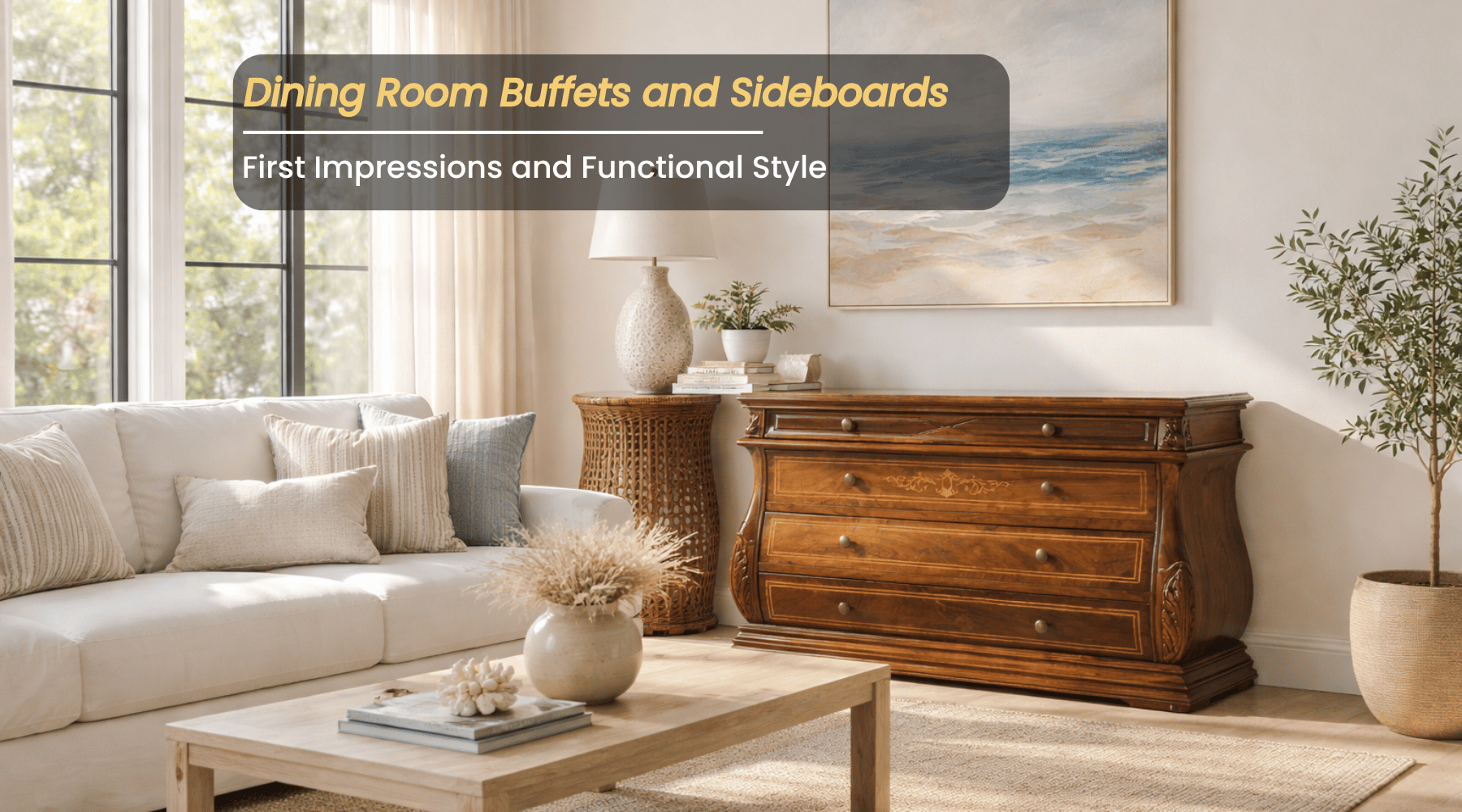
Traditional sideboards feature low profiles designed to position serving surfaces at convenient heights, typically 34 to 36 inches. The lower height facilitates serving while seated guests can easily view food presentations. Sideboards originated in English dining traditions where servants served from these pieces.
Classic sideboard construction includes drawers for linens and flatware combined with cabinet sections for serving pieces and china. The mix of storage types addresses varied dining essentials within single pieces. Deeper cabinets accommodate larger items while shallow drawers organize smaller pieces.
Sideboard lengths typically range from 48 to 72 inches, providing substantial storage and serving surface. The horizontal emphasis creates visual stability anchoring dining room walls. Sideboards suit formal dining rooms where traditional functionality remains relevant.
Buffets
Buffets often stand slightly taller than traditional sideboards, with heights approaching 38 to 40 inches. This additional height provides more interior storage volume while maintaining practical serving surface access. The term buffet emphasizes the serving function during entertaining.
Modern buffets may incorporate features absent from traditional sideboards including wine storage, adjustable shelving and varied door configurations. These adaptations address contemporary entertaining styles while maintaining essential storage and serving functions.
The distinction between buffets and sideboards has blurred considerably in contemporary usage. Many manufacturers and retailers use the terms interchangeably. Focus on specific dimensions, features and storage configurations rather than terminology when selecting pieces.
Credenzas
Credenzas share general form with sideboards and buffets but traditionally emphasized office rather than dining use. Contemporary credenzas increasingly appear in dining contexts, offering clean-lined storage suitable for modern interiors. The term implies sophisticated, often minimal design.
Dining credenzas typically feature cleaner lines than traditional sideboards, suiting contemporary and transitional spaces. The streamlined appearance reduces visual weight while maintaining storage functionality. Consider credenzas for dining rooms seeking modern aesthetic with traditional function.
China Cabinets and Hutches
China cabinets and hutches combine base storage resembling sideboards with upper display sections featuring glass doors. These two-piece units provide comprehensive dining storage and display in single footprints. The vertical extent creates significant room presence.
Hutch tops add display capability but require ceiling height and wall space accommodating their presence. Some bases function independently as sideboards if upper sections prove impractical. Evaluate whether display needs justify the substantial presence hutches command.
Dining Storage Furniture Comparison
|
Type |
Typical Height |
Primary Function |
Style Association |
Display |
|
Sideboard |
34-36 inches |
Serving, storage |
Traditional |
Top surface |
|
Buffet |
36-40 inches |
Storage, serving |
Various |
Top surface |
|
Credenza |
28-34 inches |
Storage |
Contemporary |
Top surface |
|
China Cabinet |
72-84 inches |
Display, storage |
Traditional |
Glass-front upper |
Storage Configuration Options
Buffet and sideboard storage configurations vary significantly, affecting both capacity and organization capabilities. Understanding available options enables selection matching actual storage needs. Consider what items require storage when evaluating configurations.
Drawer Configurations
Drawers provide organized storage for flatware, linens, serving utensils and smaller items. Shallow drawers suit flatware with divided organizers keeping pieces separated. Deeper drawers accommodate folded linens and larger serving implements.
Drawer placement affects access convenience. Center drawer configurations position flatware storage centrally for balanced access. Drawer banks on ends keep smaller items separate from larger cabinet contents. Consider how drawer placement serves your serving patterns.
Felt-lined drawers protect silverware from tarnishing and scratching. This feature adds cost but provides significant benefit for fine flatware storage. Inquire about lining options when ordering custom pieces.
Cabinet Sections
Cabinet sections store larger items including serving bowls, platters and china. Door styles range from solid panels concealing contents to glass fronts enabling display. Select door styles based on whether stored items merit visibility.
Interior shelving determines storage flexibility. Fixed shelves establish permanent organization while adjustable shelves accommodate varied items. Consider future storage needs alongside present requirements when evaluating flexibility.
Cabinet depth affects storage capacity and room footprint. Deeper cabinets store more but project further into rooms. Standard depths of 18 to 20 inches accommodate most serving pieces while maintaining reasonable room presence.
Specialized Features
Wine storage sections with bottle slots address contemporary entertaining needs. Proper wine storage requires horizontal positioning maintaining cork moisture. Integrated wine storage eliminates need for separate wine furniture in dining spaces.
Some buffets incorporate pull-out serving extensions increasing surface area during entertaining. These features prove valuable when serving space limits entertainment scale. Consider whether occasional expanded surface justifies the feature cost.
Electrical outlets integrated within cabinets support warming trays and small appliances during serving. This feature requires planning during furniture selection as retrofit proves impractical. Evaluate electrical needs before finalizing selections.
Sizing Considerations
Proper buffet and sideboard sizing ensures functional success within available space. Both storage capacity requirements and room dimensions affect appropriate sizing. Careful measurement prevents disappointing mismatches.
Length Guidelines
Buffet length should complement dining table scale while fitting available wall space. General guidelines suggest buffet length equal to or slightly less than table length for proportional balance. Tables 72 inches long typically pair well with buffets 54 to 66 inches long.
Available wall space may constrain length options regardless of proportional ideals. Measure carefully including clearances for opening doors and accessing storage. Allow minimum 36 inches passage space past buffet ends.
Small dining rooms may accommodate only compact buffets despite larger tables. Prioritize essential storage in constrained spaces rather than forcing oversized pieces. Small buffets serving well exceed large buffets that overwhelm rooms.
Height Considerations
Standard buffet and sideboard heights range from 34 to 40 inches, with lower heights suiting traditional serving functions and taller heights maximizing storage. Consider primary use when selecting height. Serving-focused needs favor lower heights enabling comfortable food access.
Height relative to dining table affects visual proportion. Buffets typically position several inches above table height for comfortable serving access. Very tall buffets may overwhelm spaces or create awkward visual relationships with tables.
User height affects practical serving surface comfort. Taller individuals may prefer higher buffets while shorter users benefit from lower surfaces. Consider household member heights when selecting non-standard heights.
Depth Requirements
Standard depths of 18 to 20 inches accommodate most serving pieces while maintaining reasonable room presence. Deeper buffets provide more storage but project further into dining spaces. Evaluate whether added depth provides proportional storage benefit.
Circulation clearance behind dining chairs affects practical depth limits. Allow adequate passage space when chairs are occupied and pushed back from tables. Cramped circulation diminishes dining comfort regardless of storage benefit.
Construction Quality
Buffet and sideboard construction quality affects both longevity and daily satisfaction. These substantial pieces should serve for generations, justifying attention to construction details. Understanding quality indicators helps identify furniture worthy of investment.
Case Construction
Quality cases are built from solid rosewood joined with traditional joinery, delivering the kind of density and structural integrity that plywood or engineered wood simply can't match. Dovetailed case corners speak to that commitment, locking joints tight in a way that holds for generations. It's worth examining case corners closely when evaluating any piece of furniture.
Back panels play a bigger role than most people realize, contributing real rigidity to the entire case. Thin, stapled backs are a telltale sign of budget construction and one of the first things to fail under everyday use. Well-made pieces feature solid rosewood backs properly joined to the case, reinforcing the structure rather than just enclosing it.
Dust panels between drawers are another mark of thoughtful construction. These horizontal dividers keep debris from upper drawers from falling into lower ones, quietly protecting your linens and serving pieces. Their presence is one of the clearest lines between furniture built to last and furniture built to a price point.
Drawer Construction
Drawer construction quality determines long-term operation satisfaction. Dovetailed drawer boxes resist the stress of repeated opening and closing. Quality slides ensure smooth operation for decades.
Test drawer operation during evaluation. Quality drawers open smoothly, extend fully and close precisely. Any binding, resistance or misalignment indicates construction problems that worsen with use.
Drawer bottom construction affects both durability and interior quality. Solid wood or quality plywood bottoms set in grooves outlast stapled hardboard. This hidden detail indicates overall construction commitment.
Door Quality
Cabinet doors should hang true, close flush and operate smoothly on quality hinges. Examine door alignment carefully as adjustment difficulties indicate construction problems. Quality pieces maintain door alignment throughout their service lives.
Hinge quality affects long-term door operation significantly. Concealed European hinges offer adjustment capabilities and clean appearance. Traditional hinges suit period-appropriate pieces. Either approach requires quality hardware properly installed.
Style Selection
Buffet and sideboard style should coordinate with dining tables, chairs, and room architecture. These substantial pieces significantly influence room character, making style selection particularly important. Consider existing elements when choosing buffet style.
Traditional Styles
Traditional buffets feature raised panel doors, shaped aprons and classical proportions. Crown moldings, bracket feet and carved details reference historical furniture periods. These pieces suit formal dining rooms and traditional homes.
Period-specific styles including Chippendale, Federal and Victorian offer authentic options for historically appointed rooms. Reproduction quality varies significantly; examine construction carefully regardless of style claims.
Contemporary Styles
Contemporary buffets emphasize clean lines, minimal ornamentation and material expression. Simple rectangular forms with subtle detailing suit modern interiors. Metal accents and mixed materials appear frequently in contemporary designs.
Scandinavian-influenced designs combine warmth with minimalist aesthetic. Light woods, tapered legs and practical function characterize this approach. These pieces suit contemporary homes seeking warmth without ornamental complexity.
Transitional Options
Transitional buffets blend traditional proportions with simplified details. These versatile pieces coordinate with varied interior styles. Transitional designs suit evolving tastes and eclectic dining rooms.
The adaptability of transitional pieces proves valuable given buffet longevity. Furniture serving for decades should accommodate style evolution. Transitional buffets maintain relevance across changing preferences.
Material Considerations
Material selection affects buffet appearance, durability and cost significantly. Wood species choice particularly influences aesthetic character. Understanding options enables informed selection matching priorities appropriately.
Wood Species Options
Oak offers strength and a distinctive grain that suits traditional styles, while walnut brings warmth and contemporary appeal with its more subtle, refined figure. Cherry adds traditional charm and ages beautifully, darkening into a rich patina over time. Each is a respectable hardwood, but none match what rosewood brings to a piece built for generations of real use.
Where oak's open pore structure limits its density, walnut falls short on hardness and cherry proves too soft for high-traffic dining settings, rosewood answers every demand. Its exceptional weight, rich tonal depth and natural resistance to decay and wear make it one of the finest furniture hardwoods in the world.
It's exactly why Boston Mills builds exclusively in solid rosewood. A buffet isn't a piece you replace every few years. It's the backdrop to every dinner party, every holiday gathering, every quiet evening at home. That kind of role deserves a wood that only gets more beautiful with time.
Coordination with Dining Furniture
Buffets should coordinate with dining tables and chairs without necessarily matching exactly. Consistent wood species creates unified appearance. Complementary tones in different species can create intentional, sophisticated contrast.
Style consistency matters more than exact material matching. Traditional buffets pair naturally with traditional tables regardless of species differences. Contemporary pieces should share design language with accompanying furniture.
Placement and Use
Thoughtful buffet placement maximizes both function and design impact. Consider serving workflow, visual balance, and room circulation when positioning. Proper placement enhances dining experiences.
Optimal Positioning
Traditional placement positions buffets against walls opposite or adjacent to dining tables. This arrangement keeps serving surfaces conveniently accessible during meals. Proximity to kitchen access improves serving workflow.
Visual balance between buffet and table affects room harmony. Center buffets on wall sections when possible. Symmetrical accessorizing with matching lamps or decorative objects enhances formal appearance.
Entertaining Considerations
Consider buffet accessibility during parties when guests serve themselves. Position buffets allowing approach from multiple directions when possible. Avoid placements creating bottlenecks during gatherings.
Adequate surface space for serving arrangements affects entertaining success. Consider typical entertainment scale when selecting buffet length. Supplementary surfaces may prove necessary for large gatherings regardless of buffet size.
Is there a meaningful difference between buffets and sideboards?
Historically, subtle distinctions existed between these terms, with sideboards typically lower for serving and buffets slightly taller emphasizing storage. Sideboards often featured a distinctive backboard or gallery. However, contemporary usage treats these terms largely interchangeably. Manufacturers and retailers rarely maintain consistent distinctions. Focus on specific dimensions, features and construction quality rather than terminology. The functional purpose remains identical: providing dining storage and serving surfaces. Select pieces meeting your specific needs regardless of how sellers name them.
What distinguishes quality buffet construction?
Quality buffet construction features several distinguishing characteristics. Solid hardwood or quality plywood cases joined with traditional joinery ensure structural integrity. Dovetailed drawer boxes resist stress from repeated use. Quality drawer slides enable smooth operation for decades. Substantial back panels properly joined to cases provide rigidity. Dust panels between drawers protect contents. Doors hang true on quality hinges with proper alignment. Finishes are carefully applied with thorough preparation. Quality hardware matches furniture character. These features distinguish furniture built for generational service from budget alternatives that fail within years.
What should buffets typically store?
Buffets typically store items supporting dining and entertaining activities. Common contents include table linens such as tablecloths, napkins, placemats and runners. Flatware, both everyday and formal silver benefits from drawer organization. Serving utensils and carving sets store conveniently in accessible drawers. Cabinet sections hold serving bowls, platters and covered dishes. China, particularly pieces used regularly, stores well in buffets. Candles, candle holders and table decorations centralize in dining storage. Seasonal items like holiday tableware consolidate conveniently. Wine and bar accessories suit buffets with appropriate features. The variety of storage types within buffets addresses the diverse items dining activities require.
How do buffets compare to china cabinets for dining storage?
Buffets and china cabinets serve complementary purposes with different emphases. Buffets prioritize concealed storage and serving surfaces within relatively compact footprints. China cabinets emphasize display through glass-fronted upper sections requiring substantial vertical space. Buffets suit dining rooms where display function matters less than storage accessibility and serving surface. China cabinets suit rooms where showcasing fine china enhances the space. Some homes benefit from both pieces, with buffets providing practical storage and china cabinets featuring treasured pieces. Available space often determines practical options, as china cabinets require significant wall height and visual prominence.
How should buyers evaluate buffet size requirements?
Evaluate buffet size through systematic assessment. First, inventory items requiring storage to establish minimum capacity needs. Second, measure available wall space including clearances for doors and passage. Third, consider dining table dimensions for proportional balance. Fourth, assess room size relative to potential buffet presence. Fifth, evaluate circulation patterns ensuring adequate passage space. Sixth, consider entertaining scale and serving surface needs. Seventh, account for future storage requirements as collections grow. Create mockups using boxes or tape to visualize buffet presence in space before purchasing. The goal balances adequate storage with appropriate room presence.
Can buffets serve purposes beyond dining rooms?
Yes, buffets increasingly serve varied purposes throughout homes beyond traditional dining room placement. Living rooms utilize buffets as media consoles, display surfaces, and general storage. Entry halls position buffets as impressive drop zones and storage for household items. Home offices employ buffets for supply storage and additional work surfaces. Bedrooms may incorporate buffets as alternatives to traditional dressers. The substantial storage and surface area buffets provide proves valuable throughout homes. When selecting buffets for non-dining purposes, consider whether traditional dining proportions suit intended use and space. Contemporary credenza-style pieces often adapt most successfully to varied applications.
How should owners care for buffet surfaces and storage?
Care for buffet surfaces through consistent protective practices. First, use protective pads beneath items displayed on top surfaces to prevent scratches. Second, employ trivets under hot serving dishes during entertaining. Third, wipe spills immediately, particularly near wine or food service areas. Fourth, dust regularly including interior shelves and drawer interiors. Fifth, clean glass door panels appropriately if present. Sixth, check drawer operation periodically, addressing any developing issues promptly. Seventh, maintain appropriate humidity levels protecting wood construction. Eighth, apply quality wax periodically to surfaces experiencing regular use. These practices preserve buffets effectively while maintaining their beauty and function.
Enhancing Dining Excellence
Buffets and sideboards complete dining rooms with practical storage and elegant presence. These pieces organize entertaining essentials while providing surfaces for serving and display. Proper selection creates furniture serving beautifully through generations of gatherings and celebrations.
Investment in quality buffet construction pays dividends through daily satisfaction and lasting service. The craftsmanship distinguishing fine pieces ensures reliable operation while maintaining beauty. Quality construction justifies premium investment through generational utility.
Boston Mills creates buffets and sideboards designed to serve your entertaining needs while enhancing your dining room with substantial presence. Our solid wood construction and traditional joinery ensure decades of reliable service. The beauty of fine materials and careful craftsmanship creates dining storage worthy of your finest occasions.