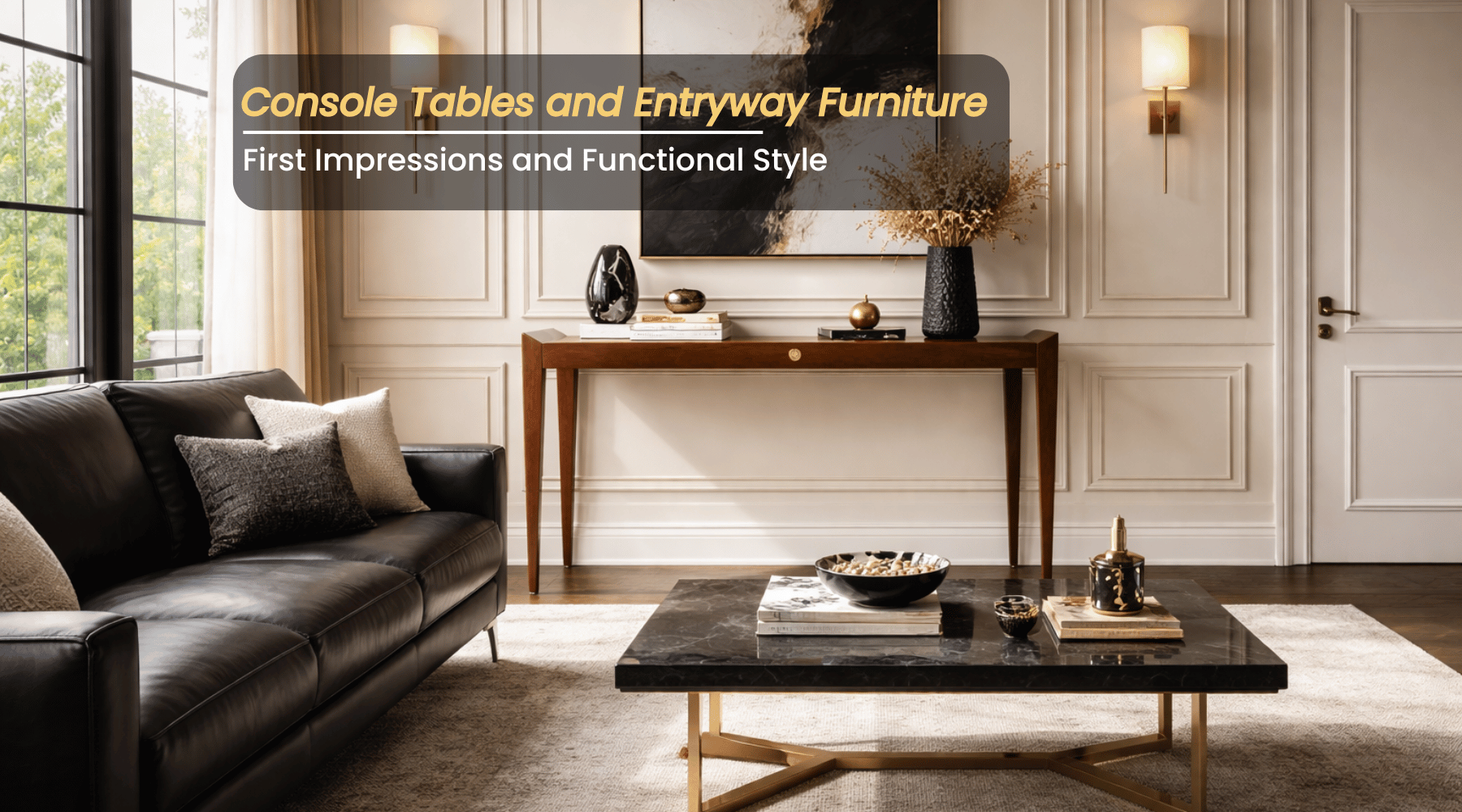
Console Tables and Entryway Furniture: First Impressions and Functional Style
You know that split second when you walk through someone's front door and the whole house just makes sense? That feeling usually starts with one piece a console table, quietly doing its job. These are the pieces that set the tone for your home's character, greet your guests before you do and give your keys, mail and everyday carry a place to land the moment you step inside. Getting this choice right means finding something that looks as intentional as it feels useful.
What makes console tables so easy to love is how far they travel beyond the entryway. Their slim, narrow build fits hallways, living room walls, the space behind a sofa, anywhere that needs a little presence without eating up square footage. Choose well, and you've got a piece that moves with your life, working just as beautifully in a new spot as it did on day one.
This guide walks through everything that matters when choosing console tables and entryway furniture from sizing and style to construction quality and placement ideas. Whether you're furnishing a spacious foyer or making the most of a smaller apartment entry, understanding what goes into a well-built console helps you choose a piece that welcomes beautifully for generations to come.
Understanding Console Table Types
Console tables encompass various configurations suited to different spaces and purposes. Understanding available types helps identify pieces best matching specific needs. Each configuration offers particular advantages affecting both function and visual impact.
Traditional Console Tables
Traditional console tables feature elegant proportions with decorative legs, shaped aprons and often carved details. Heights typically range from 30 to 36 inches, positioning surfaces conveniently for placing items during arrivals. Depths generally measure 12 to 18 inches, maintaining narrow profiles appropriate to hallways and entries.
Classic designs may include drawers providing concealed storage for small items. Single drawers centered in the apron represent the most common configuration, though pieces may feature multiple drawers. This storage addresses practical needs while maintaining elegant appearance.
Sofa Tables
Sofa tables position behind sofas, providing display surfaces and lighting placement. These specialized console tables typically match or slightly exceed sofa back height generally 26 to 30 inches. The positioning creates visual backdrop for seating areas while adding functional surface space.
Sofa table length should relate proportionally to sofa dimensions. Pieces spanning approximately two-thirds of sofa length create balanced visual relationships. Shorter tables may appear inadequate while longer pieces extend awkwardly beyond sofa ends.
Entry Benches and Hall Trees
Entry benches combine seating with storage, providing places to sit while removing shoes and compartments for storing them. Some benches incorporate coat hooks or upper storage, functioning as compact hall trees. These pieces suit entries where seating enhances daily routine.
Traditional hall trees combine coat storage, mirror and often bench seating in single floor-standing units. These substantial pieces suit large entries where comprehensive organization benefits household function. The vertical presence creates significant design impact.
Demilune and Specialty Shapes
Demilune tables feature half-moon shapes positioning flat sides against walls. The curved fronts create elegant visual interest while the wall-hugging backs suit narrow spaces. These distinctive pieces add sophistication to formal entries and hallways.
Other specialty shapes including serpentine fronts, kidney shapes and asymmetrical designs offer unique visual character. These statement pieces suit entries where furniture serves primarily as visual focal point rather than practical necessity.
Console Table Type Comparison
|
Type |
Typical Height |
Best Placement |
Primary Function |
|
Traditional Console |
30-36 inches |
Entry, hallway |
Display, drop zone |
|
Sofa Table |
26-30 inches |
Behind sofa |
Display, lighting |
|
Entry Bench |
17-19 inches |
Entry, mudroom |
Seating, storage |
|
Demilune |
30-34 inches |
Formal entry |
Display, elegance |
Sizing Considerations
Console table sizing requires balancing proportional aesthetics with practical space constraints. Both the console dimensions and the space it occupies affect successful placement. Careful measurement prevents disappointing mismatches.
Width and Length
Console table length should complement wall space proportionally. General guidelines suggest tables spanning approximately half to two-thirds of available wall width for balanced appearance. Very short tables may appear lost while very long tables overwhelm spaces.
Standard console lengths range from 36 to 72 inches, accommodating varied spaces from apartment entries to grand foyers. Measure available wall space carefully, accounting for any doors, openings or adjacent furniture affecting practical placement.
For behind-sofa placement, relate table length to sofa dimensions rather than wall width. The furniture grouping should read as unified composition with proportional relationships between elements.
Depth Considerations
Console table depth significantly affects both utility and space impact. Narrow depths of 10 to 12 inches suit tight hallways where clearance matters most. Deeper tables of 14 to 18 inches provide more useful surface area but require adequate passage space.
Circulation clearance behind console tables should allow comfortable passage. Minimum clearance of 30 to 36 inches enables single-file traffic while 42 inches or more allows comfortable two-person passage. Evaluate actual traffic patterns when determining acceptable depth.
Consider what items the console will hold when evaluating depth. Lamps, vases and decorative objects require adequate surface area. Very narrow consoles limit display options and may tip under lamp weight.
Height Guidelines
Standard console heights of 30 to 36 inches position surfaces conveniently for placing items and viewing displayed objects. Taller consoles suit spacious entries with high ceilings while lower heights work in more intimate spaces.
Behind-sofa placement typically calls for heights at or slightly below sofa back height. This positioning prevents visual competition while maintaining accessible surface for lamps and display items. Measure sofa back height before selecting sofa tables.
Consider user heights when selecting console dimensions. Surfaces should allow comfortable item placement without awkward reaching. Households with varied member heights may prefer moderate heights serving everyone adequately.
Style Selection
Console table style establishes entry character and should coordinate with home architecture and interior design. As first furniture visitors encounter, entry consoles deserve careful style consideration. Select pieces reflecting and reinforcing overall home aesthetic.
Traditional and Classical Styles
Traditional console tables feature turned or cabriole legs, shaped aprons and classical proportions. These designs suit homes with traditional architecture and formal entries. Rich wood finishes and refined details communicate established elegance.
Period-specific styles including Queen Anne, Chippendale and Federal offer authentic options for historically appointed homes. Quality reproductions capture period character while incorporating construction improvements ensuring longevity.
Contemporary Designs
Contemporary console tables emphasize clean lines, geometric forms and material expression. Simple rectangular profiles with minimal ornamentation suit modern interiors. Metal accents and mixed materials appear frequently in contemporary designs.
Scandinavian-influenced designs combine warmth with minimalist aesthetic. Light woods, tapered legs, and practical simplicity characterize this approach. These pieces suit contemporary homes seeking warmth without ornamental complexity.
Transitional Options
Transitional console tables blend traditional proportions with simplified details. These versatile pieces coordinate with varied interior styles without committing fully to traditional or contemporary expression. Transitional designs suit evolving tastes and eclectic interiors.
The adaptability of transitional pieces proves valuable given furniture longevity. Console tables serving for decades should accommodate style evolution. Transitional designs maintain relevance across changing decorating preferences.
Material and Construction
Console table materials and construction affect durability, appearance and value significantly. Entry furniture experiences significant daily use, making quality construction particularly important. Understanding material options enables informed selection.
Wood Species
Oak is a dependable choice for entry furniture, offering real durability and a grain that adds natural character to any space. That said, its bolder, coarser texture doesn't always suit more refined or contemporary interiors. Walnut brings a warmer, more polished presence with its smooth figure and rich brown tones, though its moderate hardness can leave it vulnerable over time in a high-traffic entry. Cherry may be the most beautiful of the three as it ages, slowly deepening into a warm, layered patina. But it is a softer wood and busy entryways have a way of testing that over the years.
Rosewood sits in a different category altogether. Its exceptional density means the everyday wear of an active entry; keys set down, bags shifted, coats brushed past, barely registers on the surface. And the grain carries a depth and warmth that gives a console table real presence, the kind you notice the moment you step through the door.
This is why Boston Mills builds every console table from solid rosewood. Your entryway is where your home makes its first impression. The piece standing there should be crafted from a wood that meets that moment with strength, beauty and lasting character.
Joinery Quality
Console table joinery determines structural longevity. Mortise and tenon joints at leg connections provide strength resisting lateral stress. Dovetailed drawer construction ensures drawer longevity under repeated use.
Evaluate joint quality by attempting gentle lateral pressure on the tabletop. Quality console tables resist movement firmly. Any looseness indicates joint problems that worsen over time.
Finish Durability
Entry furniture finishes must withstand challenging conditions including temperature fluctuation, humidity variation and frequent contact with keys, phones and other items. Quality finishes resist these challenges while maintaining beauty.
Catalyzed varnishes and conversion finishes provide maximum durability for entry applications. Traditional finishes including lacquer and oil work well with appropriate care. Evaluate finish quality alongside wood and construction when assessing console tables.
Functional Considerations
Beyond aesthetics, console tables serve practical functions deserving consideration during selection. Understanding how the piece will be used ensures selection meeting actual needs alongside design aspirations.
Drop Zone Function
Entry consoles often serve as drop zones where keys, mail and carried items land during arrivals. This function requires surface area adequate for accumulated items and durable surfaces resisting key scratches and similar wear.
Drawer storage helps organize drop zone items, preventing surface clutter. Drawers containing keys, sunglasses and daily carry items keep surfaces presentable for guests while ensuring items remain accessible.
Display Surface
Console tops showcase decorative objects, flowers and art creating welcoming entry vignettes. Adequate surface area accommodates display arrangements without crowding. Consider display intentions when evaluating console dimensions.
Lamp placement requires sufficient depth and surface stability. Table lamps add welcoming illumination to entries while requiring adequate surface support. Ensure selected consoles accommodate intended lighting.
Storage Options
Console storage configurations range from simple open shelves through multiple drawers. Drawers conceal clutter while shelves display baskets or decorative objects. Consider storage needs when selecting among configurations.
Lower shelves provide additional storage while maintaining visual lightness above. This configuration suits entries benefiting from both storage and open feeling. Evaluate whether lower shelf storage serves your needs.
Placement Strategies
Thoughtful console table placement maximizes both function and visual impact. Consider traffic patterns, sight lines and relationship to other elements when positioning. Proper placement creates entries that function smoothly while impressing guests.
Entry Placement
Position entry consoles where they catch attention while serving practical function. Placement visible from the front door creates immediate impression. Adjacent positioning to door handles facilitates item drop-off during arrivals.
Wall mounting mirrors above entry consoles creates classic compositions. The mirror provides last-minute appearance checks while expanding spatial perception. Console and mirror proportions should relate harmoniously.
Hallway Considerations
Hallway placement requires careful attention to circulation clearance. Narrow consoles suit tight hallways while deeper pieces work in wider passages. Never compromise safe passage for furniture placement.
Long hallways may accommodate multiple console tables creating rhythm and visual interest. Consistent or intentionally varied pieces can both work depending on design intent. Consider the hallway journey when planning furniture placement.
Living Room Integration
Console tables behind sofas extend living room functionality while defining space edges. These positions provide surfaces for lamps illuminating seating areas and display space for objects visible from seating positions.
Console tables against living room walls can substitute for traditional media furniture or provide display surfaces below artwork. These positions integrate console function throughout living spaces beyond traditional entry applications.
Caring for Console Tables
Entry furniture experiences significant daily wear requiring appropriate maintenance. The prominent position makes condition particularly visible. Consistent care preserves beauty while managing inevitable use impacts.
Surface Protection
Protect console surfaces from scratches using decorative trays for keys and small items. Felt pads beneath decorative objects prevent scratching during cleaning. These simple practices prevent accumulated wear.
Address spills and water from flower vases immediately. Entry tables often hold fresh flowers whose water can damage finishes. Waterproof liners beneath vases provide protection while enabling floral display.
Regular Maintenance
Dust console tables regularly given their prominent visibility. Entry dust accumulates quickly from door opening and foot traffic. More frequent dusting than other furniture may prove necessary.
Periodic waxing provides additional protection while building attractive patina. Entry furniture benefits from this protection given environmental challenges from door proximity. Quality wax maintains finish beauty through daily encounters.
Can console tables serve as primary entry furniture?
Yes, console tables can effectively serve as primary entry furniture in many homes. The combination of display surface, potential drawer storage and visual impact addresses key entry needs. Console tables work particularly well in entries without space for larger furniture pieces. The surface provides landing zone function while drawer storage organizes daily essentials. Paired with wall-mounted mirror and coat hooks, a console table creates functional entry without requiring significant floor space. Larger entries may benefit from additional pieces like benches or hall trees, but modest entries function well with console tables as primary furniture.
What distinguishes console tables from other table types?
Console tables are distinguished primarily by their narrow depth, typically 12 to 18 inches, designed for positioning against walls. This shallow profile allows placement in hallways and entries where deeper furniture would obstruct passage. Console tables stand taller than coffee tables, typically 30 to 36 inches, positioning surfaces at convenient standing height. Unlike dining or work tables intended for seated use, console tables serve primarily for display and item placement while standing. The wall-adjacent positioning means console tables typically feature finished fronts and sides with simpler backs. These characteristics combine to create furniture serving the specific needs of transitional spaces.
What items typically belong on entry console tables?
Entry console tables typically hold a combination of decorative and functional items. Decorative items include table lamps providing welcoming illumination, vases with fresh or dried flowers, framed photographs, sculptural objects and seasonal decorations. Functional items include decorative trays or bowls for keys and small items, mail organizers and attractive storage boxes for sunglasses or similar daily carry items. Many entries incorporate mirrors above console tables, creating compositions addressing both decoration and function. The balance between decorative and functional items depends on household needs and aesthetic preferences. Avoid cluttered appearance by editing items regularly and using attractive containers for practical necessities.
How do console tables compare to entry benches for entry furniture?
Console tables and entry benches serve different primary functions despite both being common entry furniture. Console tables emphasize display, drop zone function and visual impression at eye level. Entry benches prioritize seating for shoe removal and lower storage for footwear and bags. Console tables suit entries where seating is unnecessary or provided elsewhere. Benches suit entries where daily routines benefit from seating, particularly in households with children or where shoe removal is customary. Some entries accommodate both pieces, with console tables providing display and benches providing seating. Selection depends on household routines, available space and aesthetic priorities.
How should buyers measure for console table selection?
Measure for console table selection through systematic space assessment. First, measure available wall width where the console will position. Second, measure clearance depth from wall to opposite surface or traffic path, subtracting minimum passage clearance of 30 to 36 inches. Third, note ceiling height and any architectural features affecting placement. Fourth, measure heights of adjacent furniture or wall features for proportion reference. Fifth, consider door swing clearance if near entries. Sixth, photograph the space for reference during shopping. Create templates from cardboard or tape to visualize console presence before purchasing. These measurements and visualizations prevent selecting pieces too large or small for intended spaces.
Do console tables require wall mounting?
No, most console tables are freestanding furniture requiring no wall mounting. The narrow depth and relatively low center of gravity typically provide adequate stability without attachment. However, very narrow or tall console tables may benefit from wall securing, particularly in households with children who might climb or lean on furniture. Earthquake-prone areas may warrant securing as precaution. Some console designs intended for specific installations may include wall-mounting provisions. Evaluate stability of specific pieces, considering household circumstances when deciding whether securing is advisable. When in doubt, securing furniture prevents potential tip-over incidents regardless of table design.
How can homeowners style console tables effectively?
Style console tables through layered compositions balancing height, scale and visual interest. First, establish a focal point, typically a mirror or artwork mounted above the console. Second, add a table lamp providing both illumination and vertical height, positioning on one side for asymmetric interest. Third, incorporate organic elements like fresh flowers or potted plants adding life and color. Fourth, include personal items like framed photographs creating connection. Fifth, add sculptural objects or decorative boxes providing visual interest and potential storage. Sixth, create intentional groupings at varied heights rather than evenly spaced items. Edit ruthlessly, removing items that clutter rather than enhance. Change displays seasonally for fresh interest throughout the year.
Creating Memorable Welcomes
Console tables and entryway furniture shape first impressions while serving essential daily functions. These pieces establish home character immediately, making their selection worthy of careful consideration. The right console balances aesthetic impact with practical utility, serving both guests and residents beautifully.
Investment in quality entry furniture pays dividends through daily encounters and lasting impressions. The craftsmanship distinguishing fine console tables ensures decades of reliable service while maintaining the beauty that welcomes guests warmly.
Boston Mills creates console tables designed to make memorable first impressions while serving your daily needs reliably. Our solid wood construction and traditional joinery ensure furniture welcoming guests beautifully for generations. The warmth of fine materials and careful craftsmanship creates entries worthy of the homes they introduce.