Furniture for Home Entertaining: Creating Spaces That Welcome and Gather
The first dinner party we hosted after our rosewood dining table arrived rewrote the way we thought about having people over. Before that table, we mostly didn't. Ours was too small, too wobbly, a little embarrassing to set in front of guests, so we met friends at restaurants instead. It was fine. It just never felt like hospitality. Then the new table came home: solid, generous, seating eight with the leaves extended, the grain catching the light like it had been waiting for company. That weekend, we sent the invitations. The table almost asked us to.
That night was a quiet revelation. Friends who'd known us for years told us the house finally felt like ours. Conversations stretched longer, looser, the way they only do around a real table. People lingered after dessert. They poured another glass. They didn't reach for their coats. The table wasn't a surface for plates; it was the architecture of the evening, the steady thing that made connection feel inevitable. And somewhere between the second bottle and the last laugh, we understood what our parents and grandparents had always known: the dining furniture they'd invested in; the kind that once seemed extravagant to our younger selves was never about the wood. It was about the life that gathered around it.
Furniture made for entertaining lives a different life than furniture made for daily use. It seats more people, weathers heavier nights, holds the rhythm of a long conversation and sets a tone that lets guests exhale the moment they walk in. Knowing what hosting actually asks of a piece is what turns a good table into the right one and turns a house into the place everyone wants to come back to. Here's what years of gathering friends and family around our rosewood table have taught us.
What Entertaining Demands from Furniture
Entertaining places specific demands on furniture that everyday use does not. Understanding these requirements helps you choose pieces that serve both daily life and special occasions.
Capacity for Guests
Entertaining requires seating and surface for more people than daily household members. A couple who normally needs seating for two must accommodate eight or twelve for a dinner party. This expanded capacity can come from expandable furniture, supplemental pieces or furniture sized for maximum anticipated gatherings rather than daily minimums.
Dining tables with extension leaves provide flexibility between daily use and entertaining capacity. A rosewood table that seats six daily can expand to seat ten with leaves inserted. This adaptability serves both intimate family dinners and larger gatherings without requiring two separate tables.
Living room seating similarly needs to accommodate guests beyond daily household members. The sofa that serves two comfortably every evening must somehow serve the eight guests arriving for a cocktail party. Additional chairs, ottomans that provide seating and arrangement flexibility all address this capacity challenge.
Durability Under Heavy Use
Entertaining concentrates use that normally spreads across days into single events. A dinner party places hours of continuous stress on dining furniture. Drinks get set down carelessly. Chairs get pushed back repeatedly. Surfaces experience more contact in one evening than in a typical week.
Quality furniture handles this concentrated use without showing immediate wear. Solid wood construction absorbs the stress of heavy entertaining. Durable finishes resist the moisture rings and minor spills that parties inevitably produce. The furniture that hosts many parties over many years needs construction that handles that accumulated use.
Cheap furniture reveals its cheapness when entertaining. The table that seems adequate for family meals shows wobble when eight people lean on it. The chairs that work for occasional sitting creak alarmingly when dinner party guests shift through a long evening. Quality construction matters most when furniture is asked to perform at capacity.
Facilitating Conversation
Entertaining is fundamentally about bringing people together in conversation. Furniture should facilitate this connection rather than impeding it. Seating arrangements, table shapes and spatial relationships all affect how easily guests can talk to each other.
Round and oval dining tables facilitate conversation better than long rectangular ones because no one sits at distant ends. Guests can see and speak to everyone around a round table. Rectangular tables work well for smaller groups but create separate conversation zones at larger sizes.
Living room arrangements for entertaining should create conversation groupings rather than theater style orientation toward televisions. Multiple seating areas allow guests to circulate and form different conversation groups. The ability to reconfigure furniture for events creates flexibility that fixed arrangements cannot provide.
Creating Welcoming Atmosphere
Beyond function, furniture creates atmosphere that affects how welcome guests feel. Quality furniture signals that guests are worth hosting properly. Beautiful materials and craftsmanship create environments that feel special rather than ordinary.
A rosewood sideboard holding appetizers communicates differently than a folding table with a tablecloth. The investment in quality furniture tells guests they matter. The atmosphere created by beautiful wood and careful craftsmanship makes occasions feel elevated without requiring formal behavior.
Comfort contributes to atmosphere as much as beauty. Chairs that become uncomfortable after thirty minutes undermine even the most beautiful dinner party. Seating that supports guests through long evenings of conversation keeps energy positive and guests lingering rather than watching clocks.
Dining Furniture for Entertaining
The dining room is the heart of most home entertaining. Furniture choices here affect everything from intimate dinners to holiday gatherings.
Choosing Tables for Gatherings
Dining table selection should account for maximum anticipated entertaining rather than just daily use. The table that perfectly seats your family may be inadequate for the holiday gatherings and dinner parties you hope to host. Size your table for the gatherings you want to have, not just the meals you eat daily.
Extension tables provide the flexibility that entertaining requires. A rosewood table with two leaves can transform from intimate four person scale to generous ten person capacity. This range serves both Tuesday night family dinner and Saturday night dinner party. Quality extension mechanisms matter because you will actually use them.
Table shape affects entertaining dynamics significantly. Round tables up to about 60 inches work beautifully for conversation but cannot expand much beyond that without becoming impractical. Rectangular tables expand more easily and fit typical dining room proportions better. Oval tables combine the conversational advantages of round with the expandability of rectangular.
Seating Enough Guests
Dining chairs should exist in quantities that match table capacity. Eight chairs for a table that seats eight with leaves extended. Matching chairs for daily positions plus coordinating chairs for expanded seating works well and provides visual interest.
Chair storage becomes an issue when entertaining chairs exceed daily needs. Host chairs or captain's chairs at table ends can remain in place daily while side chairs for expansion store elsewhere. A few extra chairs in bedrooms, home office or storage wait until needed for gatherings.
Comfortable dining chairs matter especially for entertaining when guests may sit for two or three hours through multiple courses and extended conversation. The chair that works for a quick weeknight dinner may prove torturous during a lingering dinner party. Test chairs for extended comfort, not just initial impression.
Buffet and Serving Furniture
Sideboards and buffets provide an essential function for entertaining that dining tables alone cannot supply. Surface for serving dishes. Storage for extra plates, linens and serving pieces. Staging area for courses before they reach the table. A dining room without serving furniture limits entertaining possibilities significantly.
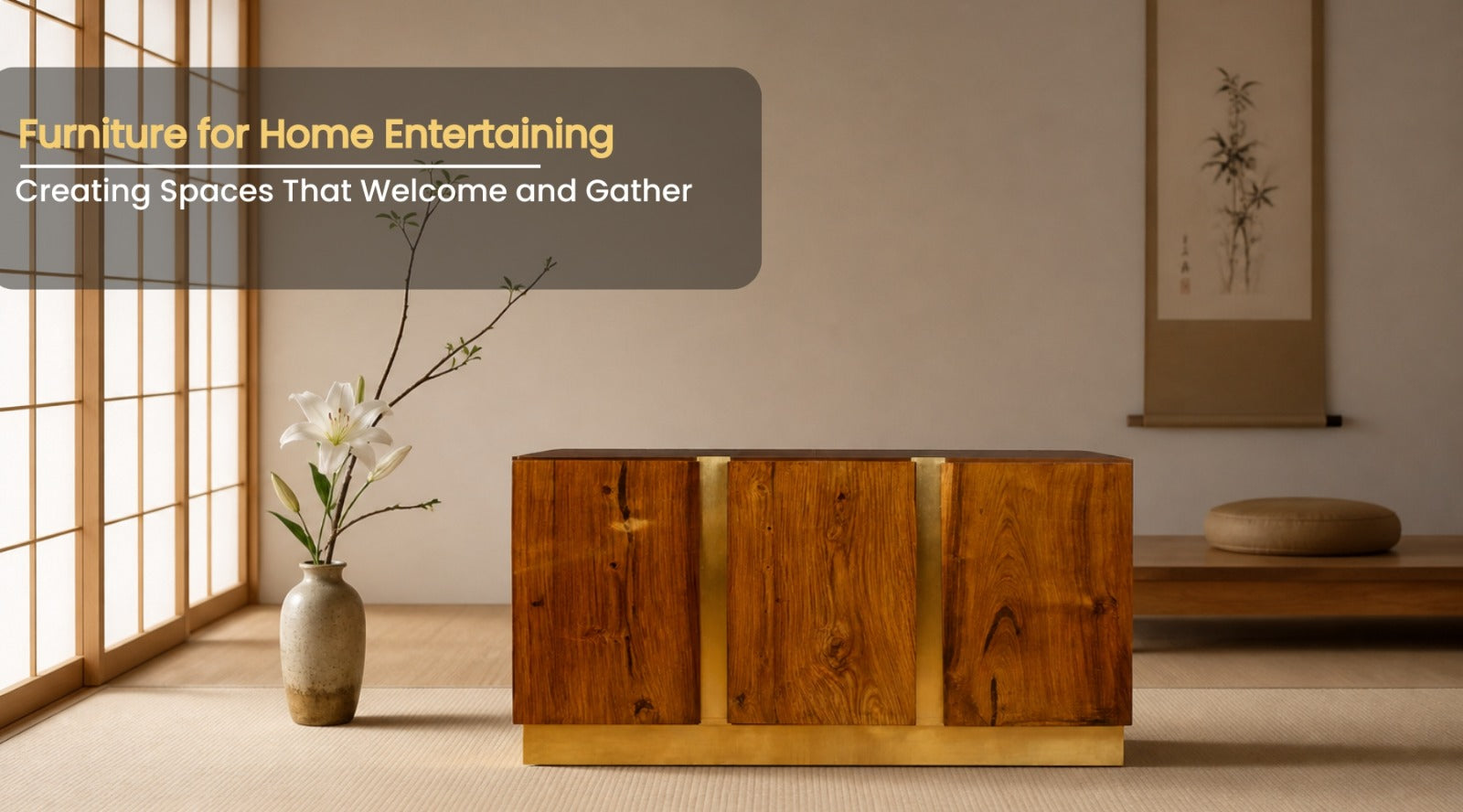
A rosewood sideboard serves double duty as storage for everyday dining items and staging for entertaining. The surface holds appetizers during cocktails, side dishes during dinner and desserts during final courses. The presence of this furniture makes entertaining easier in ways you notice only when trying to host without it.
Bar carts or drink stations supplement sideboards for beverage service. A dedicated surface for drinks keeps traffic away from food service areas and allows guests to refresh their own drinks without interrupting hosts. Mobile carts can position wherever current entertaining needs require.
Living Room Furniture for Entertaining
Living rooms host the gatherings that happen before, after or instead of dinner. Furniture here should facilitate mingling, conversation and comfort for all your guests.
Flexible Seating Arrangements
Living room seating for entertaining should accommodate reconfiguration. The arrangement that works for family television watching may not work for cocktail party mingling. Furniture that can be moved and regrouped creates flexibility that fixed heavy pieces cannot provide.
Multiple seating pieces rather than one large sectional provide more flexibility for entertaining. A sofa plus several armchairs can be arranged in various groupings. Add ottomans that serve as seating when needed. This distributed approach adapts to different entertaining situations.
Consider traffic flow during parties when arranging furniture. Guests need to circulate, reach food and drinks, find seating and form conversation groups. Arrangements that block flow or create bottlenecks frustrate entertaining even if they work fine for daily family life.
Surfaces for Drinks and Plates
Cocktail parties and casual gatherings require surfaces where guests can set drinks and small plates. The living room with nowhere to put things forces guests to hold everything constantly, which becomes tiring and limits what they can actually enjoy at your gathering.
Coffee tables provide central surface but may not be accessible to all seating positions. Side tables and end tables extend surface throughout the room. Small accent tables can be positioned specifically for parties and stored when not needed.
Quality matters for these surfaces because drinks will be set on them repeatedly throughout any event. Water rings and condensation test finishes constantly during parties. Rosewood and other quality hardwoods with good finishes handle this use without showing damage. Cheap veneered surfaces may show party wear immediately and permanently.
Accommodating Standing and Mingling
Not all entertaining happens seated. Cocktail parties involve standing, mingling and circulating throughout the space. Furniture arrangements should accommodate this movement without making guests feel they are navigating an obstacle course to reach each other.
Clear pathways between seating groupings allow circulation. Furniture pushed to room perimeters opens central space for standing groups. High tables or counter height surfaces provide places to gather while standing, which proves useful for larger parties where seating cannot accommodate everyone comfortably.
The balance between seating and standing space depends on your entertaining style. Dinner parties need more seating. Cocktail parties need more circulation space. Furniture that moves easily allows optimizing for each occasion as it arises.
Furniture Needs by Entertaining Style
|
Entertaining Style |
Key Furniture Needs |
Capacity Focus |
|
Dinner parties |
Expandable table, comfortable chairs, sideboard |
Seated dining for 8-12 |
|
Cocktail parties |
Distributed surfaces, flexible seating, clear paths |
Standing room for 15-25 |
|
Holiday gatherings |
Maximum table extension, extra chairs, serving pieces |
Multi-generational groups |
|
Casual get-togethers |
Comfortable seating, coffee table, relaxed arrangement |
Conversation groups of 6-8 |
Investing in Entertaining Furniture
Furniture for entertaining deserves investment because it serves purposes beyond daily function and receives heavier use than everyday pieces might experience.
Cost Per Occasion Analysis
Restaurant entertaining costs accumulate quickly over time. Dinner for eight at a decent restaurant easily exceeds three hundred dollars with drinks and tip. A dozen such dinners per year costs more than a quality dining table that hosts those same gatherings at home for decades to come.
The rosewood table that seems expensive becomes economical when measured against the restaurant dinners it replaces. Each dinner party hosted at home rather than a restaurant returns value on the furniture investment. The furniture pays for itself while providing better experiences than restaurant hosting allows.
Beyond direct cost comparison, home entertaining creates experiences restaurants cannot match. The intimacy of your own space. The ability to linger indefinitely without waiters hovering. The personal touch of hosting in your home. These intangible benefits add value beyond any economic calculation.
Quality That Handles the Demands
Cheap furniture fails under entertaining demands. The table that works for daily family meals may not survive regular dinner parties over the years. Investing in quality ensures furniture handles the concentrated use that entertaining requires without showing premature wear.
Quality construction provides the stability that entertaining demands. Eight people leaning on a table requires stronger joinery than two people eating quietly. Quality finishes resist the moisture and wear that parties produce inevitably. Quality materials maintain beauty through years of heavy and repeated use.
The furniture that hosts your entertaining becomes associated with all the gatherings that happen around it over the years. Quality pieces worthy of those associations create the experiences you want to provide. The table that impresses guests every time it appears justifies whatever investment it required.
How large should a dining table be for entertaining?
Dining table size for entertaining should accommodate your maximum anticipated gatherings, not just daily use. Allow approximately 24 inches of table length per seated guest for comfortable spacing. A table for eight needs about 96 inches or 8 feet in length. Consider an extension table if daily needs differ significantly from entertaining needs. A table that expands from 60 to 96 inches serves both intimate family dinners and larger gatherings. Measure your dining room to ensure the expanded table fits with enough clearance for chairs and movement, typically 36 to 42 inches from table edge to wall.
What makes dining chairs suitable for long dinner parties?
Dining chairs suitable for entertaining must provide comfort through extended sitting of two to three hours. Look for adequate seat depth, supportive backs and padding or contouring that prevents pressure points from developing. Arms provide comfort but may limit how closely chairs push to the table. Test chairs by sitting for at least ten minutes, shifting as you would during conversation. Avoid chairs that feel fine initially but become uncomfortable quickly. Durability matters because entertaining chairs see heavy use with guests of varying sizes. Quality construction handles this use without developing wobbles or creaks.
How much living room seating does entertaining require?
Living room seating for entertaining depends on your gathering style. Dinner party hosts need seating for pre dinner drinks for expected dinner guests, typically 8 to 12 seats total. Cocktail party hosts need less seating because guests stand and mingle, perhaps seating for half the guest count plus adequate standing room. The key is flexibility in your arrangement. Multiple movable pieces adapt to different needs better than one large fixed sectional. Supplement permanent seating with ottomans, benches and occasional chairs that can be added for parties and stored when not needed.
Should entertaining furniture match everyday furniture?
Entertaining furniture need not match daily furniture exactly but should coordinate stylistically throughout your home. A rosewood dining table relates harmoniously to rosewood living room pieces without requiring identical design details. Consistent quality level matters more than matching style. Guests notice when entertaining areas feature dramatically better furniture than family areas, which can feel performative rather than genuinely welcoming. The ideal is a home where quality and style flow consistently through all spaces, with entertaining furniture simply being the pieces that happen to anchor gathering spaces naturally.
How can small homes accommodate entertaining well?
Small homes accommodate entertaining through furniture flexibility and creative use of available space. Expandable tables that serve daily needs compactly but expand for guests are essential for small home entertainers. Furniture that serves multiple purposes, like ottomans that provide both coffee table surface and extra seating maximizes utility. Arrange for entertaining by temporarily relocating furniture that impedes gathering. Some hosts move bedroom or office furniture to create party space, returning it afterward. Embrace the intimacy that small space entertaining provides rather than apologizing for it. Thoughtfully chosen quality furniture makes small spaces feel intentional rather than cramped.
What serving furniture helps most with entertaining?
Sideboards, buffets and credenzas provide essential serving and staging surface for entertaining. These pieces hold serving dishes, extra plates and beverages during parties while storing linens, serving pieces and dining accessories between events. Bar carts provide mobile drink service that can position wherever needed during gatherings. Console tables in adjacent spaces extend staging capacity further. The absence of serving furniture forces hosts to use kitchen counters and dining tables for staging, which limits what can be served and creates traffic problems. Investing in serving furniture dramatically improves entertaining capability and reduces hosting stress.
How does furniture arrangement change for parties?
Furniture arrangement for entertaining often differs from daily arrangement significantly. Living rooms may need seating regrouped for conversation rather than television viewing. Dining rooms may need expanded tables and additional chairs brought in. Traffic paths may need clearing for guest circulation throughout the space. Some hosts maintain daily arrangements and adjust for each event as needed. Others create primary arrangements that serve entertaining and adapt slightly for daily life. The key is furniture light enough to move or arrangements that work reasonably well for both purposes. Knowing how you will actually use spaces for entertaining helps you choose furniture and create arrangements that require minimal adjustment.
Furniture That Brings People Together
That rosewood dining table has hosted hundreds of dinners since that first tentative party years ago. Friendships have deepened around it. Family milestones have been celebrated. Holiday traditions have established themselves in our home. The table that once intimidated us with the entertaining it demanded has become the center of our social life, the platform for connection that we did not know we needed until we finally had it.
Furniture for entertaining is not luxury or indulgence. It is infrastructure for human connection, the physical equipment that makes gathering possible and pleasurable. Without adequate furniture, hosting remains difficult and awkward. With appropriate furniture, hosting becomes natural and enjoyable. The investment in entertaining furniture is investment in the relationships that entertaining nurtures over years and decades.
At Boston Mills, we design furniture for gathering. Every piece begins at our Dallas World Trade Center showroom, where it's developed by our design team, then brought to life by skilled craftsmen and carefully reviewed for finish, proportion and quality before it reaches your home. Our rosewood dining tables seat the dinner parties that build friendships. Our sideboards stage the meals that mark celebrations. Our chairs provide comfort through long evenings of conversation and laughter. We design for the moments when people come together, because those moments deserve furniture equal to their importance.