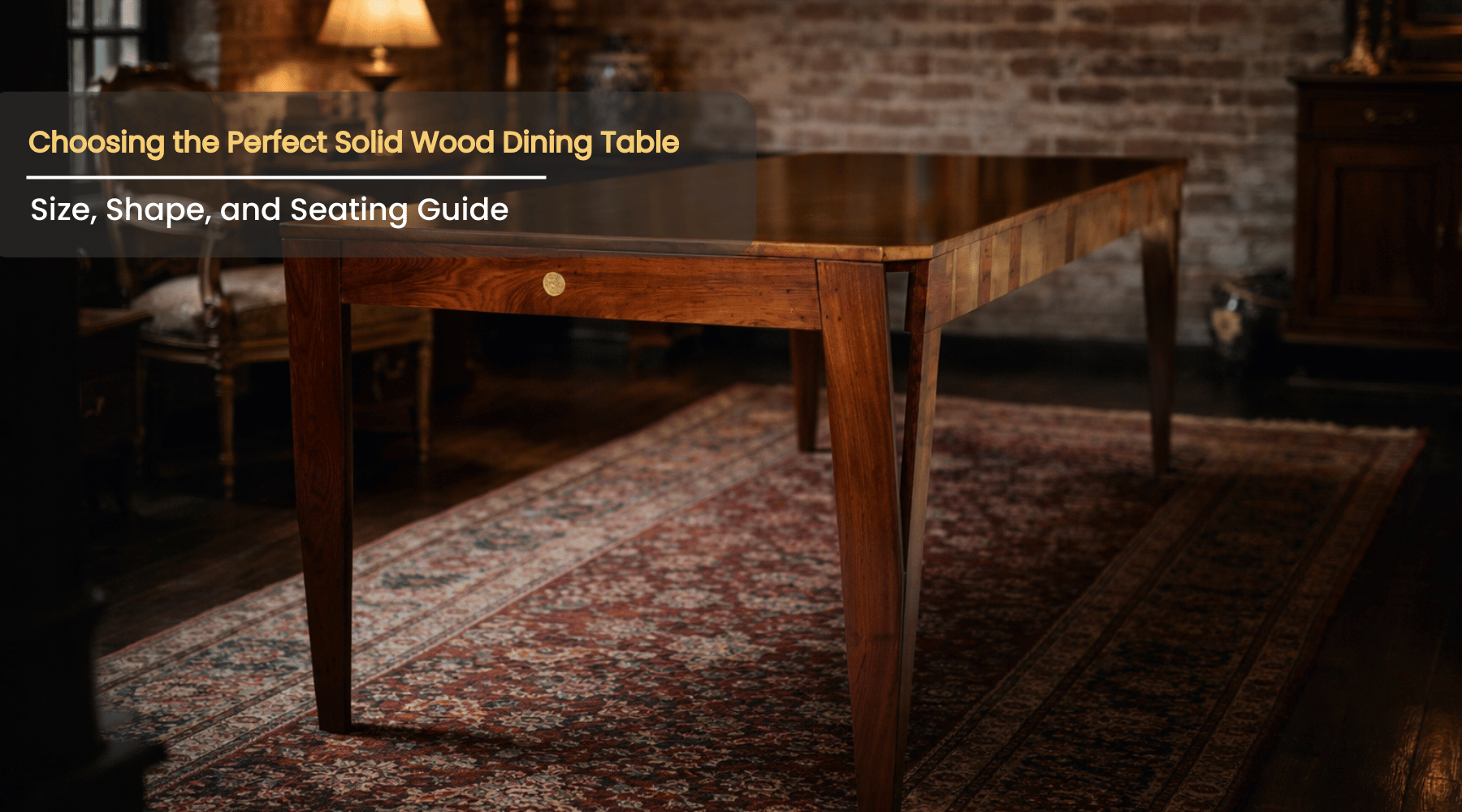
Choosing the Perfect Solid Wood Dining Table: Size, Shape, and Seating Guide
There's something about a solid wood dining table that holds more than plates and glasses, it holds the memory of every Thanksgiving toast, every weeknight homework session, every slow Sunday morning with coffee and conversation. Choosing the right one means finding a table that fits not just your room, but the way your family actually lives.
Getting dining table dimensions right makes all the difference between a room that breathes and one that feels cramped the moment everyone sits down. A table that's too large swallows the space around it. One that's too small leaves your guests bumping elbows before the first course arrives. When you understand how table size, room proportions and seating capacity work together, you're not guessing, you're investing in something your family will gather around for decades.
Shape matters more than most people expect and it goes well beyond looks. A rectangular table seats the most guests with room to spare. A round table pulls everyone into the conversation, nobody's stuck at the far end. An oval table offers a graceful middle ground while a square table can transform the right room into something truly intimate. Each shape shifts the feel of a meal in ways worth thinking through before you commit.
Understanding Dining Table Dimensions
Dining table sizing follows established standards developed through centuries of furniture making. These measurements ensure comfortable dining regardless of table style or material. Understanding standard dimensions helps evaluate options and identify tables suited to specific needs.
Standard Table Heights
Standard dining table height measures 28 to 30 inches from floor to tabletop surface. This range accommodates most adults comfortably when paired with chairs having seat heights of 17 to 19 inches. The 10 to 12 inch gap between seat and table allows adequate thigh clearance while keeping arms at comfortable eating positions.
Counter-height tables stand 34 to 36 inches tall, requiring stools or counter-height chairs with 24 to 26 inch seats. This configuration suits casual dining, open-concept kitchens and spaces where visual separation between kitchen and dining areas benefits room flow. Counter height works less well for formal dining or extended meals.
Bar-height tables measure 40 to 42 inches, paired with 28 to 30 inch bar stools. This height suits entertainment spaces, home bars and very casual dining situations. Bar height rarely appears in formal dining rooms due to reduced comfort during extended seating.
Per-Person Space Requirements
Comfortable dining requires 24 inches of table width per person as a minimum standard. This measurement provides adequate elbow room for eating without crowding neighbors. Formal dining or larger individuals benefit from 28 to 30 inches per person. Tight seating at 20 to 22 inches works only for children or very casual situations.
Table depth per place setting requires 12 to 15 inches from edge toward center. This depth accommodates dinner plates, silverware and glassware in standard configurations. Formal dining with multiple courses and elaborate place settings may require 18 inches. Casual family meals function well with 12 inches.
Center space for serving dishes, centerpieces and shared items requires 12 to 20 inches of table width beyond place settings. Narrow tables with 36-inch widths provide minimal center space suited to family-style serving. Wide tables of 42 to 48 inches accommodate elaborate centerpieces and formal service styles.
Dining Table Size and Seating Capacity Reference
|
Table Shape |
Dimensions |
Comfortable Seating |
Maximum Seating |
|
Rectangular |
60" x 36" |
4-6 persons |
6 persons |
|
Rectangular |
72" x 36" |
6 persons |
8 persons |
|
Rectangular |
84" x 42" |
8 persons |
10 persons |
|
Rectangular |
96" x 42" |
8-10 persons |
12 persons |
|
Round |
42" diameter |
4 persons |
4 persons |
|
Round |
54" diameter |
6 persons |
6 persons |
|
Round |
72" diameter |
8 persons |
10 persons |
Room Size Considerations
Dining room dimensions constrain table size more than any other factor. Adequate clearance around the table ensures comfortable seating, safe movement and proper room proportion. Measuring your space accurately before shopping prevents returns and disappointment.
Minimum Clearance Requirements
Chair clearance requires 36 inches minimum from table edge to wall or obstruction. This distance allows chairs to pull out fully for seating and standing without wall contact. Increasing clearance to 42 to 48 inches permits walking behind seated diners, essential for serving and traffic flow in active households.
Service clearance of 48 to 54 inches from table edge accommodates servers passing behind chairs during formal dining. This generous spacing suits entertainment-focused households where dinner parties and holiday gatherings occur regularly. Casual dining spaces function adequately with 36 to 42 inches.
Calculate maximum table size by subtracting clearance requirements from room dimensions. A 12 by 14 foot dining room with 42-inch clearance on all sides accommodates tables up to 60 by 84 inches. Reducing clearance to 36 inches permits 72 by 96-inch tables in the same room, but sacrifices comfort and flow.
Room Proportion Guidelines
Visual balance requires appropriate table size relative to room volume. Oversized tables crowd spaces regardless of technical clearance compliance. Undersized tables appear lost in large rooms, creating awkward proportions. The table should command the room without dominating it.
Tables should occupy roughly one-third to one-half of available floor space for optimal proportion. A 12 by 14 foot room (168 square feet) suits tables of 56 to 84 square feet, translating to approximately 60 by 84 inches maximum. Larger tables require correspondingly larger rooms to maintain visual balance.
Choosing the Right Table Shape
Table shape affects dining experience, conversation dynamics, room flow and seating flexibility. Each shape offers distinct advantages suited to different household needs, room configurations and entertaining styles. Consider how you use your dining space before committing to shape.
Rectangular Tables: Maximum Versatility
Rectangular tables provide maximum seating efficiency and suit the majority of dining rooms. The elongated shape fits naturally in rectangular rooms while accommodating traditional head-of-table seating arrangements. Most formal and casual dining situations work well with rectangular tables.
Seating capacity scales easily with rectangular shapes. Adding length increases capacity without changing width or room layout. Extendable rectangular tables offer maximum flexibility, accommodating intimate family dinners and large gatherings in the same piece.
The rectangular shape does create natural hierarchy through head and foot positions. This traditional arrangement suits formal households and those who value defined seating roles. Families preferring egalitarian dining may find rectangular tables reinforce unwanted dynamics.
Round Tables: Conversation and Connection
Round tables eliminate head positions, creating democratic seating where all diners occupy equivalent positions. This configuration encourages conversation across the table and eye contact among all participants. Families valuing connection and discussion often prefer round tables for daily dining.
Space efficiency differs between round and rectangular shapes. Round tables require square floor space, potentially wasting corner areas in rectangular rooms. However, the absence of corners allows easier traffic flow around the table and reduces collision risks in tight spaces.
Seating capacity limits constrain round table usefulness for large gatherings. Tables beyond 72 inches diameter create conversation difficulties as center distance increases. Large households requiring 10 or more seats generally find rectangular tables more practical despite round table appeal.
Oval Tables: Blending Benefits
Oval tables combine rectangular seating capacity with rounded aesthetics and improved traffic flow. The curved ends soften visual appearance while maintaining elongated shape suited to rectangular rooms. This compromise appeals to households wanting traditional capacity without hard corners.
End seating at oval tables differs from rectangular configurations. Curved ends provide less usable space than squared corners, potentially reducing effective capacity by one to two seats. However, the softer shape often feels less crowded than equivalent rectangular tables.
Oval shapes suit formal and transitional design styles particularly well. The elegant curves complement traditional furniture while functioning in contemporary spaces. This versatility makes oval tables sound choices for households anticipating style evolution over decades of use.
Square Tables: Intimate Dining
Square tables suit small households and intimate dining situations. The equal-sided shape provides balanced seating for four without hierarchy or head positions. Square configurations work well in square rooms, breakfast nooks and apartment dining areas.
Scaling limitations restrict square table usefulness. Tables beyond 48 inches square create uncomfortable reaching distances to center areas. Larger households generally find rectangular or round shapes more practical than oversized squares.
Game playing and activities beyond dining benefit from square tables. Card games, board games and crafts distribute equally around square shapes. Households using dining tables for multiple purposes may find square configurations advantageous.
Extendable vs Fixed Tables
The choice between extendable and fixed tables balances flexibility against simplicity and stability. Each approach offers distinct advantages depending on household size, entertaining frequency and space constraints.
Extension Mechanisms
Butterfly leaf mechanisms store leaves beneath the tabletop, eliminating separate storage requirements. Pulling table ends apart deploys leaves automatically through mechanical linkages. This convenient system suits frequent extenstion users but adds complexity that may require maintenance.
Self-storing leaves slide into table aprons when not in use, keeping leaves accessible without cabinet storage. This approach works with heavier solid wood leaves that butterfly mechanisms cannot support. Self-storing designs maintain table appearance while ensuring leaves remain available.
Separate leaf storage requires dedicated cabinet or closet space for leaves removed during daily use. This traditional approach accommodates unlimited leaf sizes and quantities but risks leaf damage, warping or loss. Households choosing separate storage should plan dedicated and climate-controlled locations.
Stability Considerations
Fixed tables provide maximum stability through continuous construction without joints or mechanisms. Solid wood expands and contracts seasonally, but fixed tables accommodate this movement without operational concerns. Heirloom-quality fixed tables last generations with minimal maintenance.
Extension mechanisms introduce potential failure points that fixed tables avoid. Slides, locks and hinges may loosen, bind or break over decades of use. Quality mechanisms from reputable manufacturers minimize these concerns but cannot eliminate them entirely.
Wood Species Selection
Solid wood dining tables showcase natural material beauty while providing durability for daily use. Different wood species offer varying aesthetics, hardness, and character suited to different design preferences and functional requirements.
Hardwood Options for Dining Tables
Rosewood stands in a class of its own among dining table hardwoods. Its grain tells a story no other species can sweeping patterns that shift from deep purple to golden brown, catching light differently with every glance. Over years of family meals, holiday spreads and quiet morning coffees, rosewood doesn't just hold up , it gets more beautiful. The wood develops a rich, living patina that rewards daily use instead of punishing it. And there's a weight to a rosewood table, a presence you feel the moment you set your hands on it, that quietly says this isn't going anywhere. That combination of density, natural resilience and evolving beauty is exactly why Boston Mills builds every dining table from 100% solid Dalbergia Sissoo rosewood, it's the only material worthy of furniture meant to last generations.
Other hardwoods like oak, walnut, maple and cherry each bring something to the table, oak's rugged grain, walnut's warm brown tones, cherry's slow-developing blush, maple's clean brightness. They're respectable woods with loyal followings. But none of them match rosewood's rare combination of extreme hardness, resistance to wear and the kind of visual depth that turns a dining table into the most striking piece in your home. When you're choosing a table your grandchildren will fight over someday, the wood matters and rosewood is the answer.
Finish Considerations for Dining Tables
Dining table finishes must balance beauty with practical durability. Tables experience water exposure, heat from dishes and daily wear that challenge protective coatings. Selecting appropriate finishes ensures long-term satisfaction.
Lacquer and conversion varnish provide excellent protection for dining applications. These finishes resist water spotting, heat damage and scratching better than traditional oils or shellac. Most contemporary dining tables use catalyzed lacquer for durability.
Oil finishes offer natural beauty but require regular maintenance and provide less protection than film finishes. Households choosing oil-finished tables should expect periodic re-oiling and accept that some wear marks become part of the table's character.
Base and Pedestal Styles
Table base design affects stability, seating flexibility and visual character. Different base styles suit different table shapes, sizes and aesthetic preferences. Understanding base options helps select tables functioning optimally for intended uses.
Leg Configurations
Four-leg tables provide traditional appearance with straightforward construction. Corner legs support tabletops effectively while allowing apron rails that increase rigidity. This conventional approach suits most dining situations and design styles.
Turned legs add decorative detail through shaped profiles ranging from simple tapers to elaborate turnings. Traditional and formal dining rooms often feature turned legs complementing other period details. Contemporary spaces may prefer straight or tapered legs for cleaner aesthetics.
Leg placement affects seating flexibility significantly. Corner legs may interfere with end seating positions, particularly on narrower tables. Set-back legs or shaped legs with angled profiles reduce interference while maintaining structural support.
Trestle and Pedestal Bases
Trestle bases support tables through paired vertical supports connected by horizontal stretchers. This design maximizes legroom by eliminating corner legs while providing excellent stability. Trestle tables suit long rectangular shapes and accommodate benches on table sides.
Pedestal bases center support beneath the tabletop, eliminating leg interference entirely. Single pedestals suit round and smaller tables while double pedestals support longer rectangular shapes. This configuration maximizes seating flexibility but may reduce stability compared to leg or trestle designs.
Split pedestal designs separate base into two or more supports, providing stability for larger tables while maintaining legroom advantages. This approach suits extendable tables where single pedestals cannot support extended lengths adequately.
Coordinating Dining Chairs
Dining chair selection complements table choice while addressing comfort, proportion and style considerations. Chairs and tables should function together as unified dining sets regardless of whether purchased together or assembled from different sources.
Height and Proportion Matching
Chair seat height must coordinate with table height for comfortable dining. Standard dining chairs with 17 to 19-inch seats pair with 28 to 30-inch tables. Counter-height and bar-height seating require corresponding table heights for proper ergonomics.
Chair width affects seating capacity significantly. Standard dining chairs measure 18 to 22 inches wide, determining how many chairs fit along table edges. Arm chairs require 24 to 28 inches, reducing side seating by one to two positions on most tables.
Style Coordination
Matching chair and table styles creates cohesive dining sets with unified aesthetic character. Traditional tables pair naturally with traditional chairs featuring turned legs, carved details and upholstered seats. Contemporary tables suit chairs with clean lines and minimal ornamentation.
Intentional mixing creates eclectic dining spaces when executed thoughtfully. Pairing antique tables with contemporary chairs or mixing chair styles around unified tables produces distinctive results. Successful mixing maintains some consistent element such as wood tone, scale, or design era.
Care and Protection for Dining Tables
Solid wood dining tables require appropriate care to maintain beauty and function across generations. Daily use exposes tables to water, heat, impacts and wear that gradually affect appearance. Understanding proper care preserves your investment.
Daily Care Practices
Placemats and coasters protect table surfaces from heat, moisture and scratches during meals. Quality table pads provide additional protection during formal entertaining. These simple precautions prevent damage far more easily than repairs address it.
Prompt spill cleanup prevents water damage and staining. Wipe liquids immediately with soft, absorbent cloths rather than allowing extended surface contact. Avoid harsh chemicals that may damage finishes, using manufacturer-recommended cleaners instead.
Seasonal Considerations
Solid wood expands and contracts with humidity changes throughout seasons. Maintaining consistent indoor humidity between 35 and 55 percent minimizes wood movement and associated stress. Extreme fluctuations may cause cracking, warping or joint loosening.
Position dining tables away from direct sunlight that causes uneven fading and finish damage. Window treatments, UV-filtering films and strategic placement protect tables from sun exposure. Rotating table orientation occasionally promotes even aging.
Investment and Value Considerations
Solid wood dining tables represent significant household investments delivering decades of daily service. Understanding value factors helps allocate furniture budgets effectively while ensuring purchases meet expectations for quality and longevity.
Quality Indicators
Solid wood construction throughout signals a genuine dedication to craft. Inspect table undersides, aprons and leaves for uniform wood species and natural grain consistency. Veneer surfaces bonded to particleboard or MDF cores drastically compromise durability and restorability, regardless of how refined the exterior may appear.
Joinery technique is the true measure of structural permanence. Mortise and tenon joints, hand-fitted wooden dowels and traditional gluing methods produce tables built to endure for generations. Reliance on screws, brackets and metal fasteners reveals cost-driven shortcuts that undermine long-term integrity.
Long-Term Value
Quality solid wood dining tables often appreciate over decades while serving daily functional needs. Antique and vintage tables from quality makers regularly sell for multiples of original purchase prices. This appreciation potential adds investment value beyond utility.
Heirloom transfer extends value across generations. Tables serving grandparents may serve grandchildren, distributing purchase cost across 75 to 100 years of family meals. This generational perspective reframes initial cost as insignificant relative to lifetime value delivered.
Does a round table save space compared to rectangular?
No, round tables do not save floor space compared to rectangular tables of equivalent seating capacity. Round tables require square floor space equal to their diameter plus clearance, often using corner areas inefficiently in rectangular rooms. A 54-inch round table seating 6 requires the same clearance as a 72 by 36-inch rectangular table seating 6, but the rectangular table fits more efficiently in typical room shapes. Round tables do improve traffic flow by eliminating corners that cause collisions in tight spaces.
What is the ideal width for a dining table?
The ideal dining table width measures 36 to 42 inches for most applications. This range provides 12 to 15 inches per place setting on each side plus 12 to 18 inches of center space for serving dishes and centerpieces. Narrower tables of 30 to 34 inches suit small spaces but limit serving options. Wider tables of 44 to 48 inches accommodate elaborate centerpieces and formal service but may impede conversation across the table. Most households find 36 to 40 inches optimal for balancing function and intimacy.
What table sizes work best for common room dimensions?
Room dimensions determine maximum comfortable table sizes as follows. Rooms measuring 10 by 12 feet suit tables up to 48 by 30 inches or 42-inch rounds. Rooms of 12 by 14 feet accommodate 72 by 36-inch rectangles or 54-inch rounds. Rooms of 14 by 16 feet handle 84 by 42-inch tables or 60-inch rounds. Larger rooms of 16 by 18 feet and beyond support tables 96 inches long or 72-inch diameter rounds. These guidelines assume 36 to 42 inches clearance on all sides for chair movement and basic circulation.
How does seating capacity differ between table shapes?
Rectangular tables seat more people per square foot of table surface than round or oval alternatives. A 72 by 36-inch rectangular table seats 6 to 8 comfortably in 18 square feet. A 54-inch round table seats 6 in approximately 16 square feet but requires similar floor space due to circular clearance needs. Oval tables seat approximately 10 to 15 percent fewer than rectangles of equivalent length due to curved end seating. Square tables seat 4 efficiently but scale poorly beyond 48 inches where center reaching becomes problematic.
How should buyers measure their dining room for table selection?
Measure room dimensions accurately using the following process. First, record length and width of available dining space at floor level. Second, note locations of doors, windows, and built-in features that affect furniture placement. Third, mark desired table position using painter's tape on the floor. Fourth, measure from tape edges to walls and obstructions, ensuring minimum 36 inches for chair clearance or 42 to 48 inches for passage behind chairs. Fifth, calculate maximum table dimensions by subtracting total clearance requirements from room dimensions. Sixth, verify measurements with cardboard mockups before purchasing.
Are extendable tables as sturdy as fixed tables?
No, extendable tables cannot match the structural rigidity of equivalent fixed tables due to necessary joints and mechanisms. Extension systems introduce pivot points, slides and locks that may loosen over years of use. However, quality extendable tables from reputable manufacturers provide adequate stability for normal dining use across decades. The convenience benefit often outweighs slight stability reduction for households needing flexible seating capacity. Families certain they will always need maximum capacity may prefer fixed tables, while those with variable needs benefit from extension flexibility.
How can buyers evaluate table construction quality in showrooms?
Evaluate showroom tables systematically using these techniques. Examine table undersides for solid wood versus particle board or MDF construction. Check joinery at legs and aprons for mortise and tenon or dowel joints versus screws and brackets. Test stability by pressing down on corners and attempting to rack the table side to side. Inspect finish quality for consistency, depth, and feel. Pull extension mechanisms repeatedly checking for smooth operation and secure locking. Compare weight between similar-sized tables as indicator of material density. Request specification sheets detailing wood species, construction methods, and finish type for documentation.
Selecting Your Family's Gathering Place
The dining table serves as command center for family connection, holiday traditions and daily nourishment across generations. Selecting the right size, shape and construction ensures this central piece functions perfectly while delivering the beauty and durability your household deserves. The investment in quality repays through decades of reliable service.
Careful measurement and honest assessment of needs prevents costly mistakes while identifying tables suited to actual use patterns. Understanding dimension standards, clearance requirements and material options transforms furniture shopping from overwhelming to systematic. These decisions deserve time and attention proportional to their long-term impact.